


Antique Floral Jewellery
Antique floral jewellery brings together the enduring appeal of botanical forms and the skilled work of past centuries.
Antique Floral Jewellery
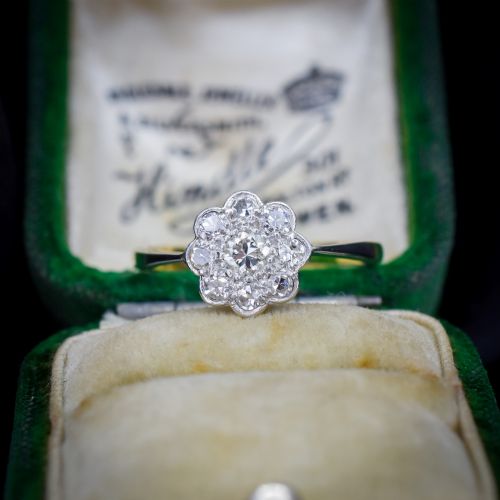
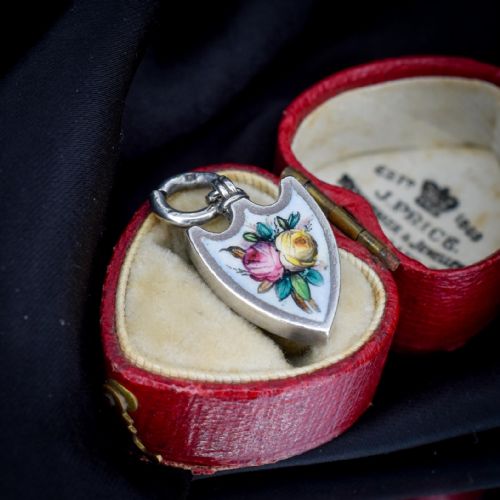
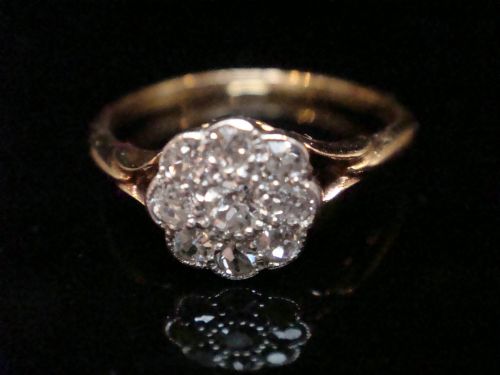
When searching for antique floral jewellery, buyers encounter rings, brooches, pendants, and drop earrings shaped as flowers, leaves, and clusters. The pieces span from the early nineteenth century through the Victorian and Edwardian periods into the mid-twentieth century. Enamelled silver brooches and diamond daisy cluster rings appear frequently across the selection.
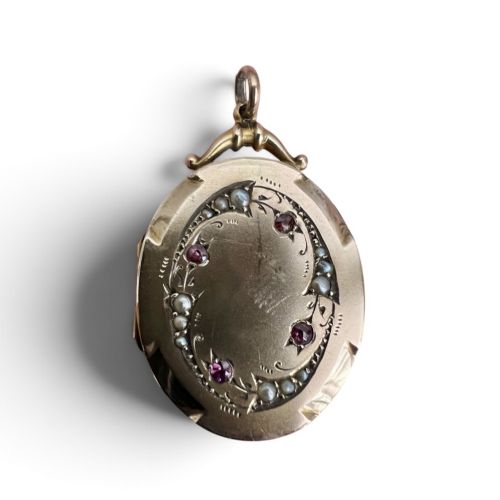
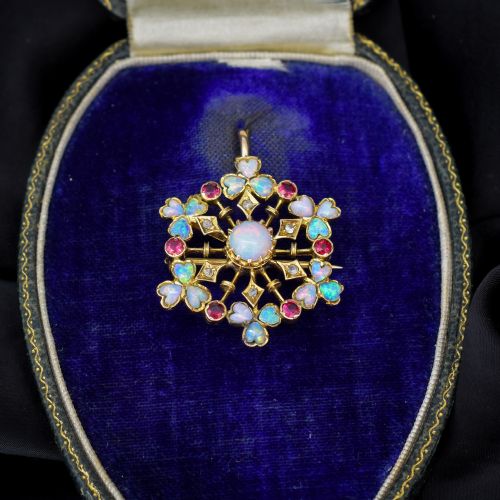
Makers utilised yellow and rose gold, platinum, and sterling silver to mount gems such as diamonds, turquoise, seed pearls, and rubies. Botanical motifs range from naturalistic pearl flower sprays to stylised Art Nouveau lines and symmetrical Edwardian clusters. These items served as personal adornments or sentimental gifts, often incorporating specific stones to convey meaning.
Materials and construction methods
Goldsmiths shaped high-carat gold and silver into delicate petals and stems, frequently employing repousse work to raise relief patterns from the metal sheet. Seed pearls were meticulously drilled and wired or glued to form floral centres, while diamonds and coloured gemstones were set in gold and platinum bezels or claw settings.
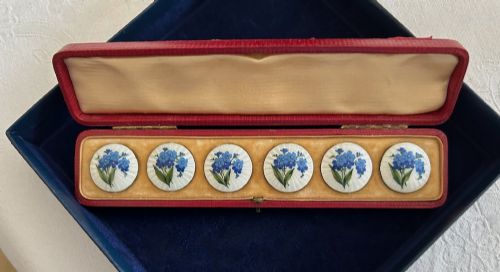
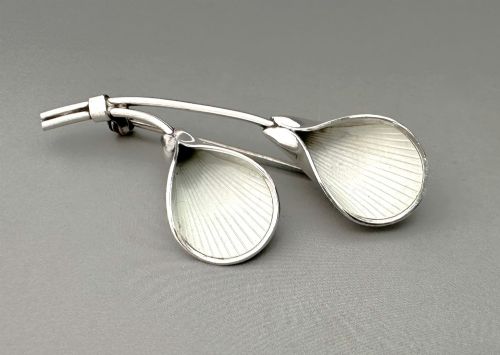
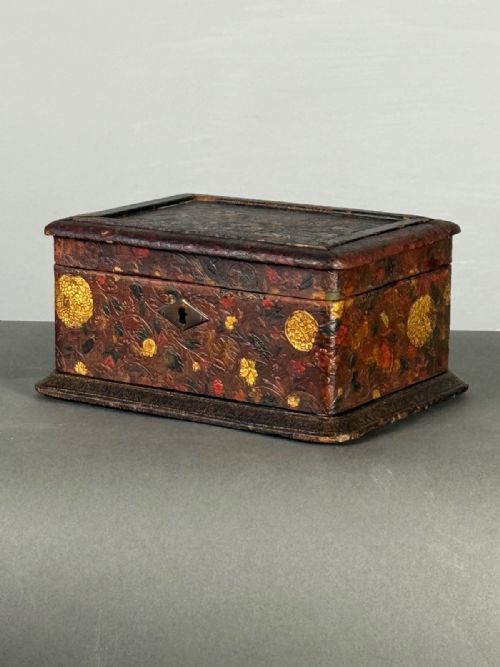
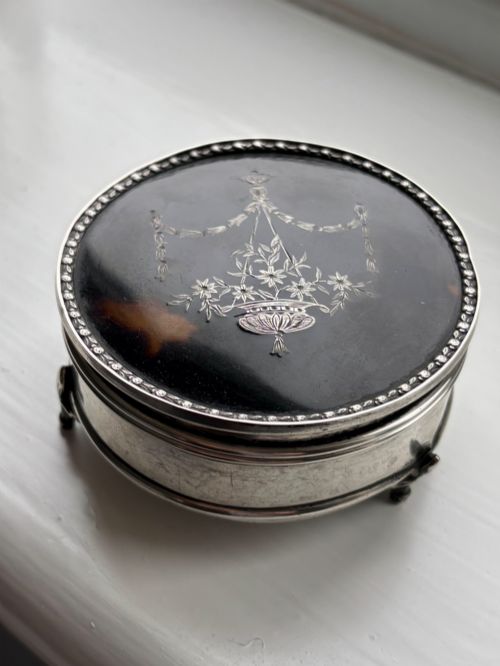
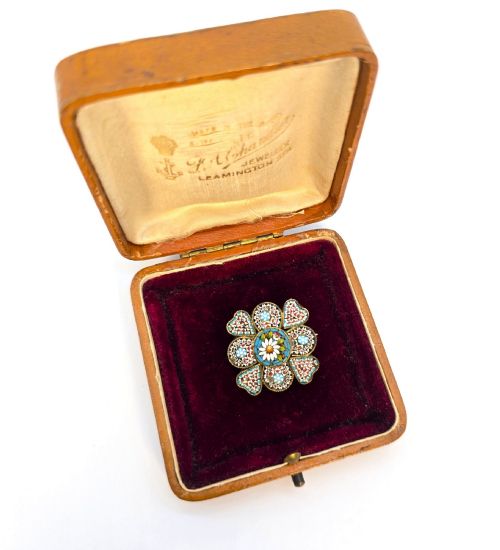
Enamelling techniques, including guilloche and translucent polychrome applications, added vibrant colour to silver and metal bases, mirroring natural botanical hues. Marquetry, micro mosaics, and cloisonne work also feature in associated boxes and charms, demonstrating diverse regional craft traditions.
Some floral brooches cleverly double as pendants, offering two ways to wear a single bouquet.
Distinctions in craftsmanship and design
Superior examples display precise stone setting, secure prong or bezel work, and crisp detailing in chased or repousse metal foliage. Lower tiers often reveal replacement stones, simplified casting, or lost enamel where delicate glass fields have suffered impact over time.
The balance of the botanical composition and the originality of the mounting determine the standing of a piece within its period. Finer survivals retain their original fitted boxes, matched gemstone graduations, and intact secure pins or clasps.
A H Darby And Son·Goldsmiths And Silversmiths Company·Ollivant And Botsford·Edmund Nye
The Antique Floral Jewellery Glossary
- Guilloche enamel
- A decorative technique where an engine-turned pattern on metal is covered with transparent enamel, allowing the geometric design underneath to show through. This method is common in Edwardian and mid-century brooches and compacts.
- Repousse
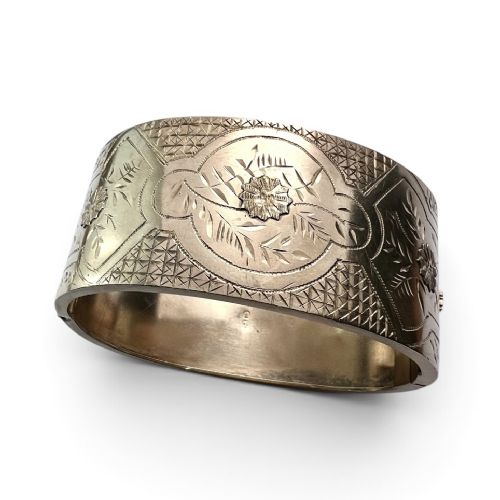
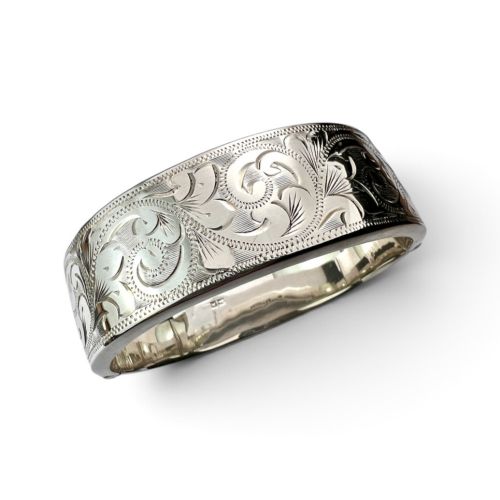
- A metalworking method in which the artisan hammers the metal from the reverse side to form a raised design in relief on the front. It is frequently seen on silver boxes and cuffs from the Victorian era.
- Seed pearl
- A very small natural or saltwater pearl, often less than two millimetres in diameter, drilled and strung or mounted closely together. They form the delicate petals of floral spray brooches and Edwardian pendants.
- Daisy cluster
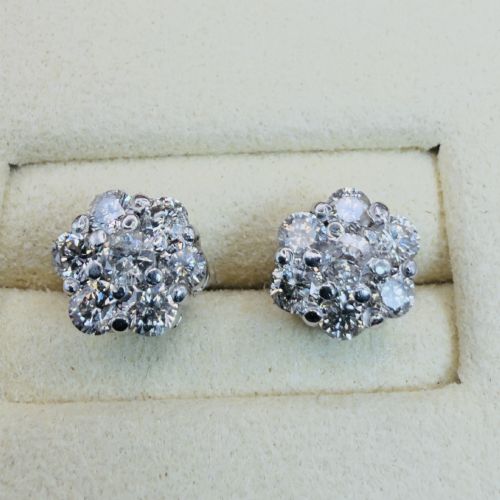
- A ring or brooch setting featuring a central gemstone surrounded by a ring of smaller white stones, typically diamonds, resembling the petals of a flower. This form appears across the Victorian, Edwardian, and later twentieth-century periods.
- Micro mosaic
- An intricate decorative technique using tiny coloured glass rods, called tesserae, fused together to create pictorial scenes of flowers or landscapes. Italian makers produced exceptional examples during the nineteenth century.
Antique Floral Jewellery: Frequently Asked Questions
What periods are common?
Pieces span from the early nineteenth century through the Victorian and Edwardian eras into the mid-twentieth century. Victorian and Edwardian examples represent a significant portion of the available designs.
Later items extend into the nineteen-fifties, showing shifts toward Scandinavian modern aesthetics and simpler geometric floral interpretations.
How do I identify Edwardian pieces?
Edwardian items frequently utilise platinum alongside yellow gold, creating a bright, lightweight mount for diamonds and pearls. The designs lean towards light, airy garlands and symmetrical floral clusters.
Turquoise and aquamarine stones set in low-carat or eighteen-carat gold are also typical of this period's romantic output.
What materials were used?
Goldsmiths relied on nine-carat, fifteen-carat, and eighteen-carat yellow and rose gold, alongside sterling silver and platinum. Gemstones include diamonds, seed pearls, turquoise, rubies, sapphires, and topazes.
Enamel, glass, and micro mosaics provided colour where precious stones were not the primary focus.
Were these worn daily?
Many items functioned as everyday personal adornments, such as securing collars with brooches or wearing cluster rings continuously. Finer pieces with delicate seed pearls or enamel required more careful handling.
Matching sets and heavy hinged bangles were reserved for formal social occasions during the nineteenth and early twentieth centuries.