

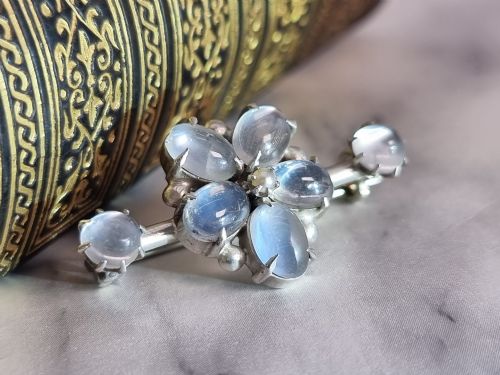


Edwardian Floral Pin
These edwardian floral pin pieces bring together enamel, silver, gold, and precious stones to capture botanical forms with remarkable delicacy.
Edwardian Floral Pin
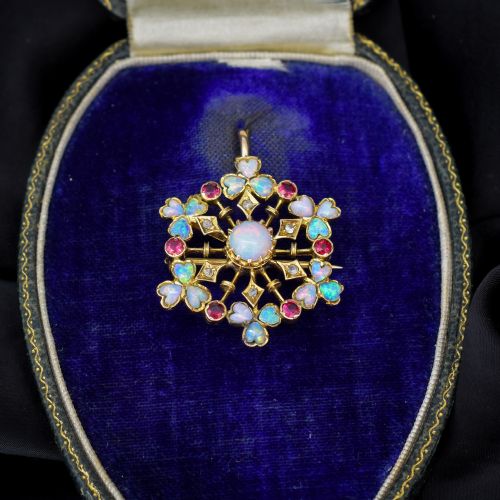
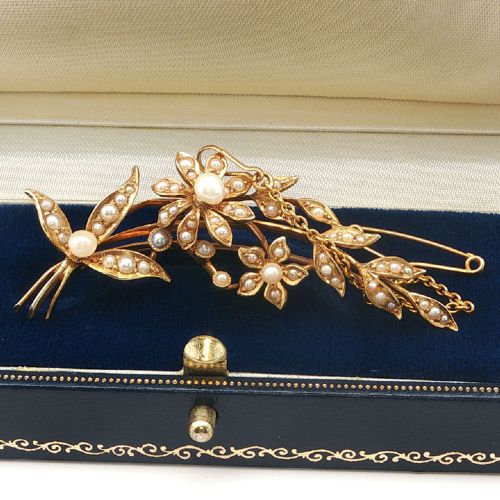
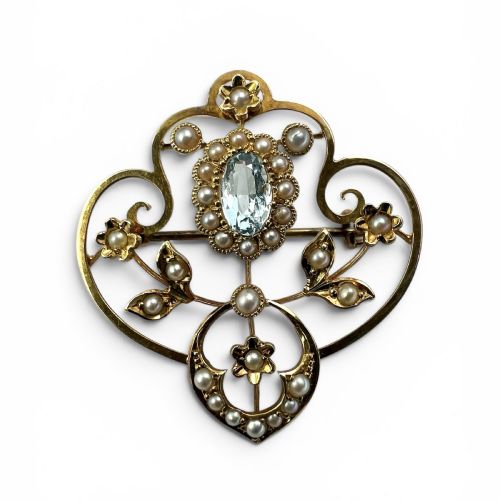
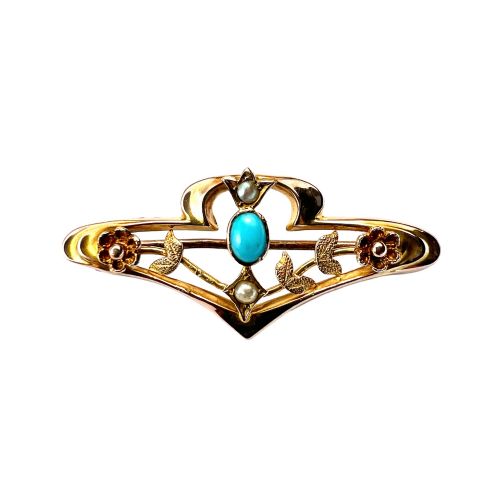
When you search for an edwardian floral pin, you encounter a selection of brooches, stick pins, and convertible brooch pendants shaped as flowers, sprays, and wreaths. Most examples on this page date from the Edwardian period or around 1900, drawing on Victorian precursors and later influences like Art Nouveau and Arts and Crafts.
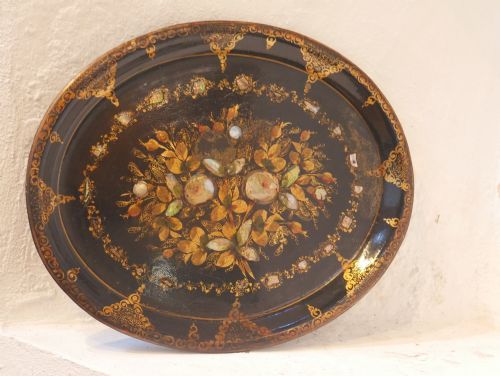
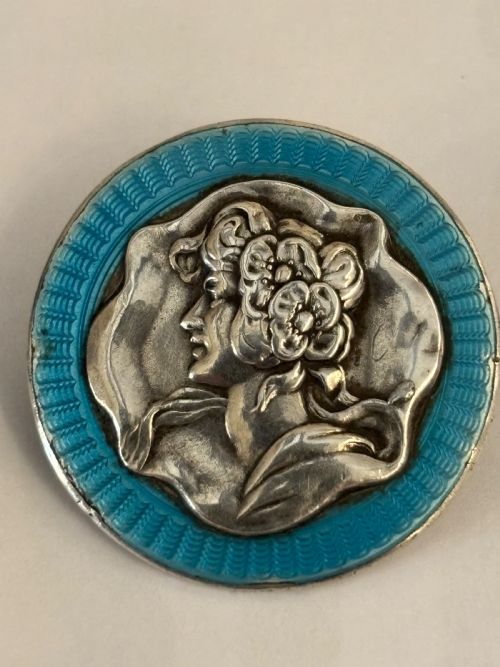
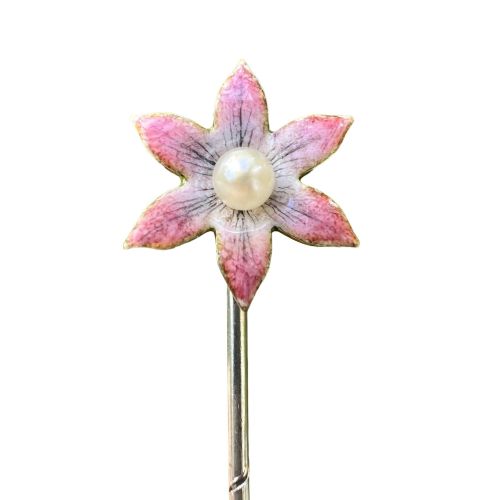
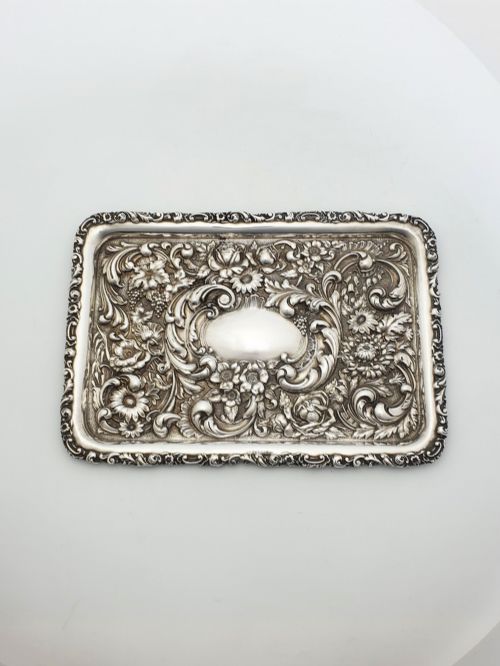
The forms range from realistic pearl and diamond floral sprays in fifteen-carat gold to silver and guilloche enamel pansies or moonstone and silver settings. Alongside wearable jewellery, the broader selection includes small decorative trays, dishes, and boxes bearing floral motifs in porcelain, repoussé silver, and copper relief.
How they were made
Maker construction relies heavily on precious metals such as silver, nine-carat, fifteen-carat, and eighteen-carat gold, paired with gemstones including diamonds, pearls, rubies, aquamarines, peridots, opals, and moonstones. Enamelling techniques, particularly plique-à-jour and guilloche, provide translucent colour for flower petals and leaves.
Metalsmiths employed hand-painted porcelain from makers like Wedgwood, repoussé silver work, and fine stone-setting to articulate naturalistic plant structures. The combination of hollow or solid gold backing with delicate claw and collet settings gives these pieces both structural integrity and fine detail.
Pansy brooches in multi-coloured enamel capture Victorian sentiment through flowers that literally remind the wearer to think of them.
What varies in quality
The distinction between tiers rests on the choice of materials and the finesse of the lapidary and goldsmith work. Pieces featuring higher-carat gold, matched natural pearls, and substantial diamonds sit apart from simpler silver or base-metal interpretations.
Artisanal execution dictates the upper range, where plique-à-jour enamel lets light through transparent cells, and hand-painted ceramic or repoussé metalwork displays crisp botanical accuracy rather than generic stamping.
William Hutton·Royal Worcester·Wedgwood
The Edwardian Floral Pin Glossary
- Guilloche enamel
- Enamel applied over engine-turned metalwork. This technique creates repeating geometric patterns that shine beneath translucent coloured glass.
- Plique-a-jour
- An enamelling technique similar to stained glass without a backing. Light passes directly through the transparent or translucent enamel cells.
- Repousse
- Metalworking shaped by hammering from the reverse side. The technique raises relief patterns of flowers and leaves on silver trays and brooches.
- Bar brooch
- A narrow horizontal pin fitted with a central decorative motif. This form was widely used during the late nineteenth and Edwardian periods.
- Stick pin
- A long pin topped with a decorative head. It was worn to secure cravats, lapels, or hats.
Edwardian Floral Pin: Frequently Asked Questions
What defines an edwardian floral pin?
These pieces take the form of brooches and stick pins shaped as flower sprays, wreaths, and individual blooms, typically produced around 1900 to 1910.
They combine precious metals like fifteen-carat gold and silver with gemstones such as pearls, diamonds, turquoise, and moonstone.
How do I wear a brooch pendant?
Many Edwardian pieces feature a concealed loop behind the pin stem that allows the mount to hang from a chain as well as fasten to fabric.
This dual function makes them versatile ornaments for both necklines and lapels.
How do I tell Edwardian from Art Nouveau?
Edwardian pieces often use platinum, diamonds, and pearls in symmetrical garland or ribbon arrangements that echo eighteenth-century motifs.
Art Nouveau designs favour flowing, asymmetrical plant stems and translucent plique-à-jour enamel inspired by natural organic growth.
What is guilloche enamel?
Guilloche is a decorative technique where metal is engraved with precise geometric patterns by a lathe before translucent enamel is applied over the top.
The underlying pattern shows through the coloured glass, creating a shimmering depth found on early twentieth-century boxes and brooches.