


Antique Floral Flatweave
An antique floral flatweave brings warmth and colour to a room through traditional botanical motifs woven without a high pile.
Antique Floral Flatweave
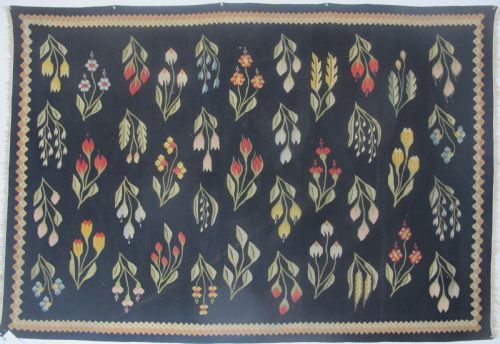
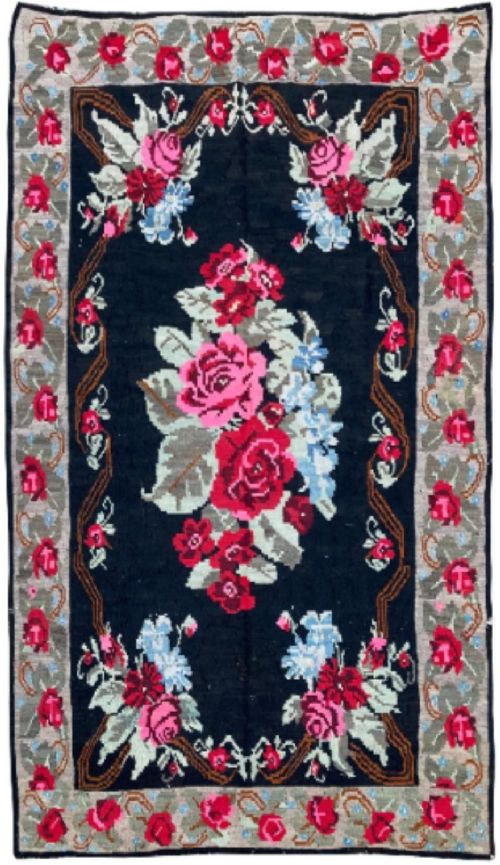
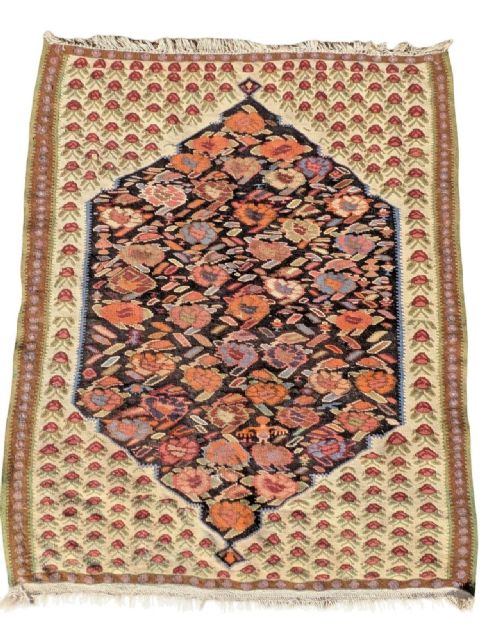
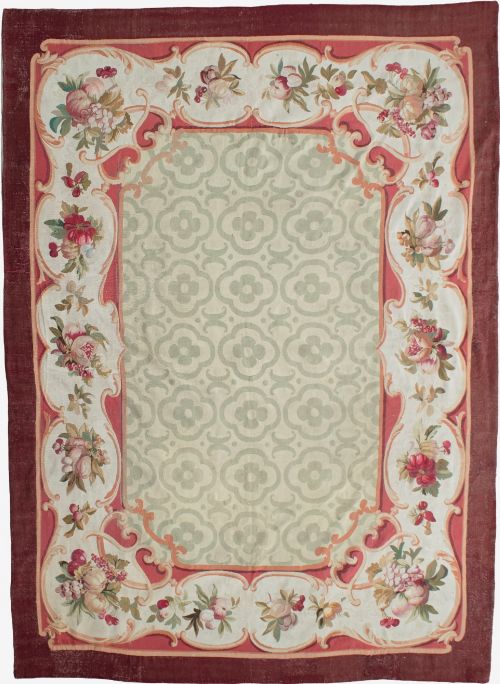
When you search for an antique floral flatweave, you encounter textiles created across Europe and the Middle East, including Bessarabian, French Aubusson, and Persian traditions. These pieces function as rugs, carpets, and tapestries designed to lie flat on floors or hang upon walls.
The pieces on this page are most frequently Bessarabian kilims and French Aubusson carpets, spanning the nineteenth and early twentieth centuries. They combine botanical patterns with flat-woven or needlepointed structures rather than deep knotted piles.
Originating from diverse regions such as Eastern Europe, Persia, and France, these textiles show how distinct weaving communities interpreted naturalistic blooms. Each piece reflects the specific folk art or formal decorative style of its origin.
How they were made
Weavers utilised wool and cotton, often working on a canvas foundation for needlepoint or interweaving threads for tapestry and kilim structures. These materials provided the tensile strength required for flat-woven floor coverings and wall hangings.
The production involved precise flat-weaving techniques where weft threads were beaten down tightly to conceal the warp, creating crisp edges for floral motifs. Needlepoint examples built up flower designs stitch by stitch on a sturdy ground mesh.
Nomadic weavers packed these flatweaves easily onto saddles, carrying centuries of botanical art across rugged terrain.
What varies in quality
Quality rests in the handling of the botanical design, where top-tier examples exhibit subtle shading, realistic petal contours, and balanced composition. Weaker pieces display rigid, blocky flowers with harsh colour transitions.
The integrity of the flat-woven structure determines durability and refinement, with tighter weaves holding intricate floral details more securely. Finer yarns and expert dye work yield richer tones that age with character rather than dulling uniformly.
The Antique Floral Flatweave Glossary
- Kilim
- A flat-woven carpet or rug made without a pile by tightly interweaving warp and weft strands. This technique produces a lightweight textile that lies completely flat.
- Flatweave
- A general term for rugs and textiles constructed without knotted piles, relying instead on interwoven threads. These pieces include kilims, tapestries, and needlepoints.
- Tapestry
- A form of textile art woven by hand on a loom, often featuring pictorial or floral scenes. They served historically as both wall hangings and floor coverings.
- Needlepoint
- A type of embroidery stitched onto a canvas mesh ground to form dense patterns. It appears frequently in French Aubusson and Portuguese pieces.
- Warp
- The vertical lengthwise threads held under tension on a loom before weaving begins. The weft threads pass over and under these foundational strands.
Antique Floral Flatweave: Frequently Asked Questions
Where should I put a flatweave?
These textiles suit areas with moderate foot traffic where a low profile is practical, such as bedrooms, studies, or sitting rooms. Their flat structure prevents obstruction beneath doors and furniture.
Because they lack a deep pile, keep them away from damp spaces and protect them from direct, harsh sunlight to preserve the wool and cotton fibres over time.
How do I clean an antique flatweave?
Gentle, regular surface cleaning with a soft brush attachment on a vacuum without a rotating beater bar removes loose dirt safely. Professional textile conservators should handle deep cleaning.
Avoid vigorous shaking or traditional rug-beating methods, as the aged wool and cotton threads in these antique flatweaves are vulnerable to undue stress.
Are these pieces fragile?
While nineteenth and early twentieth-century textiles show resilience, their flat-woven structures require thoughtful placement and occasional rotation. They handle normal walking traffic well when supported by a proper underlay.
Heavy furniture legs can strain the woven foundation, so using protective cups helps distribute weight evenly across the surface of the rug.
How do I identify a Bessarabian piece?
Bessarabian kilims typically feature dark, often black or deep brown grounds covered in naturalistic floral sprays and roses. Their distinct Eastern European folk art style separates them from Persian or French designs.
They rely on flat-weaving techniques where wool yarns create painterly, romantic depictions of blooms without the geometric stiffness found in some other regional rugs.