
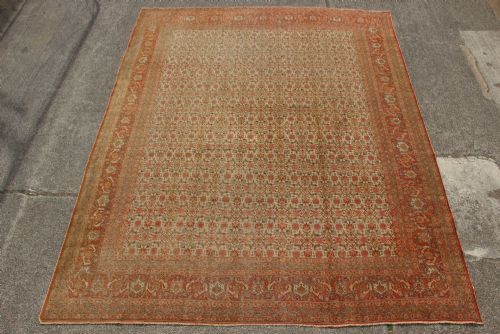



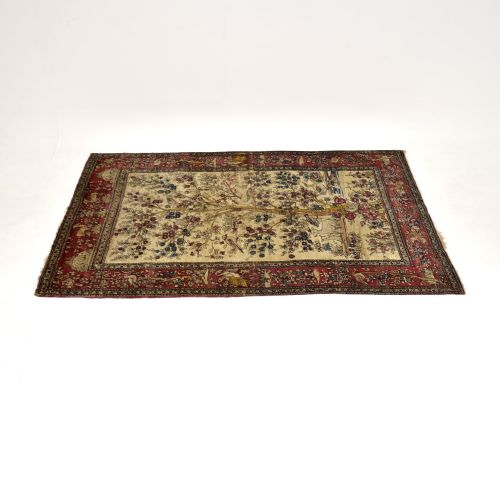
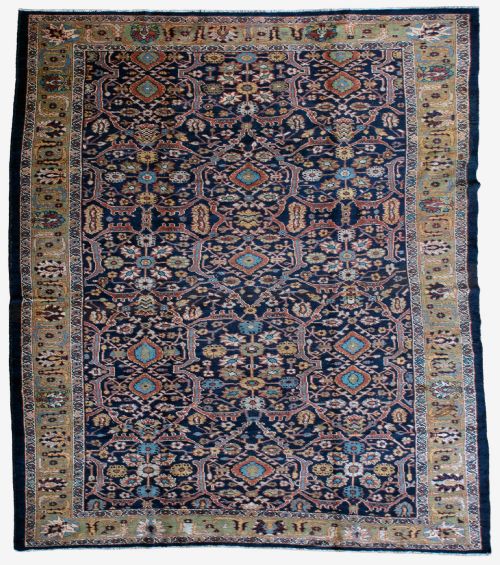
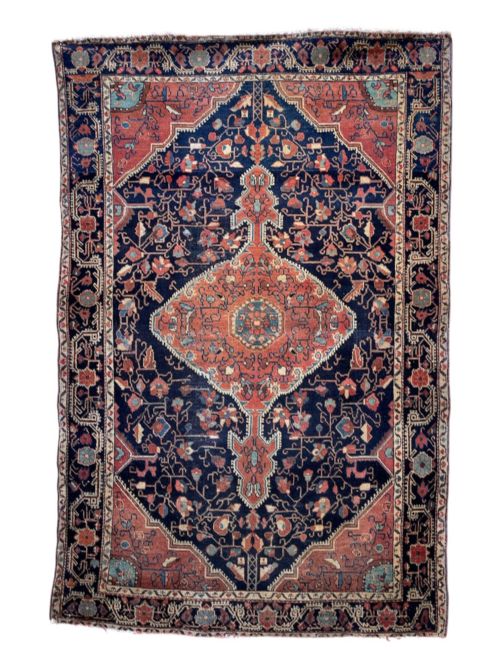
Vintage Woven Area Rug
A vintage woven area rug brings depth to a room through traditional patterns and hand-knotted pile.
Vintage Woven Area Rug
A vintage woven area rug serves as a practical floor covering that anchors furniture arrangements in a reception room or study. These pieces include smaller hearth-sized rugs alongside large room-sized carpets spanning the nineteenth and early twentieth centuries.
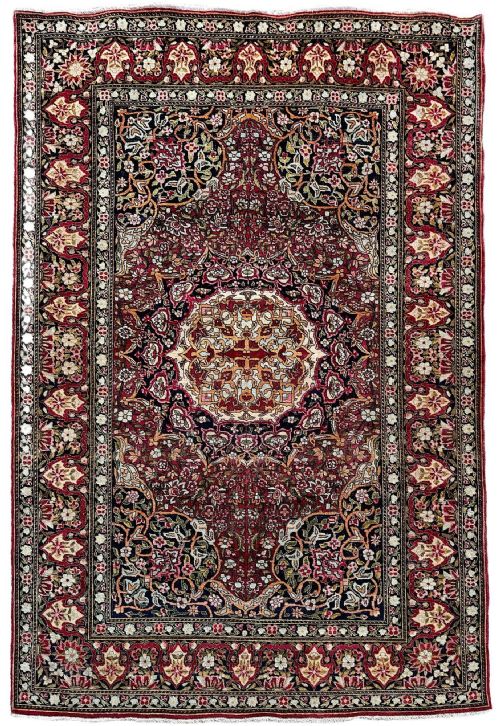
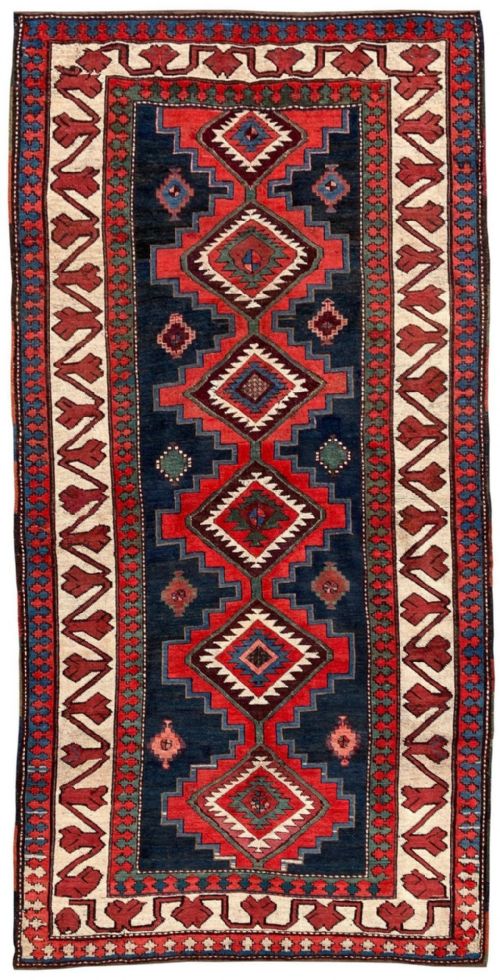
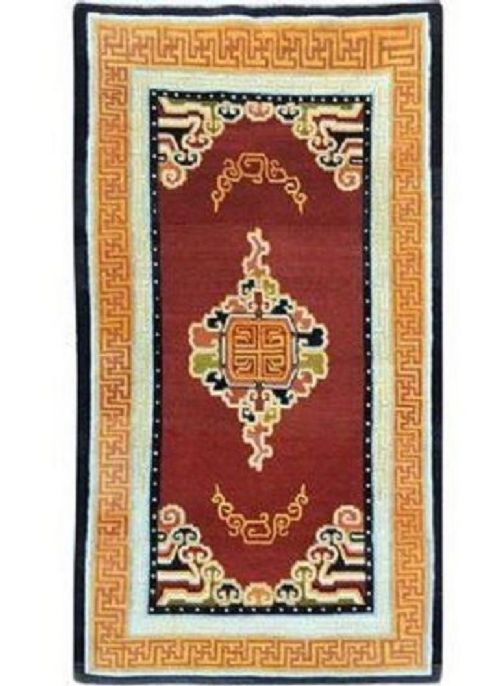
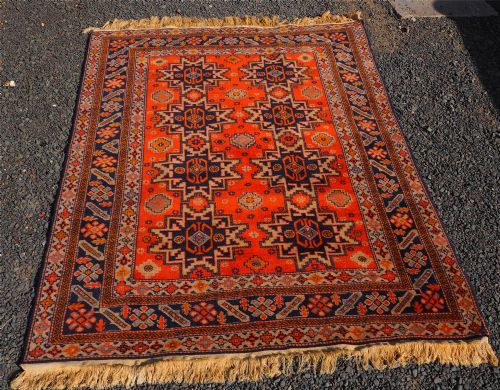
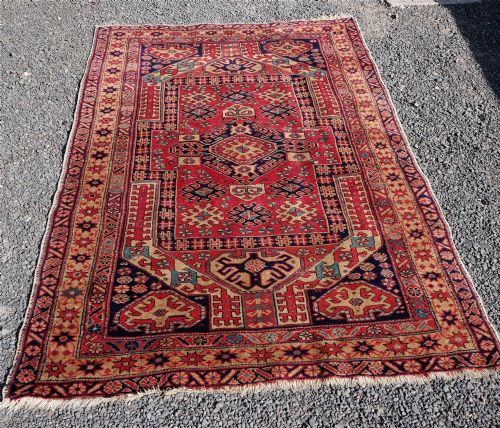
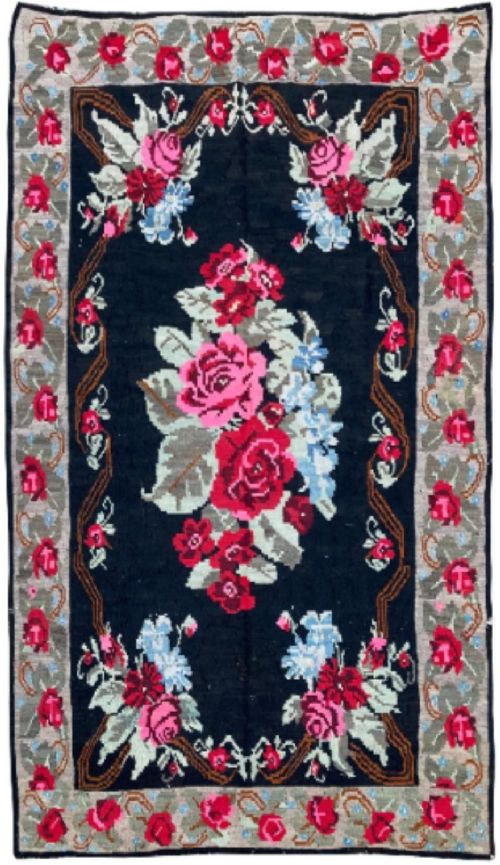
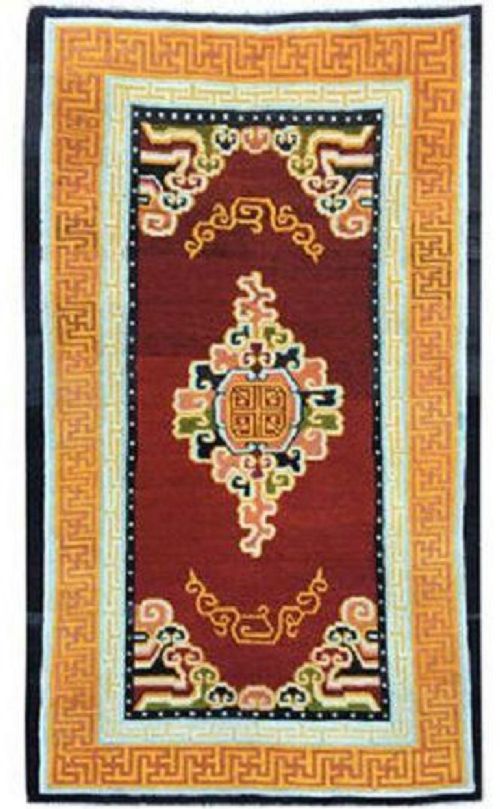
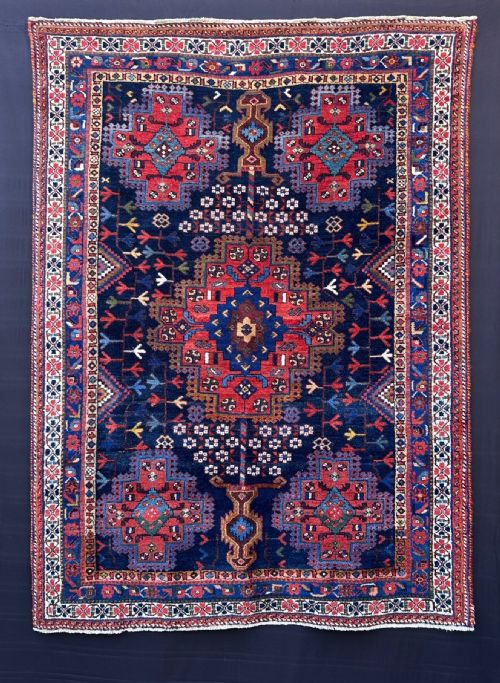
The selections encountered here originate primarily from Persian, Caucasian, Anatolian, and Tibetan traditions. Buyers meeting these textiles will find distinct regional designs, from geometric tribal medallions to flowing floral carpets.
How they were made
Weavers constructed these carpets using wool, cotton foundations, and occasional silk highlights. Hand-spun wool provides the durable pile found across many nineteenth-century and early twentieth-century examples.
Makers utilised flatweave techniques for kilims and knotted pile methods for heavier rugs. Natural dye methods produced the mellow colour palettes seen in Caucasian and Persian weaving.
Listings span from the mid-nineteenth century through the 1930s, featuring wool, cotton, and silk materials.
What varies in quality
Knot density and structural tightness dictate the overall durability and crispness of the design. Closer knots allow intricate patterns to hold their definition over decades of domestic use.
The quality of the wool and the depth of the dye work determine how gracefully a floor covering ages. Superior materials retain their lustre and handle even after heavy foot traffic.
The Vintage Woven Area Rug Glossary
- Kilim
- A flatweave carpet produced without a pile. These lighter textiles function well as decorative floor coverings or wall hangings.
- Medallion
- A central ornamental motif placed in the middle of the field. This design element directs the visual balance of the entire composition.
- Pile
- The upright yarn surface formed by knotted threads. This textured layer determines the softness and insulation of the floor covering.
- Runner
- A long and narrow carpet format designed for hallways and corridors. These rectangular pieces guide movement through domestic spaces.
Vintage Woven Area Rug: Frequently Asked Questions
How do I clean a woven rug?
Regular gentle vacuuming without a beater bar removes loose grit from the pile. Professional specialist cleaning remains necessary for deeper dirt removal.
Water and harsh detergents damage natural wool fibres and traditional dyes. Surface spills require immediate blotting with a dry white cloth rather than rubbing.
Can I place these rugs in heavy traffic areas?
Sturdier wool carpets handle domestic foot traffic well in hallways and living rooms. Dense knotting provides the resilience needed for everyday use.
Fine silk highlights or fragile flatweaves suit quieter spaces like bedrooms or studies. Placing a quality underlay beneath the carpet prevents slipping and reduces fibre wear.
How do I identify a tribal rug?
Tribal carpets often display geometric motifs, stylised animals, and memory patterns rather than formal court designs. Village weavers created these pieces independently without metropolitan workshop cartoons.
Irregularities in the border alignment or colour shifts indicate hands-on village production. These spontaneous design choices give tribal rugs their distinctive character.
What is an Anatolian flatweave?
An Anatolian flatweave is a textile produced in the regions of modern Turkey without a raised pile. Artisans interwove warp and weft threads to create lightweight decorative coverings.
These versatile pieces function effectively as summer floor coverings or light throws. Their geometric patterns reflect traditional regional weaving practices.