


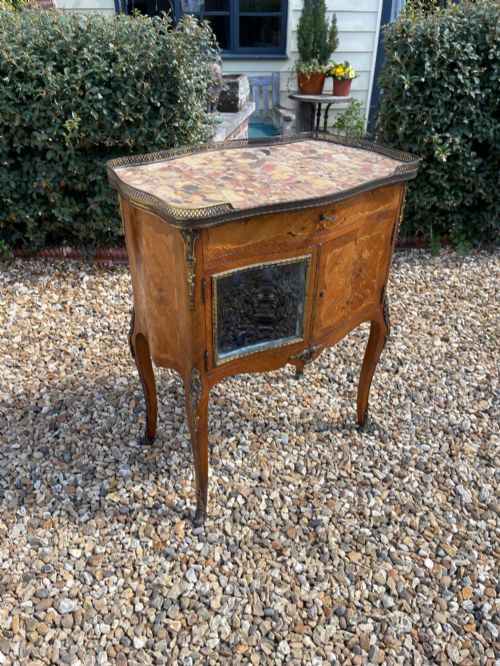


Antique Floral Display Table
An antique floral display table holds botanical arrangements and prized ornaments on tiered surfaces crafted in mahogany, rosewood and marble.
Antique Floral Display Table
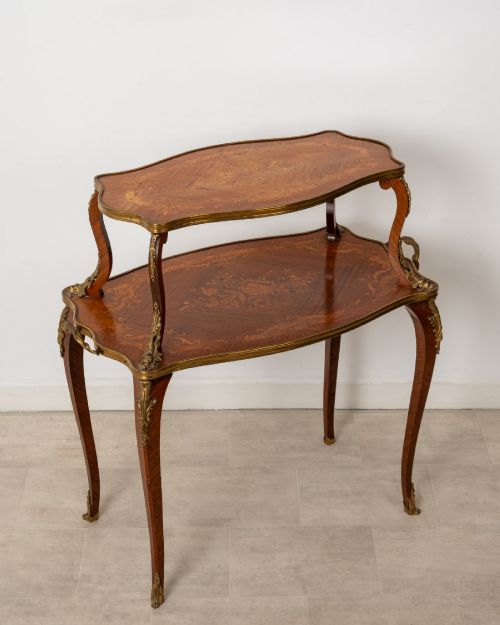
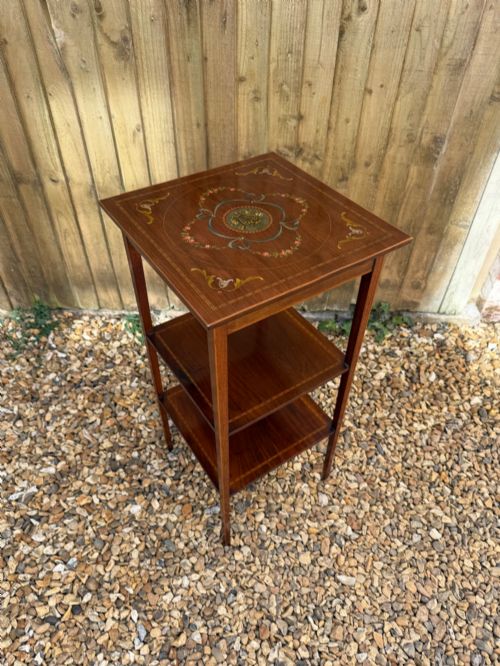
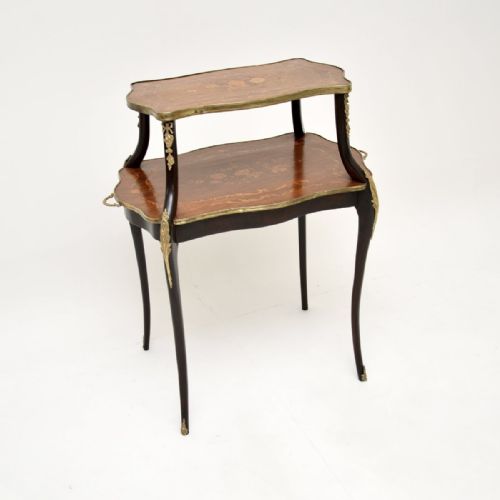
When searching for an antique floral display table, collectors encounter a diverse group of etageres, plant stands, jardiniere supports and tier tables designed to showcase blooms and decorative objects. The selection spans the Victorian and Edwardian eras alongside late nineteenth century pieces and French Louis XV revival designs.
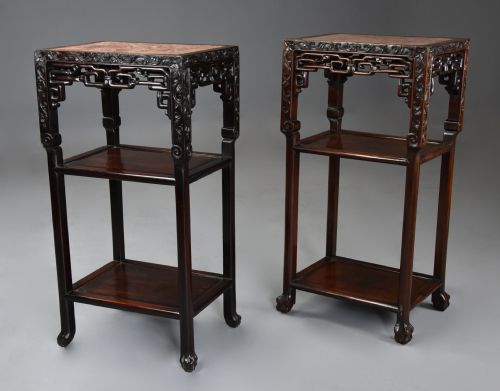
The primary forms include multi-tier etageres with marquetry inlay, Chinese hardwood and marble top vase stands, and occasional tables configured specifically to present plants and floral vessels. These pieces range from compact corner pot stands to expansive freestanding two-tier display surfaces.
Originating across English, French and Chinese workshops, these furnishings reflect distinct regional tastes in botanical presentation. Victorian and Edwardian examples sit alongside nineteenth century oriental pedestals, creating multiple pathways to integrate floral displays into domestic interiors.
How They Were Made
Cabinetmakers utilised dense timbers including mahogany, walnut, kingwood, rosewood and satinwood as foundations for marquetry inlay and structural frames. Brass mounts, ormolu and ceramic plaques frequently accented these wooden structures.
Inlaid surfaces combined contrasting veneers to depict botanical motifs and geometric banding across table tops and tiers. Marble inserts provided durable, water-resistant tops suited to supporting wet flower pots, vases and jardiniere stands.
Certain plant stands arrived from nineteenth century workshops with heavy marble tops destined to outlast every houseplant placed upon them.
What Varies in Quality
Execution of marquetry and veneer selection mark the distinction between standard production and fine pieces, where intricate floral motifs display precise shading and tight joints. The choice of secondary timbers and the crispness of brass mounts reveal the maker's hand.
Structural integrity rests on the stability of tiered joints and the preservation of marble inserts without hairline fractures. Pieces retaining original surface finishes and cohesive French polishing command greater attention from discerning collectors.
Edwards & Roberts
The Antique Floral Display Table Glossary
- Étagère
- A set of open shelves or tiers for displaying small objects, plants or ornaments. These pieces typically feature multiple levels supported by slender uprights.
- Marquetry
- Decorative veneer work forming pictures or patterns using various coloured woods, shells or ivory. This technique frequently portrays floral arrangements across table tops.
- Jardiniere
- An ornamental pot or stand designed to hold a plant or floral display. They appear in porcelain, brass and carved hardwood.
- Ormolu
- Gilded bronze mounted onto furniture or decorative objects for enrichment. It provides bright metallic contrast against dark woods.
- Hongmu
- A category of dense, dark Chinese hardwoods used for traditional furniture and plant stands. These timbers offer substantial weight and polished durability.
Antique Floral Display Table: Frequently Asked Questions
What is an etagere table used for?
An etagere serves as a multi-tiered surface designed to display decorative items, small plants and floral arrangements in principal rooms.
Its stepped levels allow several objects to be viewed simultaneously without crowding the floor space.
How do I identify Victorian display tables?
Victorian examples frequently incorporate dark timbers like walnut and mahogany, often enhanced by marquetry inlay or brass mountings. They reflect the period's preference for ornamented utility in domestic settings.
Many incorporate marble tops specifically intended to accommodate damp flower pots and jardiniere stands safely.
Where should I place a plant stand?
Plant stands suit corners, window bays or entrance halls where natural light highlights botanical displays. Freestanding versions work effectively as standalone focal points.
Ensure the surrounding floor space allows the tiered structure or vase stand to be viewed from multiple angles.
What distinguishes French revival tables?
French revival pieces display curved cabriole legs, kingwood veneers and elaborate floral marquetry reflecting Louis XV styles. Their serpentine edges soften rigid room layouts.
Brass or ormolu mounts usually accent the corners and feet of these decorative display tables.