


Antique Flatback Mantel Ornaments
Antique flatback mantel ornaments are Victorian Staffordshire pottery figures designed to be displayed on a shelf, bringing colourful folk art character to a room.
Antique Flatback Mantel Ornaments
These antique flatback mantel ornaments comprise nineteenth-century Staffordshire pottery figures, portrait groups, and spill vases produced for domestic display. Because they were modelled with unglazed flat backs intended to face a wall, they sat snugly upon narrow mantelpieces and shelves.
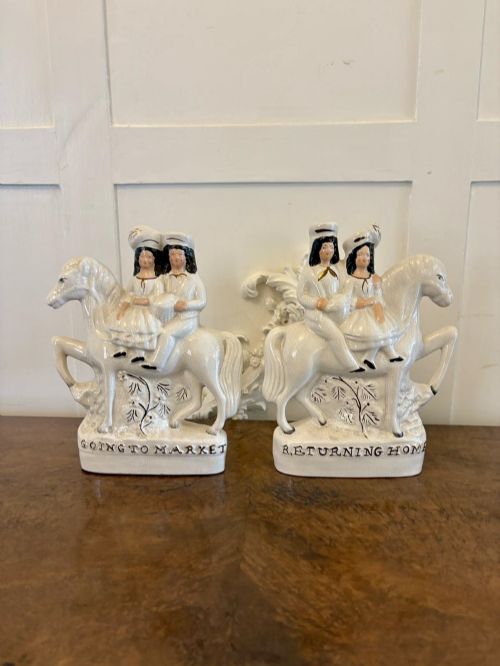
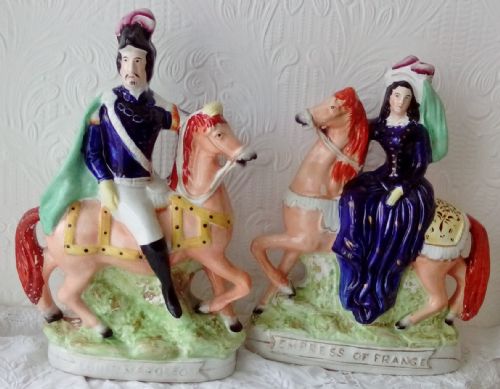
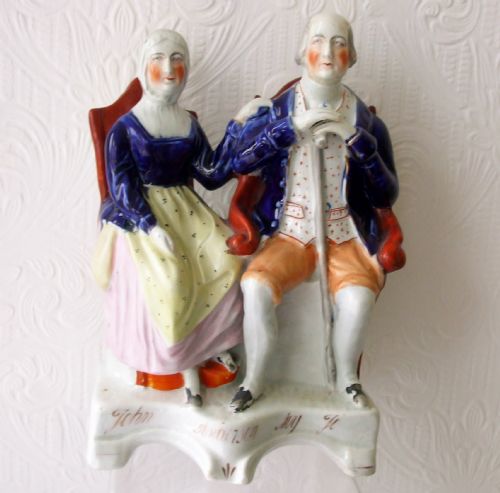
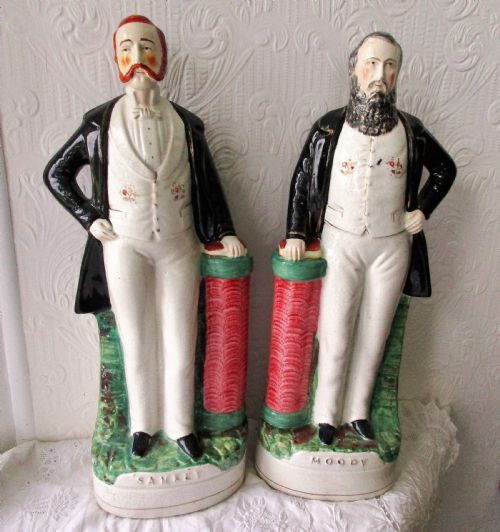
The subjects seen on this page range widely from literary and historical characters like Robin Hood and Will Watch the smuggler to pairs of royals, musicians, and Scottish lairds. Figures of evangelists Moody and Sankey and political leaders such as Louis Napoleon also appear alongside domestic country couples and children with horses.
Most examples date from the Victorian era, spanning the mid to late nineteenth century around eighteen-fifty to eighteen-ninety. They take the form of ceramic figures, decorative figurines, and clock groups, often modelled as pairs designed to sit symmetrically.
Assessing quality
Larger scale figures and complex pairs, such as those depicting horses or architectural castles, generally demand greater modelling skill. The vibrancy and preservation of the original enamel paint and gold leaf also separate ordinary pieces from superior survivals.
The listings here span the nineteenth century, featuring earthenware bodies finished with enamel paint, gold leaf, and lead glaze.
The Antique Flatback Mantel Ornaments Glossary
- Flatback
- A ceramic figure modelled with a finished front and sides but left flat and unglazed at the back. This construction allowed the ornament to sit flush against a wall or mantelpiece.
- Spill vase
- A hollow ceramic tube incorporated into a figure group, designed to hold wooden spills for lighting fires and candles. They combine decorative appeal with practical utility.
- Earthenware
- A porous pottery body fired at lower temperatures than stoneware or porcelain. It formed the standard material for nineteenth-century Staffordshire figures.
- Enamel paint
- Coloured vitreous pigments applied over the fired glaze and fixed with a low-temperature firing. It provides the bright palette seen on Victorian pottery.
- Staffordshire pottery
- Ceramic wares produced in the various potteries of Staffordshire, England. The term encompasses the robust earthenware figures popular during the Victorian period.
Antique Flatback Mantel Ornaments: Frequently Asked Questions
What are flatback mantel ornaments?
These pieces are nineteenth-century ceramic figures produced by Staffordshire potteries for domestic decoration. They earned their name from the flat, unglazed backs that allowed them to rest safely against walls.
Potters modelled them to represent public figures, literary heroes, animals, and everyday folk. They served as colourful chimney-piece ornaments in Victorian homes.
How were mantel ornaments displayed?
Victorian households arranged these figures along mantelpieces, sideboard tops, and shelf edges where their brightly painted fronts could be admired. Pairs were often placed symmetrically to frame a clock or mirror.
Because the backs were left plain, they were strictly intended for frontal viewing against a vertical surface.
How do I date Staffordshire figures?
Dating relies on stylistic clues, subject matter, and manufacturing characteristics associated with the nineteenth century. Historical events and famous personalities depicted in the titles often provide a reliable window for production.
Mid-Victorian examples often display simpler modelling and earthy enamel palettes, while later Victorian pieces show different glaze textures and larger scales.
How do I care for antique pottery?
Keep these earthenware ornaments away from direct sunlight and damp environments to protect the fragile enamel paint and gold leaf. Dust them gently with a dry, soft brush rather than using water or cleaning agents.
Handle them carefully by the base and main body rather than protruding limbs or spill vases, which are vulnerable to damage.