



Antique Flat Woven Tapestry
These antique flat woven tapestry pieces bring rich texture and heritage into a room, offering authentic motifs from regional weaving traditions.
Antique Flat Woven Tapestry
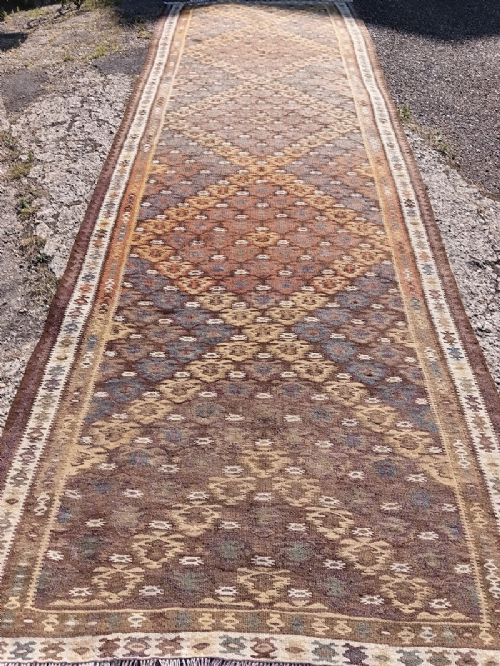
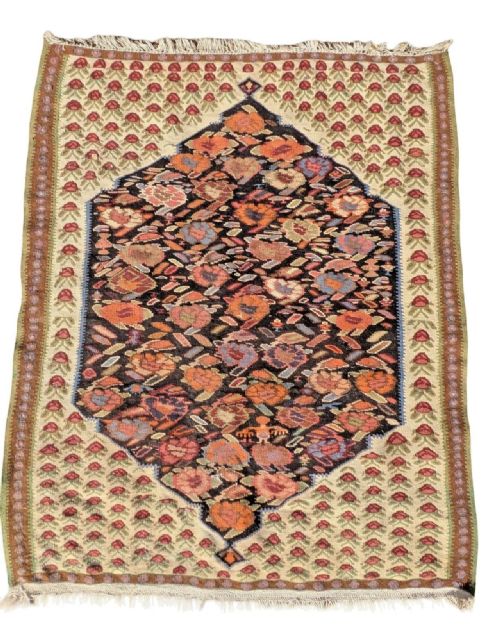
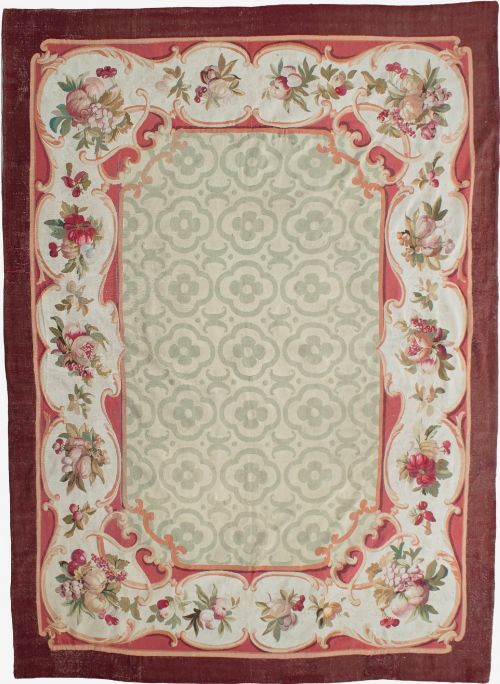
When you search for an antique flat woven tapestry, you are looking at non-pile textiles including kilims, soumakhs, and French carpets created without a knotted pile. These items span various origins, featuring traditional pieces from Anatolia, Persia, the Caucasus, and Europe.
You are most likely to encounter Bessarabian kilims and tribal flatweaves from the latter half of the nineteenth century and the early twentieth century on this page. These examples range from large floor carpets to smaller cushions and fragments.
The selection includes specific regional types such as Bidjar, Senneh, Shahsavan, and Aubusson weaves, each carrying distinct geometric or floral layouts. They function today as floor coverings or decorative wall hangings that anchor a space with historical depth.
What separates the finest examples
Quality rests in the precision of the weave, the clarity of the design motifs, and the depth of the natural dyes employed by the maker. Tighter tension in the flat weave creates a denser, more durable fabric that withstands daily use.
The distinction between standard domestic pieces and superior examples often lies in the complexity of the drawing and the preservation of the original borders and selvedges. Well-balanced colour palettes and intact structural edges elevate certain regional weaves above ordinary production.
Antique Flat Woven Tapestry Retail Price Guide 2026
Typical asking prices for flat woven tapestry among the pieces listed under this phrase on Sellingantiques today, from the lower quarter to the upper quarter. They describe what is for sale here now, not the wider market.
The listings span the period from 1850 to 1930, utilising wool and cotton across Anatolian, Persian, Caucasian, and European workshops.
The Antique Flat Woven Tapestry Glossary
- Kilim
- A flat-woven carpet or rug produced without a pile, common across the Near East, Central Asia, and Eastern Europe. These textiles rely on the interlocking of weft threads to form flat geometric designs.
- Soumakh
- A flat-weave technique involving wrapping weft threads over and under warp threads in a herringbone or braided effect. This method adds structural weight and a characteristic ribbed texture to the face of the textile.
- Khorjin
- A traditional woven saddlebag used among nomadic and tribal groups for transport and storage. Surviving panels often display intricate regional iconography.
- Mafrash
- A large rectangular storage bag or panel associated with tribal weavers in the Caucasus and Northwest Persia. They typically feature bold geometric compartments.
- Warp
- The stationary vertical threads stretched onto a loom before weaving begins. The weft is passed through these structural foundation threads to build the cloth.
Antique Flat Woven Tapestry: Frequently Asked Questions
How do I clean an antique flat woven tapestry?
Gentle vacuuming without a rotating brush attachment removes loose surface dust safely.
Professional textile conservation cleaning is recommended for heavier soil to protect wool fibres.
Can these flatweaves be used on the floor?
Many examples function well as floor coverings in moderate traffic areas when paired with a quality rug underlay.
Fragile or historical pieces are better suited to wall mounting to reduce mechanical wear.
What is the difference between a kilim and an Aubusson?
Kilims are tribal or village flatweaves featuring geometric, angular motifs from regions like Anatolia and the Caucasus.
Aubusson pieces originate in France and display neoclassical floral scrolls and pastoral scenes woven in a fine tapestry technique.
How do I hang a textile on the wall?
A conservation specialist can sew a cotton sleeve along the top reverse edge to slide onto a flat metal rod.
This distributes the weight evenly across the width of the fabric without puncturing the antique material.