

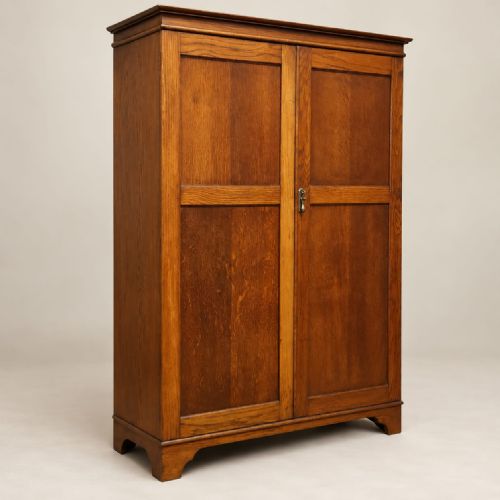
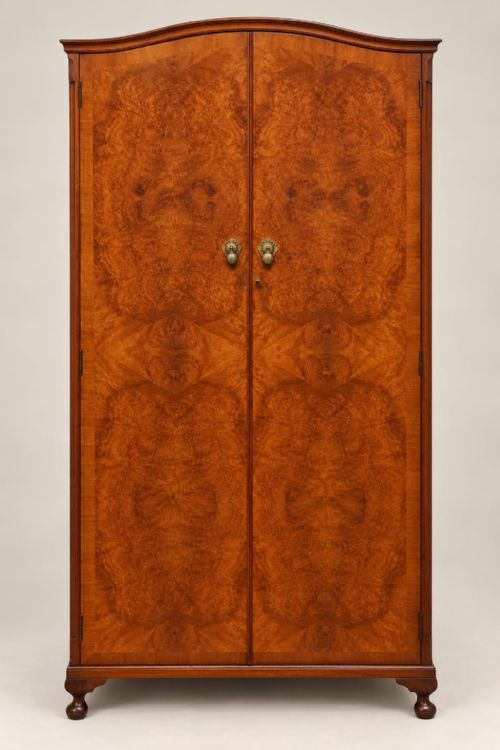
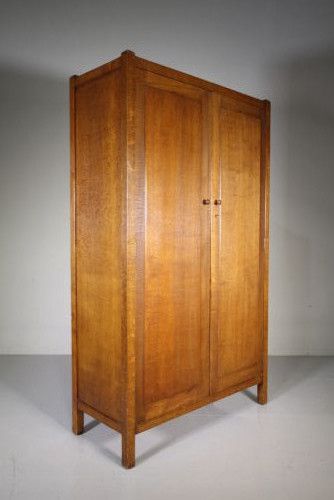
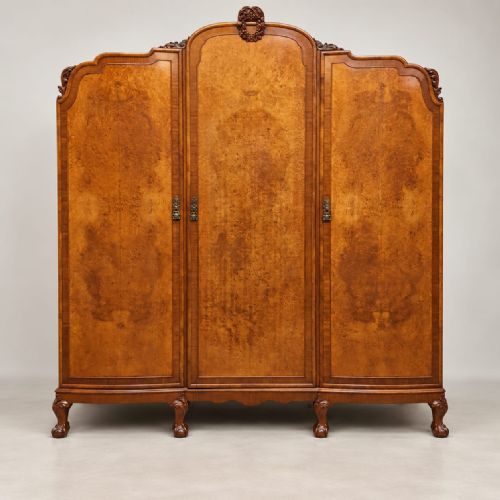
Antique Fitted Wardrobe
An antique fitted wardrobe offers substantial internal storage behind panelled doors, combining period character with compartments designed for modern hanging space.
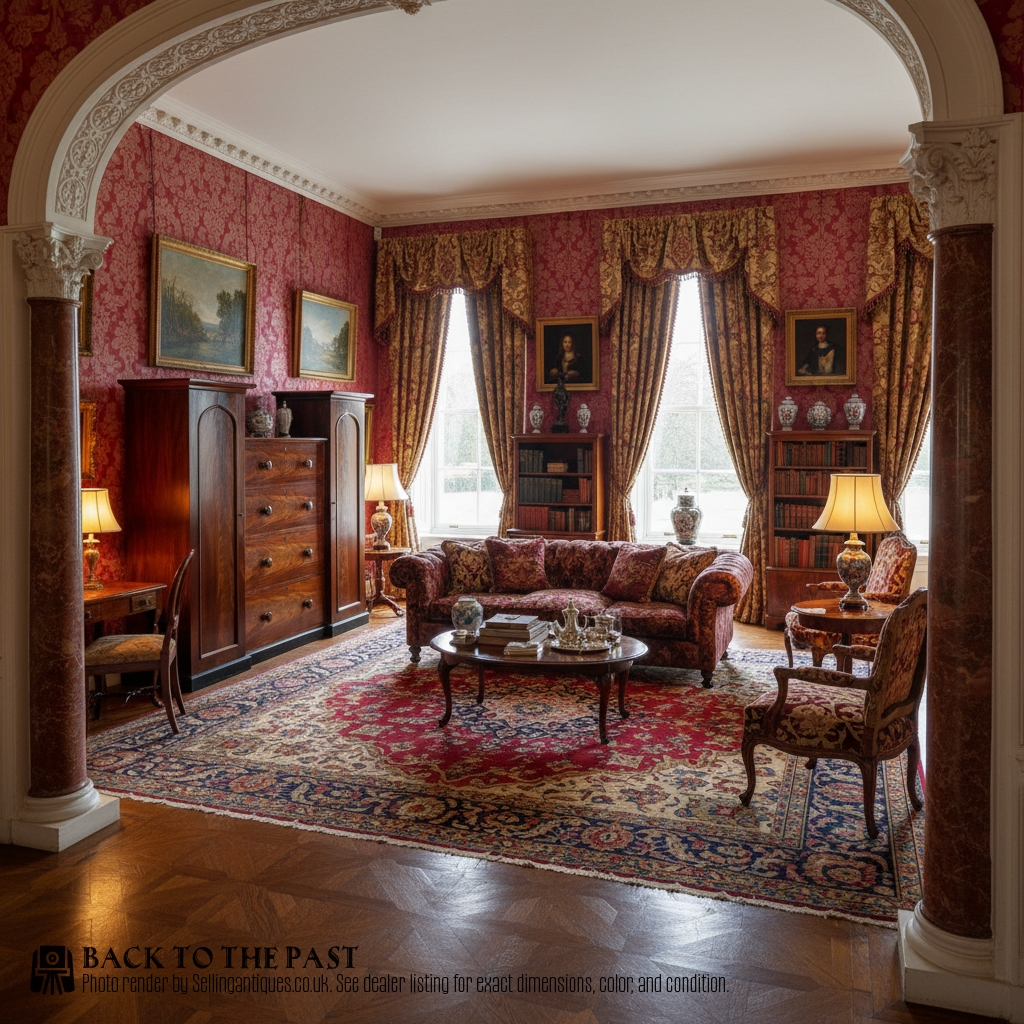
Antique Fitted Wardrobe
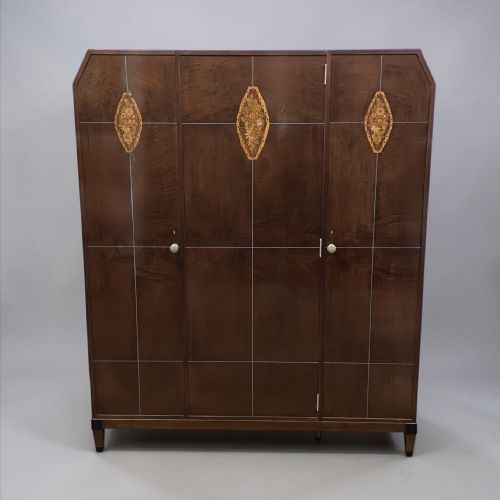
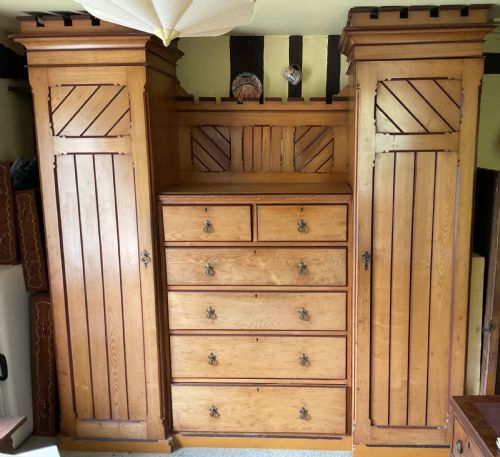
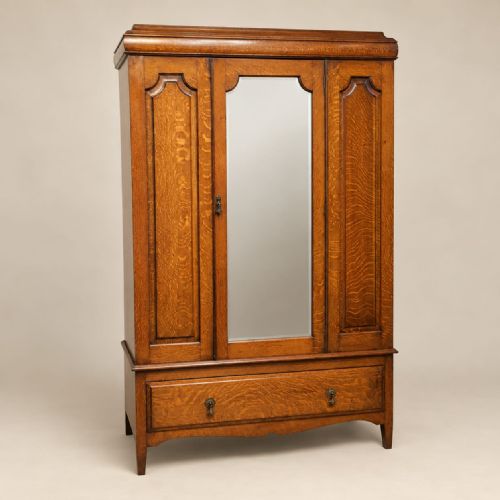
An antique fitted wardrobe provides internal compartments, drawers and hanging space enclosed within large wooden cabinet frames. These pieces span multiple decades from the Victorian and Edwardian eras through to the 1920s and Art Deco periods.
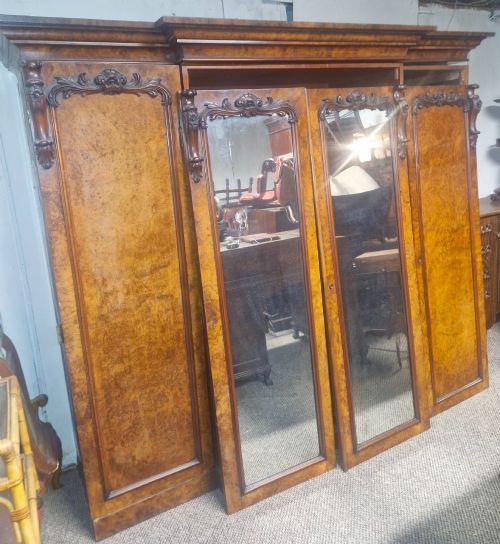
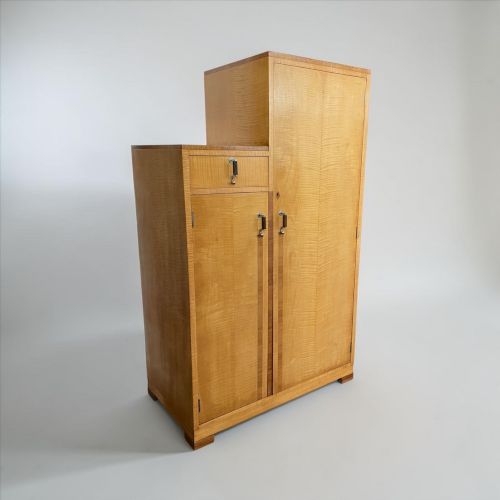
Makers constructed these storage solutions in various scales, from narrow single cabinets and double doors up to expansive triple and four-door configurations. Buyers encounter formats like compactums and combination wardrobes that integrate sliding trays or linen presses into the main carcass.
Originating as bespoke bedroom furniture for substantial homes, surviving examples reflect changing domestic requirements across the nineteenth and twentieth centuries. Oak, mahogany and burr walnut dominate the surviving selections found in current and archive records.
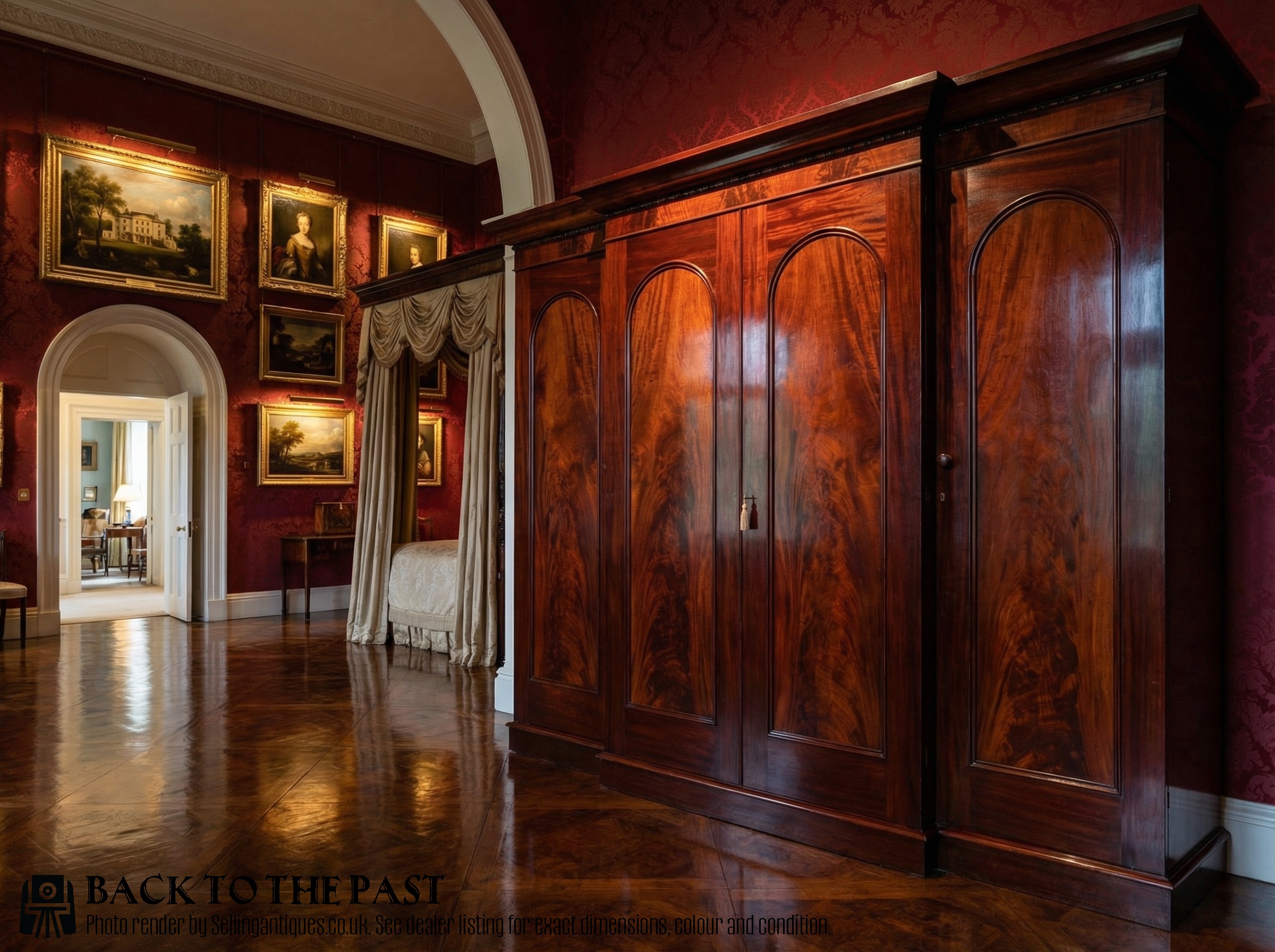
Materials and construction methods
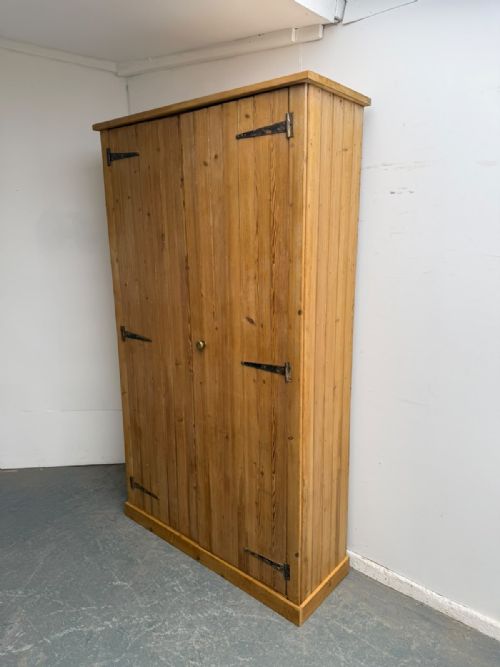
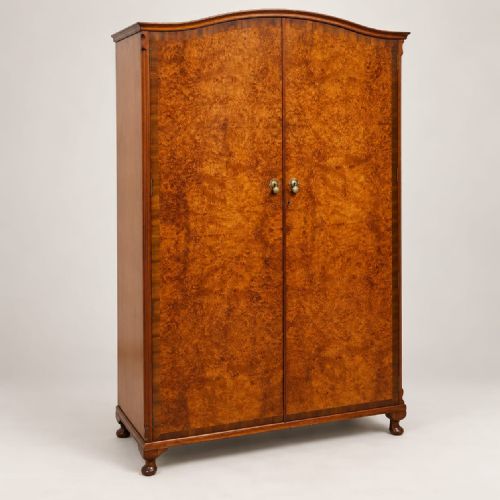
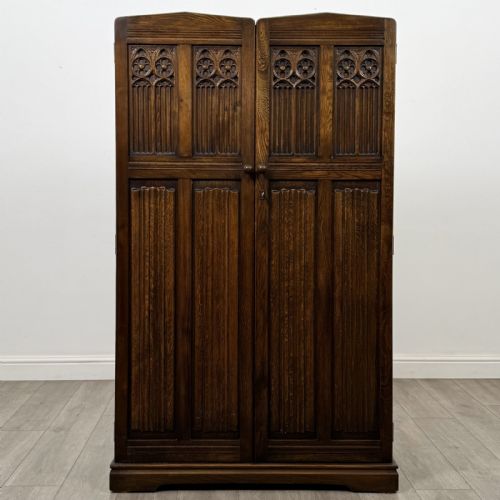
Cabinetmakers utilised solid timbers alongside decorative veneers, selecting figured mahogany, flame mahogany, burr walnut and oak for external visible surfaces. Secondary woods such as pine provided structural stability for interior shelving and drawer framing.
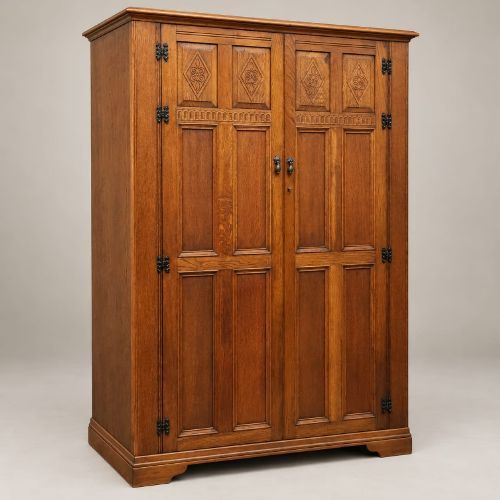
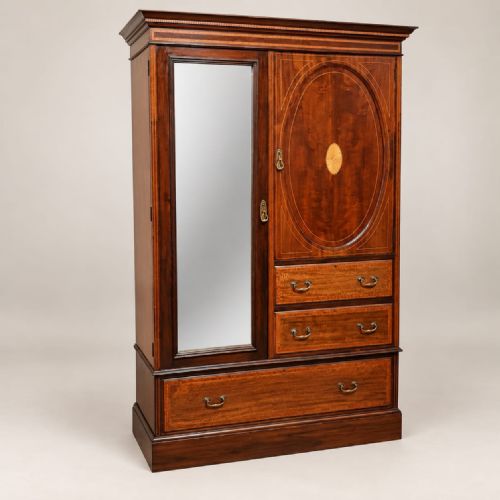
Construction involved heavy panelled doors, brass hardware and dovetail joinery on internal drawers. Makers applied satinwood stringing and mahogany crossbanding to enrich flat surfaces on Edwardian and Victorian models.
Many larger triple and breakfront wardrobes were designed as modular carcases that dismantled into manageable sections for transport and installation in domestic chambers.
Antique Fitted Wardrobe Retail Price Guide 2026
Typical asking prices for fitted wardrobe among the pieces listed under this phrase on Sellingantiques today, from the lower quarter to the upper quarter. They describe what is for sale here now, not the wider market.
Some Edwardian wardrobes travelled across oceans as cabin trunks before finding permanent homes on dry land.
Distinctions in construction and design
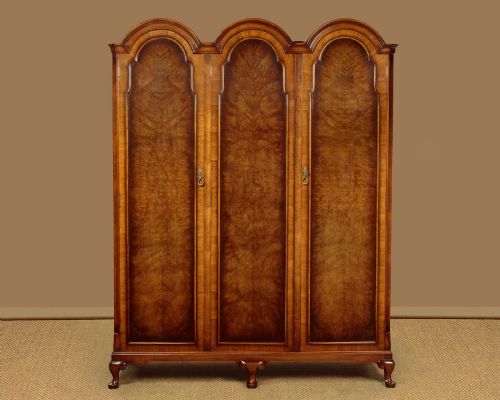
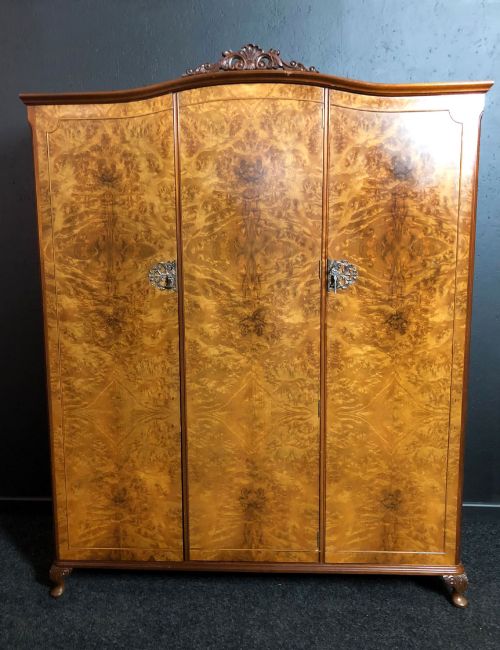
Quality rests upon the selection of timber veneers and the precision of the internal carpentry. Finer pieces display matched burr walnut or figured mahogany grains across multiple doors, creating symmetrical visual patterns.
The sophistication of the internal fittings defines superior examples, featuring dedicated spaces for gentleman's accessories, sliding linen trays and original brass hanging hooks rather than simple empty cavities.
Robust carcase construction without warping or door drop separates workshop-produced furniture by established makers from simpler utility pieces of the period.
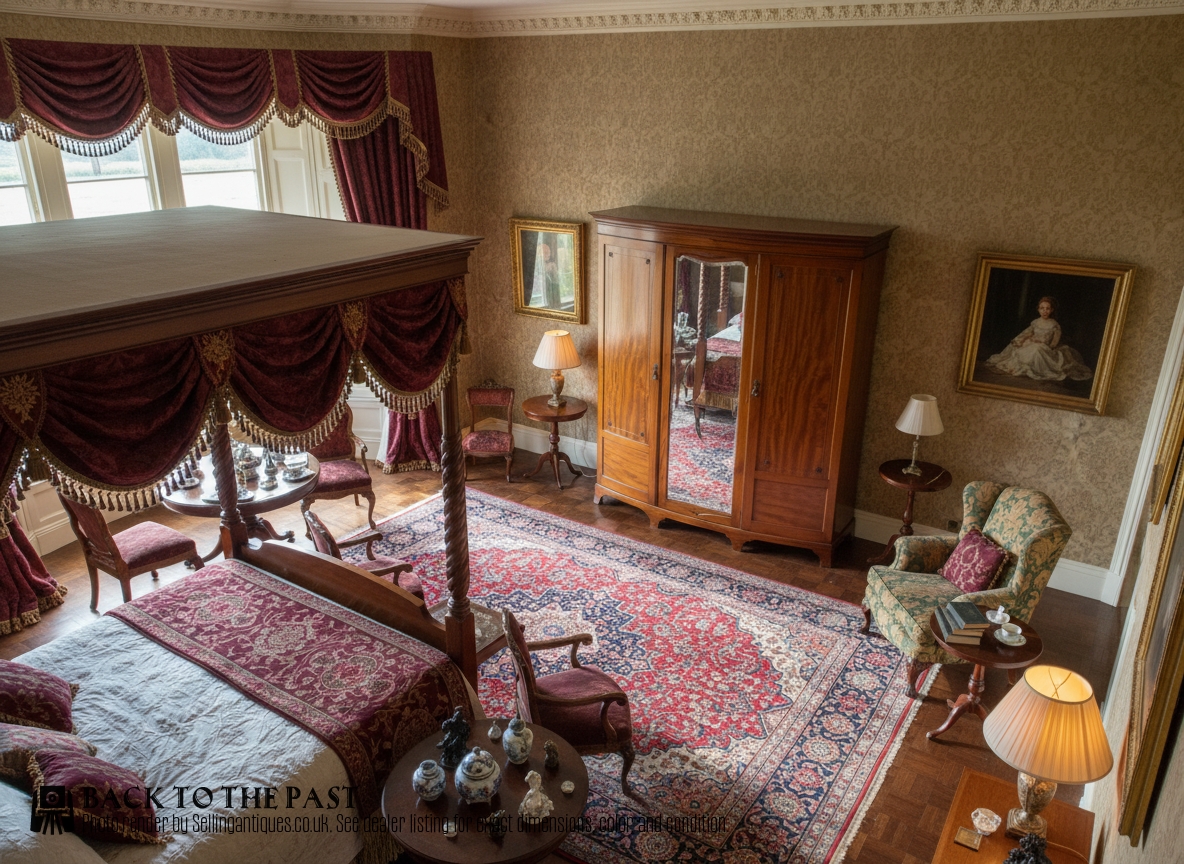
Maples and Co·Holland and Sons·Gillows·Heals·Waring and Gillows
The Antique Fitted Wardrobe Glossary
- Compactum
- A multi-section wardrobe combining hanging space, linen drawers and sliding trays within a single integrated cabinet carcass.
- Breakfront
- A cabinet design where the central section projects forward from the flanking outer doors, adding architectural depth to the façade.
- Linen Press
- A tall storage piece featuring upper cabinet doors enclosing sliding trays, positioned above a base chest of drawers.
- Satinwood
- A lustrous, yellow-toned exotic timber frequently used for contrasting stringing, banding and inlay work on mahogany furniture.
- Stringing
- Thin inlaid lines of contrasting light or dark wood used to outline panels and drawer fronts on cabinet pieces.
Antique Fitted Wardrobe: Frequently Asked Questions
Will an antique fitted wardrobe dismantle for transport?
Many large Victorian and Edwardian wardrobes were constructed to separate into a cornice, base and individual side or central carcases. This modular design allowed historical delivery up narrow stairs and into domestic bedrooms.
Buyers should verify the exact construction method of larger triple or four-door models before arranging transit into properties with restricted access.
What is a compactum wardrobe?
A compactum is a specialised multi-functional wardrobe designed to house an entire gentleman's wardrobe in one footprint. It typically combines hanging compartments with banks of internal drawers and linen slides.
These pieces frequently display sophisticated internal layouts with dedicated spaces for waistcoats, collars and shoes behind solid panelled doors.
How do I date an antique wardrobe?
Dating relies on stylistic clues, timber choices and construction techniques visible across different periods. Victorian pieces often use heavy figured mahogany, while 1920s examples favour burr walnut veneers and curved Art Deco lines.
Hardware details, dovetailing methods and the presence of maker stamps provide further evidence to narrow down the decade of manufacture.
Can I adjust the internal hanging space?
Historical wardrobes were built for period garments and often feature fixed wooden hanging pegs or shallow depths compared to modern wardrobes. Modern suits and long dresses may require careful clearance measurement.
Some interiors allow for subtle adaptations to hanging rails without altering the structural integrity of the antique cabinet.