
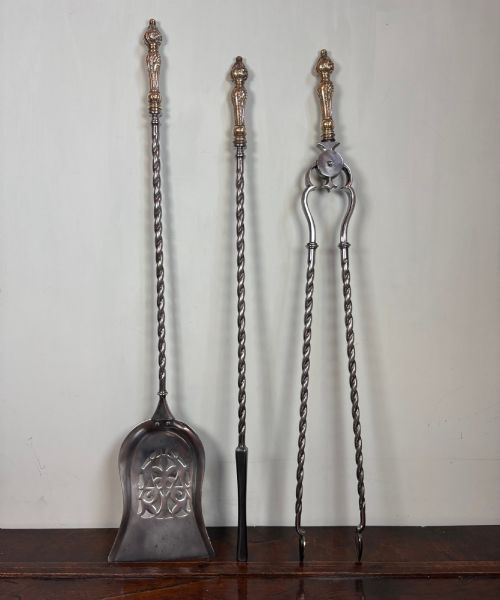
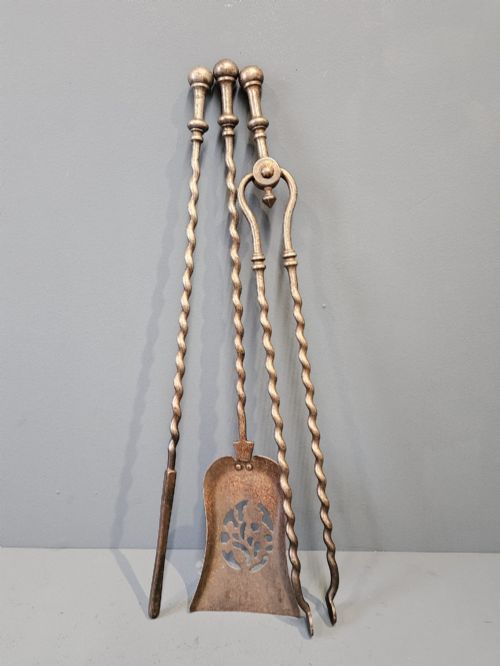
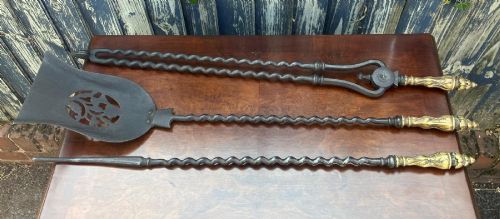
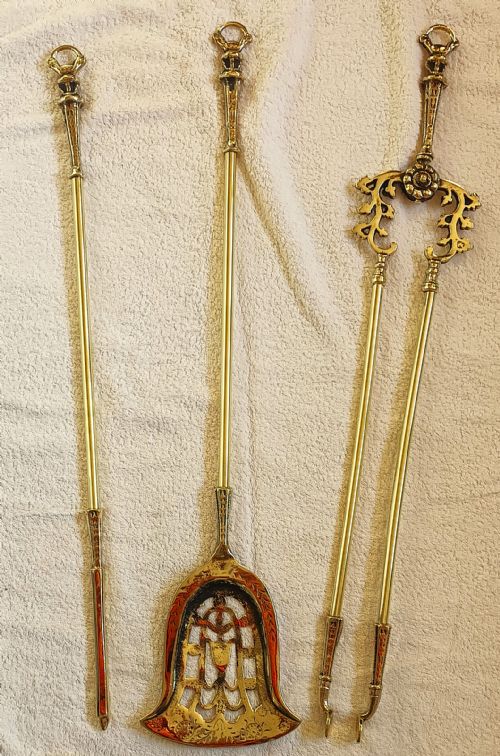
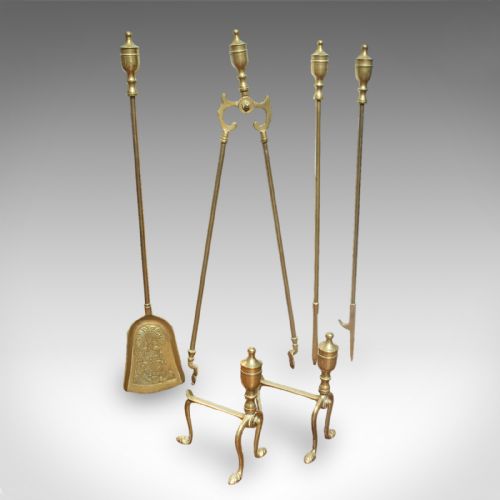


Antique Fire Tongs Poker
These antique fire tongs poker sets are the essential hearth hardware you need to manage an open fire with traditional English style.
Antique Fire Tongs Poker
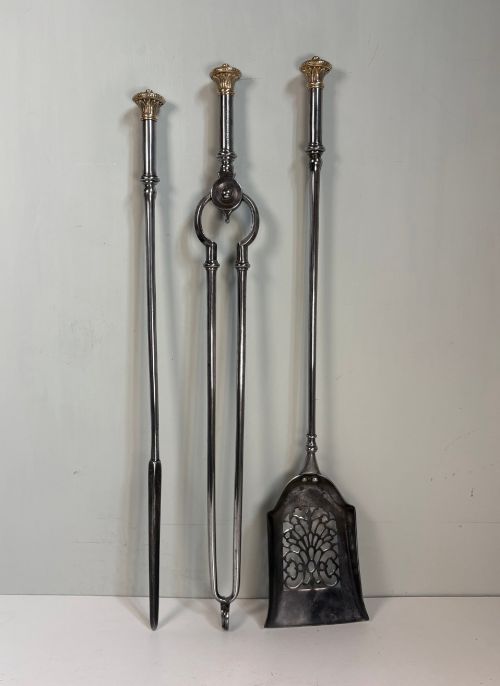
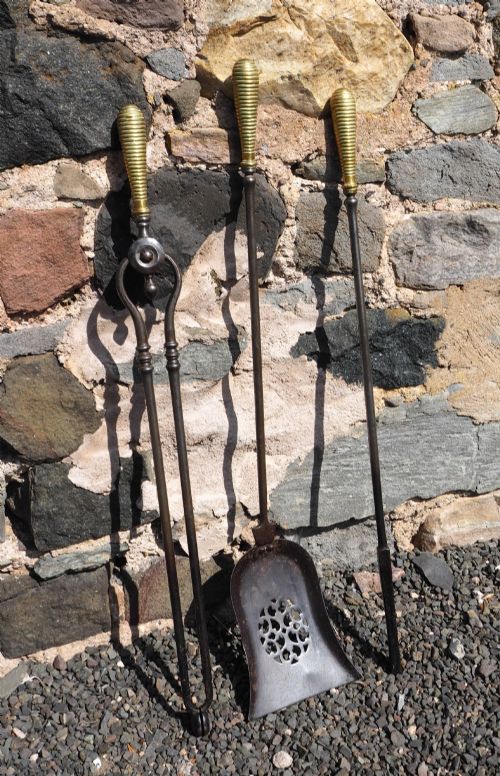
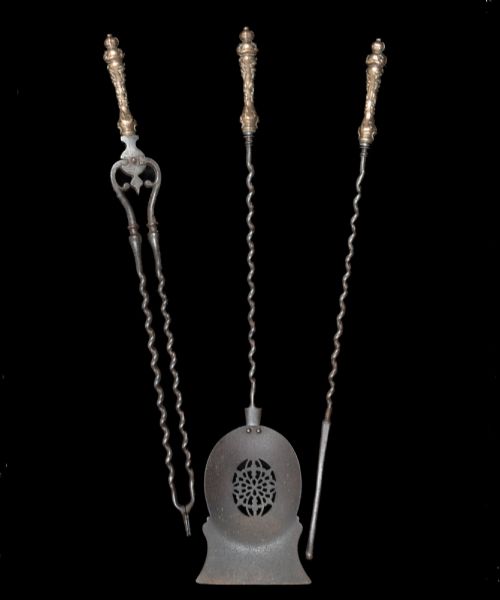
When you search for antique fire tongs poker sets, you are looking at functional hearth groupings that typically comprise a shovel, tongs, and a poker, often found together as companion sets. These assemblies surface frequently from the Georgian, Victorian, and Edwardian periods, reflecting the domestic habits of past centuries.
Assessing quality in hearth tools
The distinction between ordinary and superior pieces rests on the weight of the metal and the integrity of the joins. Heavier gauge brass and solid steel resist the bending and warping caused by decades of heavy hearth use.
Finishing separates the tiers, seen in crisp turning on handles, careful polish on steel, and the retention of original matching components within a companion set rather than assembled replacements.
Listings span multiple eras from the eighteenth century through the Edwardian period, utilising brass, steel, iron, and gunmetal.
The Antique Fire Tongs Poker Glossary
- Fire irons
- A collective term for the matching poker, tongs, and shovel used to tend a coal or wood fire.
- Companion set
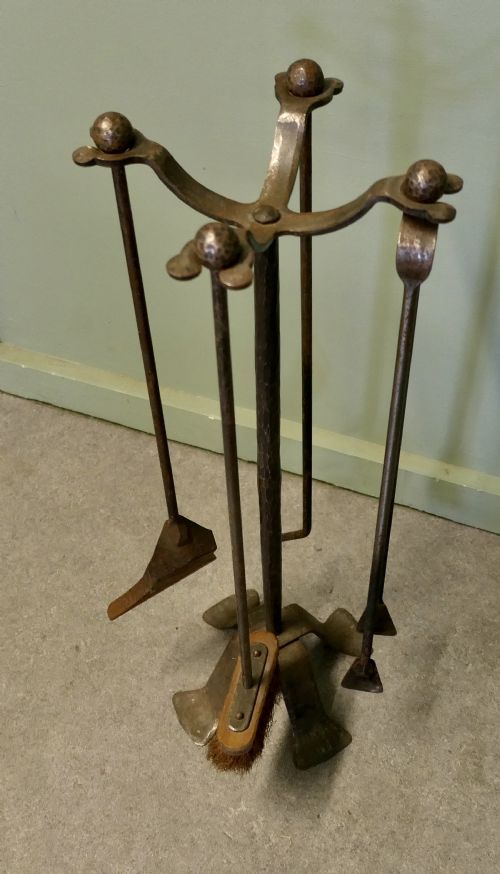
- A matched group of fireplace tools, usually held together on a dedicated stand or fender.
- Fire dogs
- Andirons placed on the hearth to support logs, frequently found listed alongside contemporary fire tool sets.
- Gilt brass
- Brass treated with a gold-coloured finish or wash to enhance its decorative appearance on formal hearths.
- Wrought iron
- Iron beaten into shape while hot by a blacksmith, characteristic of earlier utilitarian fireplace equipment.
Antique Fire Tongs Poker: Frequently Asked Questions
What tools come in a standard set?
Standard fireplace sets typically include a poker for moving fuel, tongs for grabbing logs or coal, and a shovel for clearing ash.
These three items formed the core equipment required to maintain an open fire in British homes across the Georgian and Victorian eras.
How do I date a brass fire set?
Dating relies on stylistic clues, such as the slender proportions and neoclassical lines of Regency pieces versus the heavier, more ornate casting common in later Victorian examples.
Material choices also help, as polished steel and gunmetal became more prominent alongside traditional brass towards the end of the nineteenth century.
Were these tools meant to be used?
Most surviving sets were manufactured for daily service in active fireplaces rather than purely decorative display.
Their robust construction in steel, iron, and brass allowed them to withstand regular exposure to heat and ash.
What is the difference between iron and brass sets?
Iron and wrought iron sets generally date to earlier periods or utilitarian contexts, offering a stark, dark finish suited to country houses and simpler hearths.
Brass sets provided a brighter, more formal appearance that suited the polished drawing rooms of the Victorian and Edwardian periods.