


Antique Figural Painting
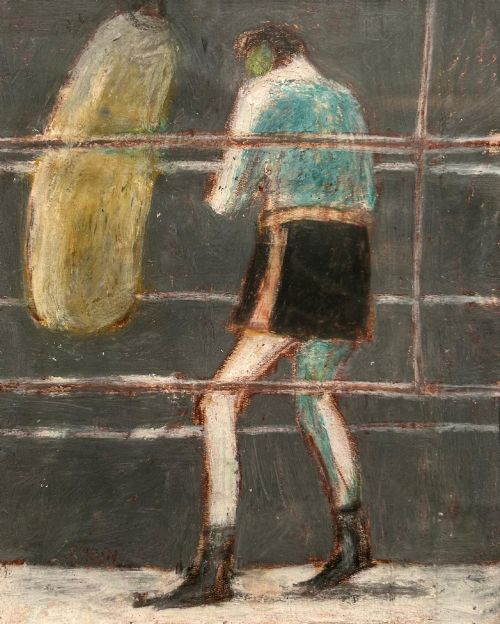
When you search for an antique figural painting, you encounter works on canvas, panel, and paper that capture human forms across several centuries.
Antique Figural Painting
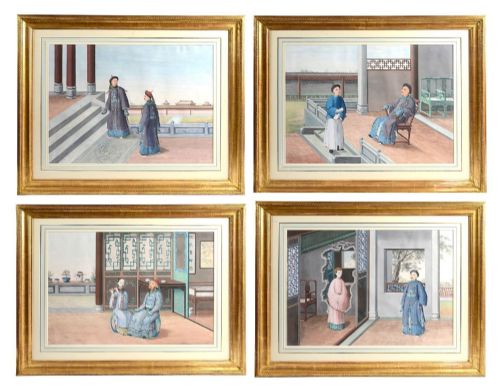
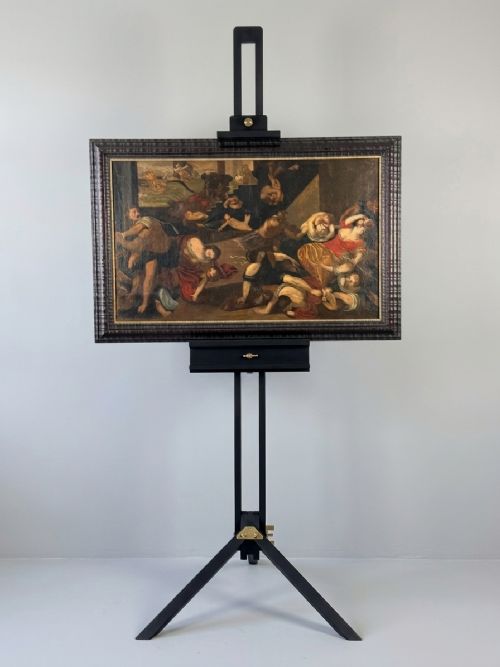
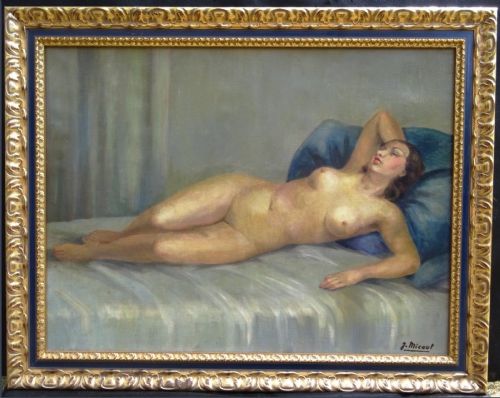
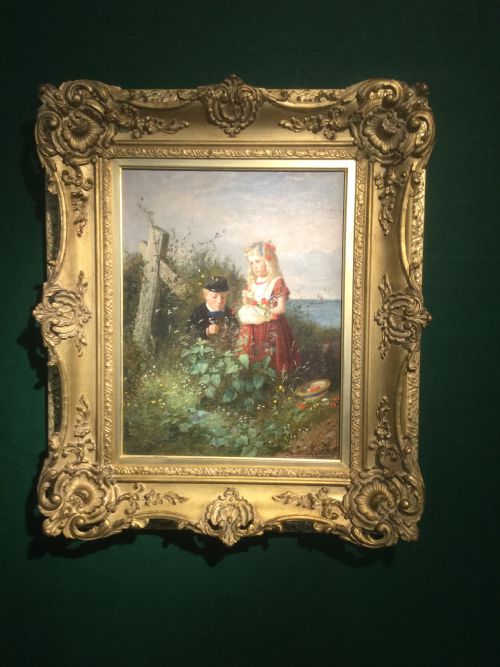
An antique figural painting centres on human subjects, ranging from formal portraits of elegant ladies to narrative scenes like historical massacres and pastoral moments. You meet works executed in oil on canvas or panel, alongside delicate pith paper paintings from the late Qing dynasty.
The pieces span the seventeenth century through to the art deco and art nouveau periods of the early twentieth century. Works by named artists such as Charles Hunt, Philip Richard Morris, John Robert Dicksee, and Georges Goursat appear alongside anonymous Chinese pith paintings.
Oil paintings share space with watercolours and gouache, reflecting diverse European and Asian traditions. The subjects include seated women, shepherds, and theatrical figures like Pierrot and Columbine.
Materials and Technique
Painters utilised oil applied to stretched canvas or wooden panels, building up layers of pigment to achieve depth and texture in portraits and narrative compositions. Watercolour and bodycolour on paper demand precise brushwork without the margin for correction that oil provides.
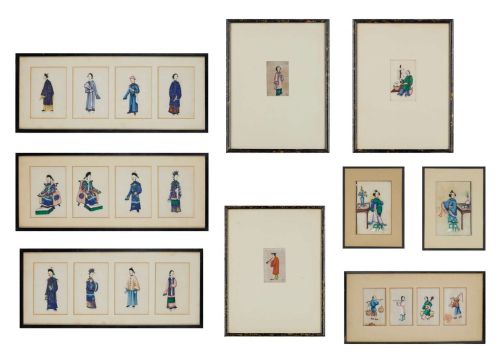
Pith paper paintings employ a delicate vegetable substrate native to China, requiring steady hands to receive opaque water-based pigments. Gold leaf and framed wooden supports complete the construction of many finished European works from the nineteenth century.
The selection includes European salon paintings alongside traditional Chinese export pith paintings from the late Qing dynasty.
Measures of Quality
The fidelity of anatomical drawing and the expressive power of the brushwork separate standard decorative works from superior artistic achievements. Subtle tonal transitions in flesh and drapery indicate a hand trained in formal academies rather than a routine workshop.
Condition plays a role, with untouched surfaces on canvas and minimal restoration to the pigment layer retaining the original character intended by the painter. The presence of a documented signature or attribution to a recorded salon-exhibiting artist elevates the standing of a piece.
Charles Hunt·L and F Moreau·Philip Richard Morris·Georges Goursat·John Robert Dicksee
The Antique Figural Painting Glossary
- Canvas
- A heavy woven fabric stretched across a wooden frame to serve as a support for oil paint. It provides a flexible yet resilient surface that accepts multiple layers of pigment.
- Panel
- A flat wooden board used as a rigid support for paintings, common in earlier European works before canvas gained dominance. It offers a smooth ground that preserves fine brush detail.
- Pith paper
- A delicate material formed from the spongy interior of plant stems, used in nineteenth-century Chinese export art. It absorbs water-based colours with a characteristic velvety brilliance.
- Watercolour
- A painting method where fine pigment is suspended in a water-soluble binder and applied to paper. Transparent washes create luminous effects unique to the medium.
- Pre-Raphaelite Movement
- A nineteenth-century association of English painters dedicated to detailed observation of nature and vibrant colour. Their works reject academic conventions in favour of Quattrocento sincerity.
Antique Figural Painting: Frequently Asked Questions
What defines an antique figural painting?
These works feature human subjects as the primary focus, executed in media such as oil, watercolour, or pith paper.
They originate from periods spanning the seventeenth century to the early twentieth century across European and Asian workshops.
How should I display an oil on canvas?
Keep paintings away from direct sunlight and dramatic shifts in relative humidity to protect the canvas and pigment layers.
Ensure the wooden stretcher remains properly adjusted and hang the piece using sturdy wall fixings suited to the weight of the frame.
Are pith paintings fragile?
The vegetable substrate is inherently delicate and sensitive to physical pressure or excessive moisture.
Framing under glass with adequate spacing prevents direct contact and protects the surface from atmospheric dust.
How do I identify the period of a portrait?
Examine the style of dress, hair, and interior furnishings depicted within the composition alongside the framing materials.
Signatures, artist dates, and stretcher construction methods provide further clues for dating the work.