




Antique Figural Clock
An antique figural clock brings sculptural presence to a room, combining timekeeping with bronze, marble and classical figures.
Antique Figural Clock
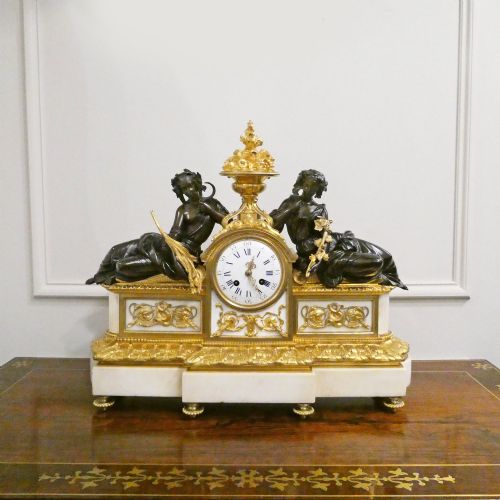
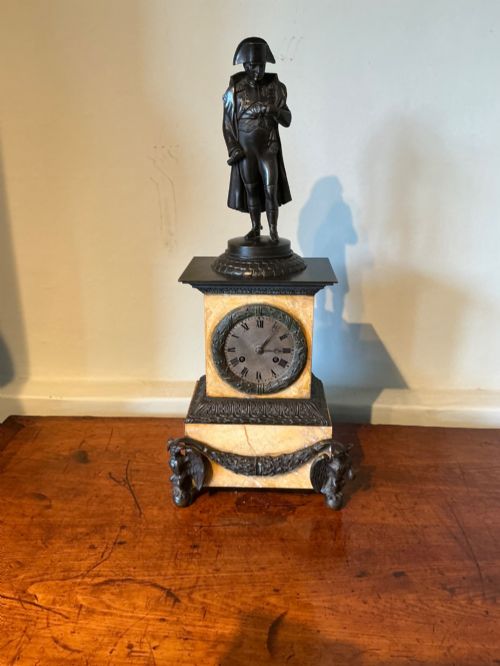
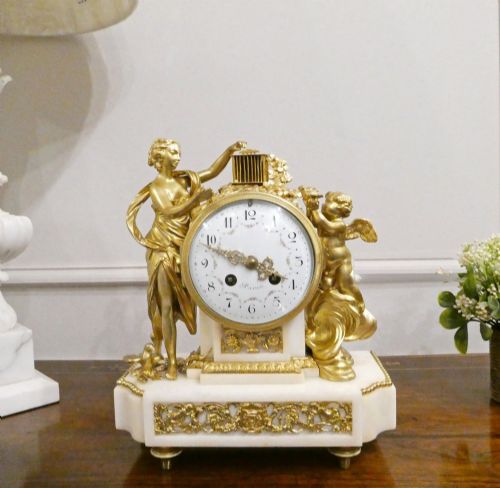
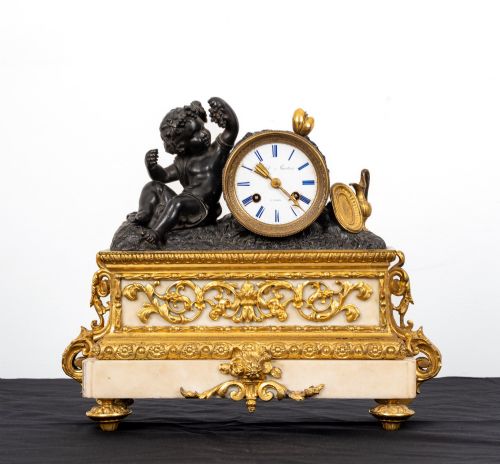
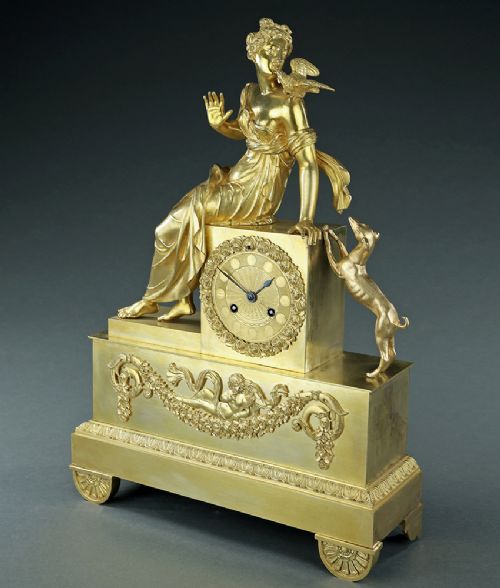
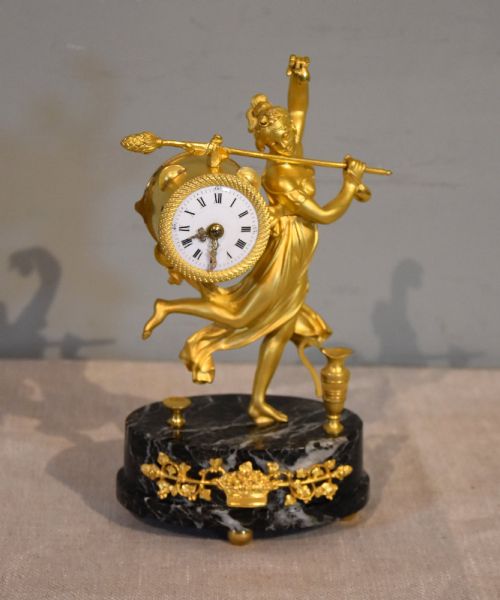
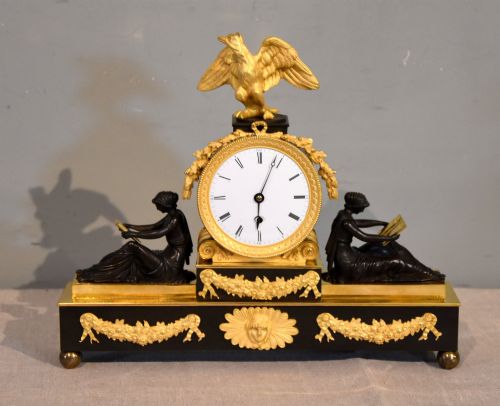
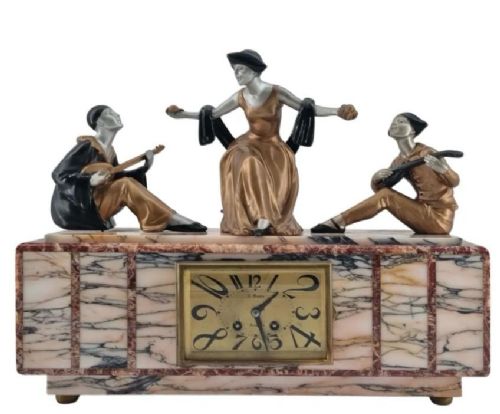
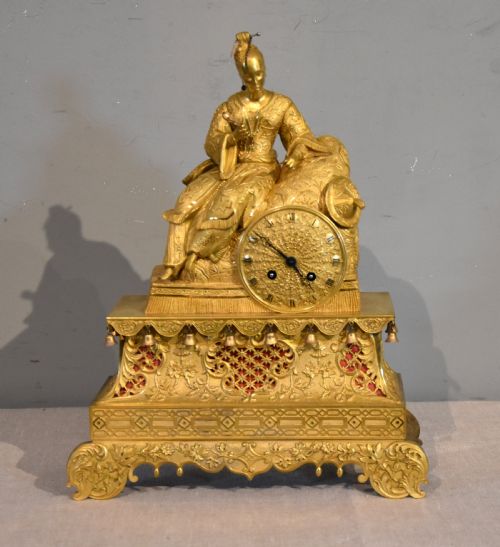
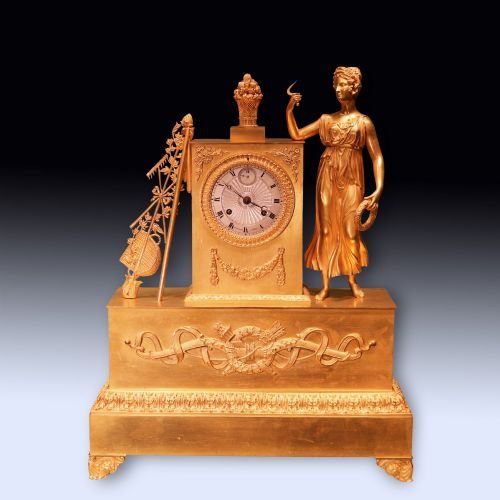
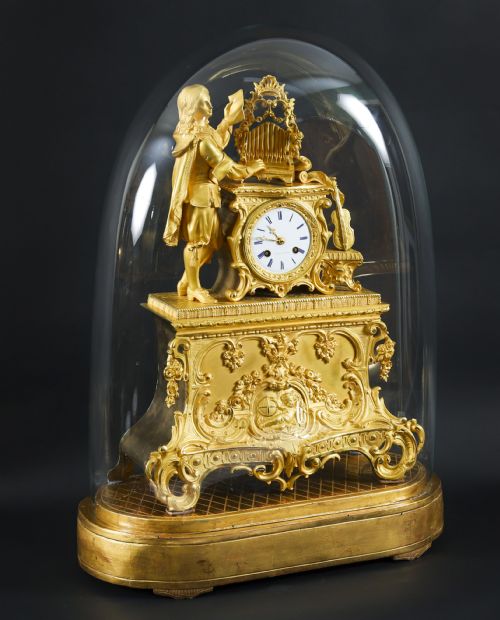
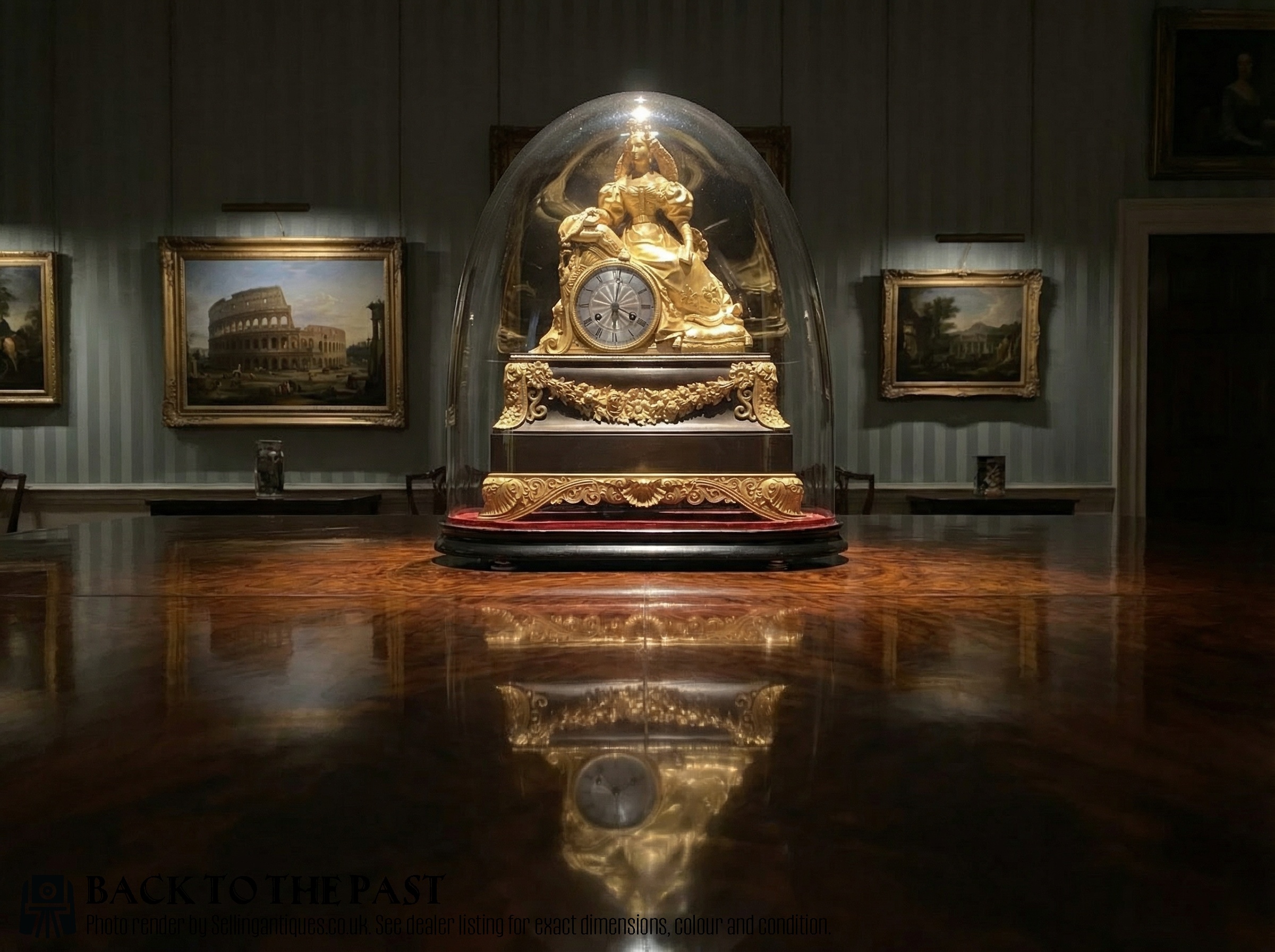
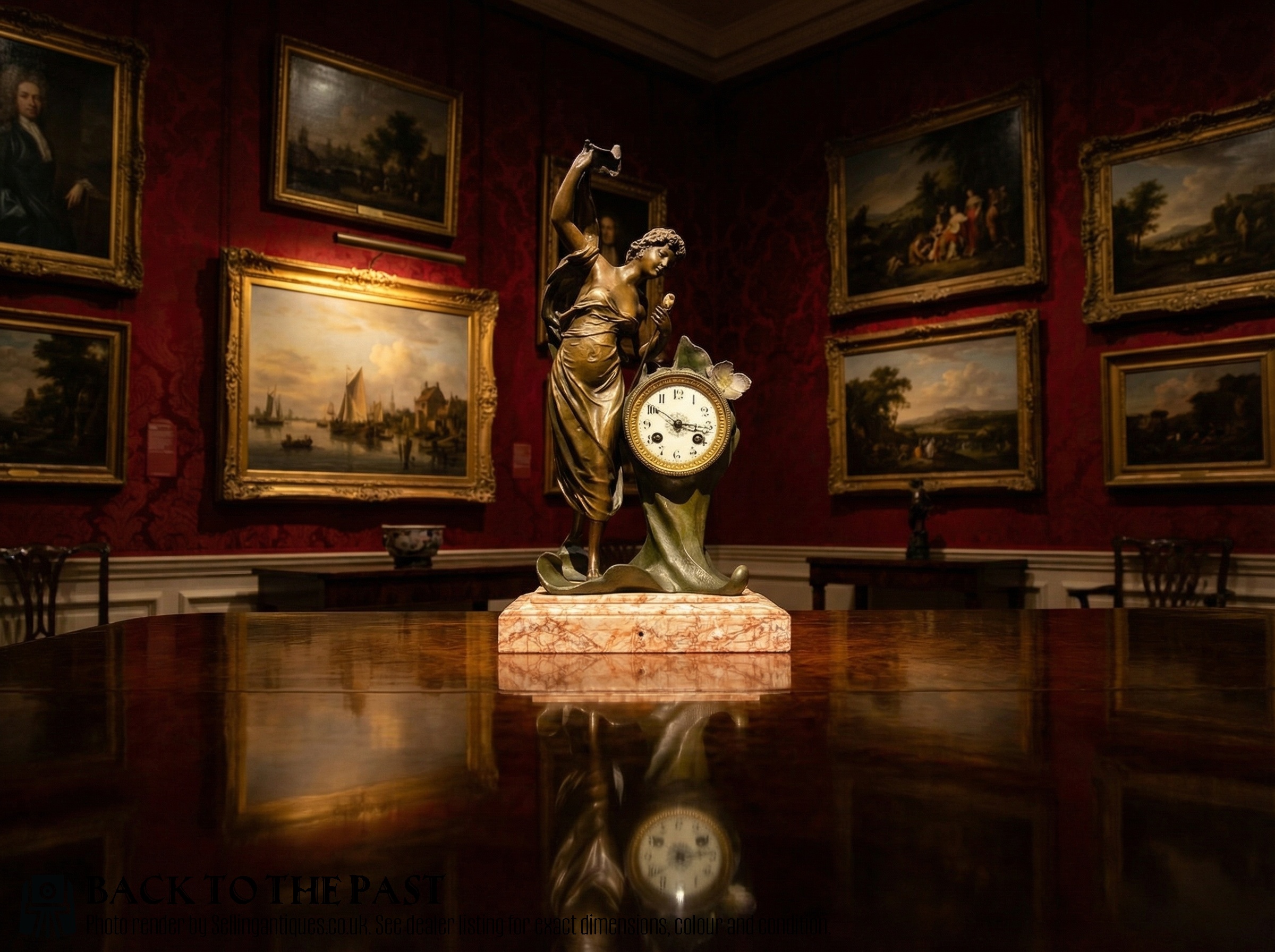
An antique figural clock combines a mechanical timepiece with cast or carved sculptural subjects, most frequently taking the form of mantel clocks and garniture sets. These pieces range from nineteenth-century French productions featuring mythological or historical figures to English Regency brass timepieces and carved Swiss linden wood clocks.
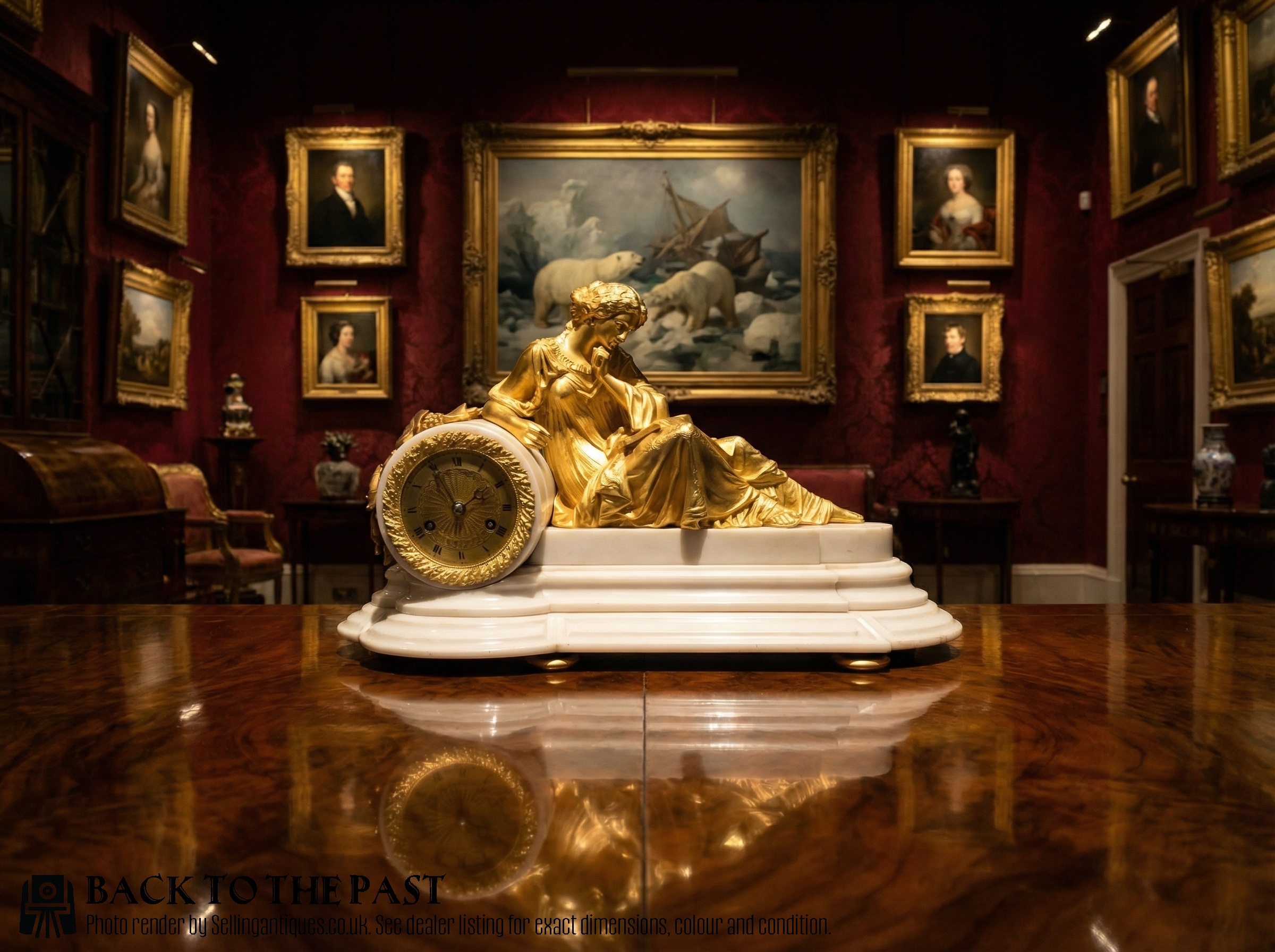
The sculptural elements often depict classical allegories, animals or notable figures such as Napoleon and various deities. On this page, French examples in Louis XVI style, Empire style and Rococo Revival appear alongside Victorian and Regency variants, housed in housings of marble, ormolu and bronze.
Buyers encounter single mantel clocks as well as larger three-piece clock sets that include matching side garnitures. These objects served as functional centrepieces for drawing rooms and mantelpieces during the nineteenth century, uniting horology with decorative art.
What Varies in Quality
The integration of materials also defines the tier of a clock. High-grade items feature substantial marble bases, fire-gilt ormolu with deep lustre and signed movements by known makers, while simpler versions rely on gilt metal and unmarked movements.
Antique Figural Clock Retail Price Guide 2026
Typical asking prices for figural clock among the pieces listed under this phrase on Sellingantiques today, from the lower quarter to the upper quarter. They describe what is for sale here now, not the wider market.
Materials recorded across current items include white and green marble, onyx, linden wood, enamel, brass, bronze and ormolu.
Vincenti·Siffel and Cartier·Baetens London·Sega·Canaillor of Paris·Japy Freres·Leroy Paris·Bergen and Co·Lemerle Charpentier·Robert A Paris
The Antique Figural Clock Glossary
- Ormolu
- Gilded bronze produced by applying a mercury and gold mixture to a bronze casting and heating it until the mercury evaporates. This technique creates a rich golden finish characteristic of French nineteenth-century decorative arts.
- Garniture
- A set of matching decorative objects designed to be displayed together on a mantelpiece, typically comprising a central clock flanked by two matching vases or urns.
- Spelter
- A zinc alloy used as a less costly alternative to bronze for casting figures and decorative mounts, frequently painted or electroplated to resemble bronze.
- Fusee
- A conical pulley used in clock movements to equalize the declining power of the mainspring as it unwinds, ensuring more accurate timekeeping.
- Dial
- The face of the clock where the hours and minutes are displayed, often constructed from enamel on copper with painted numerals.
Antique Figural Clock: Frequently Asked Questions
How do I wind an antique figural clock?
Most mechanical clocks require a specialised key inserted into the winding arbours on the dial face. Turn the key gently until resistance indicates the mainspring is fully wound.
Take care not to overwind the movement, as this can strain the internal spring. Many nineteenth-century French movements use a pendulum that must be secured or removed if the clock is moved.
What periods are common for figural clocks?
The majority of pieces date from the nineteenth century, spanning the Regency, Victorian, Empire and Louis XVI revival periods. French workshops produced a high volume of these decorative items between eighteen-board and nineteen-hundred.
Earlier examples from the beginning of the nineteenth century feature distinct neoclassical proportions. Later Victorian and fin-de-siecle pieces often incorporate varied marbles and specialised patinated bronzes.
How should I clean ormolu and bronze?
Dust surfaces gently with a soft, dry brush to prevent accumulation in crevices and chased details. Avoid harsh chemical cleaners or abrasive cloths that can strip surface gilding or patination.
Ormolu tolerates mild soapy water if dried immediately, but delicate gilt surfaces require professional care. Keeping the clock away from direct sunlight and moisture preserves both the metal and the marble.
What is a clock garniture set?
A clock garniture is a matched suite consisting of a central mantel clock accompanied by two side pieces, such as urns or candelabra. These sets were designed to create a balanced display across a mantelpiece or sideboard.
The side pieces share the materials, decorative motifs and base design of the main clock. They became particularly popular during the Victorian period in grand drawing rooms.