


Antique Figural Candleholders
Antique figural candleholders bring sculpted human and animal forms to the table, combining functional lighting with ornamental drama.
Antique Figural Candleholders
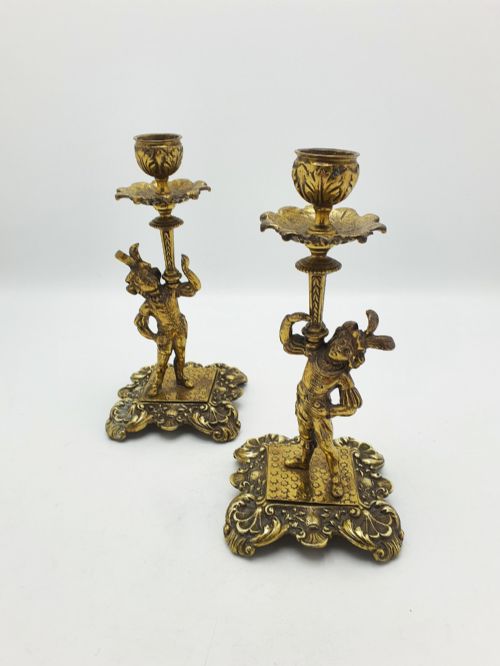
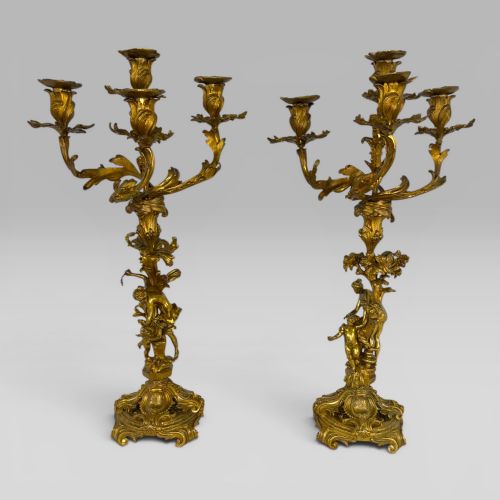
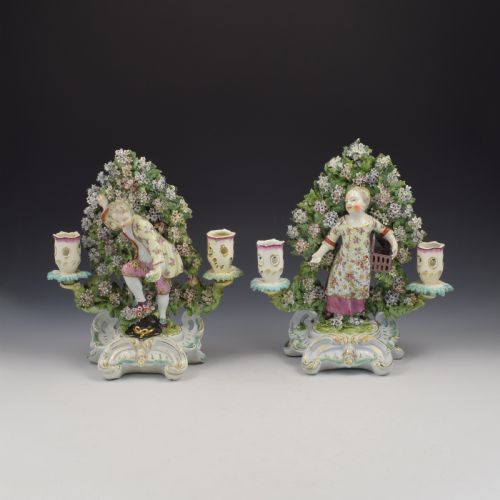
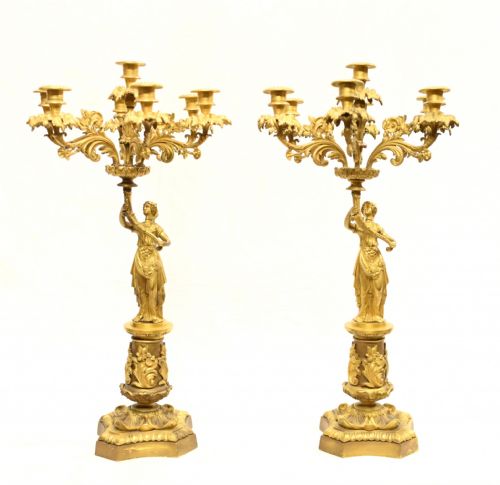
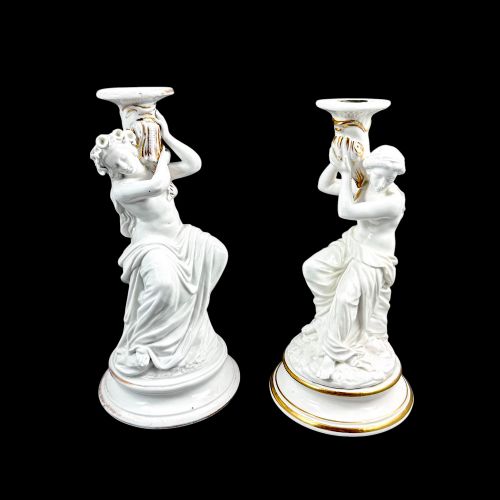
These pieces merge practical lighting with sculptural figures, taking the form of single candlesticks or multi-branch candelabra. When searching for antique figural candleholders, buyers encounter works shaped as human figures, cherubs, mermen, storks and children.
The selection ranges from porcelain figures produced by European factories to cast metal works in brass, bronze and spelta. English potteries and continental European makers dominate the forms seen across the periods.
Victorian and nineteenth-century examples appear frequently alongside earlier eighteenth-century porcelain pairs. Styles stretch from Rococo Revival and Louis XVI to Renaissance Revival and Neo-Gothic.
Materials and construction methods
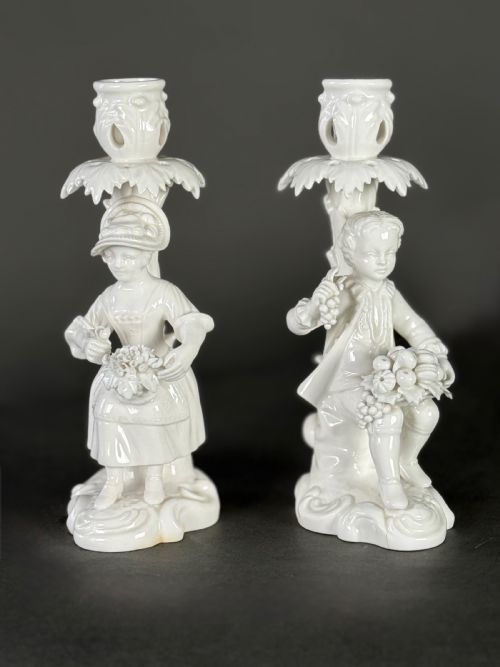
Metal pieces rely on casting techniques using brass, bronze, ormolu and spelter, often finished with gilt or silver plating. Porcelain examples involve hard paste ceramics, sometimes enhanced with enamel colours, bocage foliage backgrounds and hand-painted details.
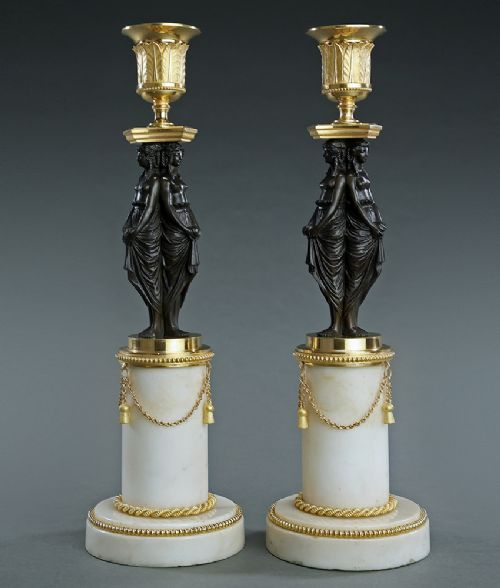
Makers combined sculpted elements with structural sockets and drip pans to catch melting wax. Details like caryatids, soldiers and animals were cast or modelled separately before assembly into the final candelabra frame.
Storks and mermen take turns holding the lights alongside classical maidens and garden children.
Distinguishing quality in sculptural lighting
The depth of the gilding or the richness of the hand-painted enamel decoration marks the distinction between standard items and high-end atelier output. Balance and proportion in the sculptural figures dictate visual success.
Sitzendorf·Meissen·Minton·Royal Worcester Hadley·Triebner ENS & Eckert Volkstedt
The Antique Figural Candleholders Glossary
- Candelabra
- A branched candlestick holding multiple lights. These branch arms extend from a central stem or figural support.
- Caryatid
- A sculpted female figure serving as an architectural support. In lighting, these figures act as the main stem of the candlestick.
- Ormolu
- Gilt bronze produced by applying a mercury-gilding mixture to cast bronze. This technique creates a rich golden surface finish.
- Spelter
- An alloy of zinc and lead used as a cheaper substitute for bronze. It was cast into sculptural figures and painted or electroplated.
- Bocage
- Applied ceramic foliage and flowers forming a background arbour behind porcelain figures. It appears frequently on eighteenth and nineteenth-century German and English pieces.
Antique Figural Candleholders: Frequently Asked Questions
What materials were used for antique figural candleholders?
Makers utilised hard paste porcelain, bronze, brass, ormolu and spelter. Many pieces also incorporated marble bases and silver plating.
Porcelain examples often featured hand-painted enamel details and applied ceramic foliage known as bocage.
How do I identify the period of a figural candlestick?
Stylistic clues such as Rococo Revival curves or Renaissance Revival motifs point to the nineteenth century. Porcelain marks and the method of metal casting help narrow the decade of production.
Clothing styles on the figural sculptures also reflect the prevailing aesthetic of their manufacturing era.
Were these pieces meant for dining tables or mantelpieces?
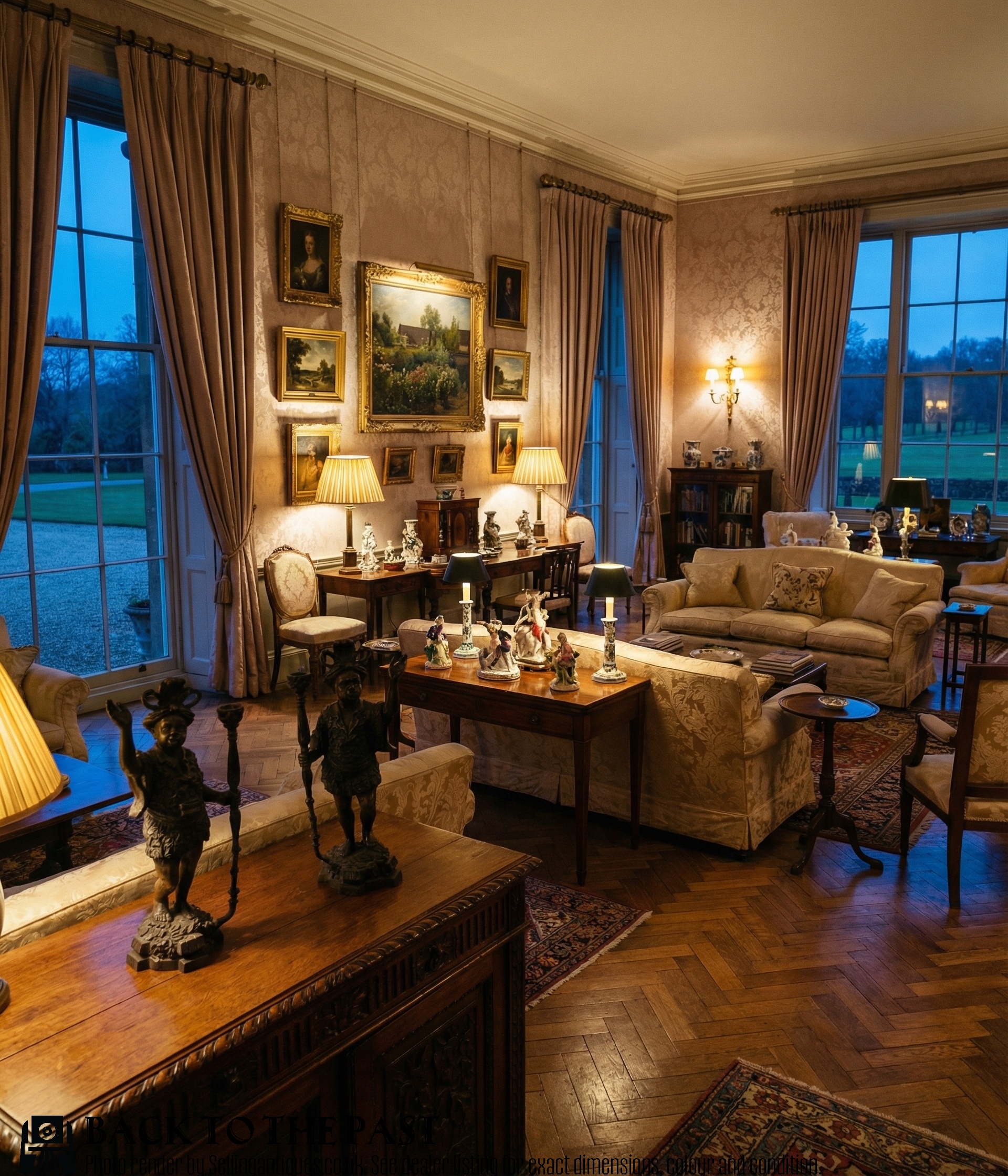
Larger candelabra served as decorative sculptural elements for mantelpieces and sideboards. Pairs of candlesticks provided functional illumination on dining tables and desks.
Their dual role as sculpture and lighting made them central decorative objects in period rooms.