





Antique Farmyard Animal Canvas
These antique farmyard animal canvas works capture rural life through oil paint, offering a glimpse into nineteenth and early twentieth century agrarian scenes.
Antique Farmyard Animal Canvas
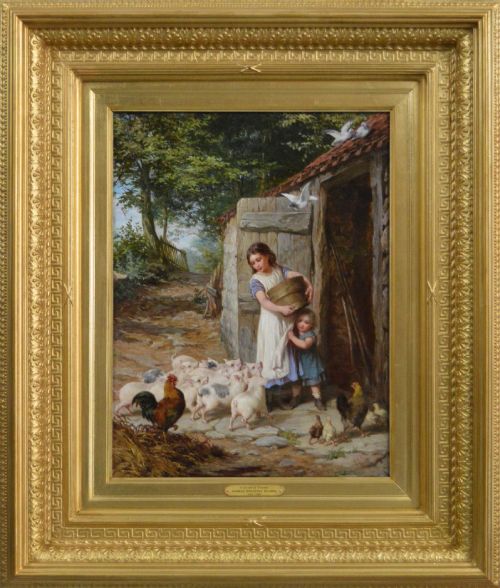
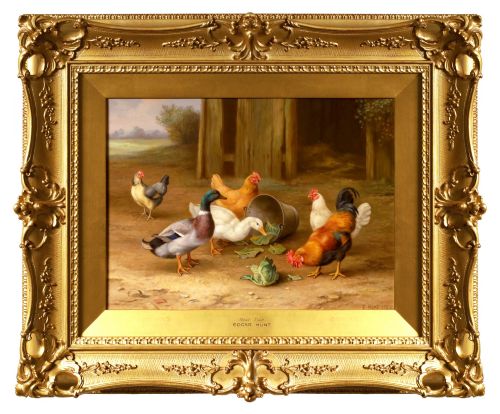
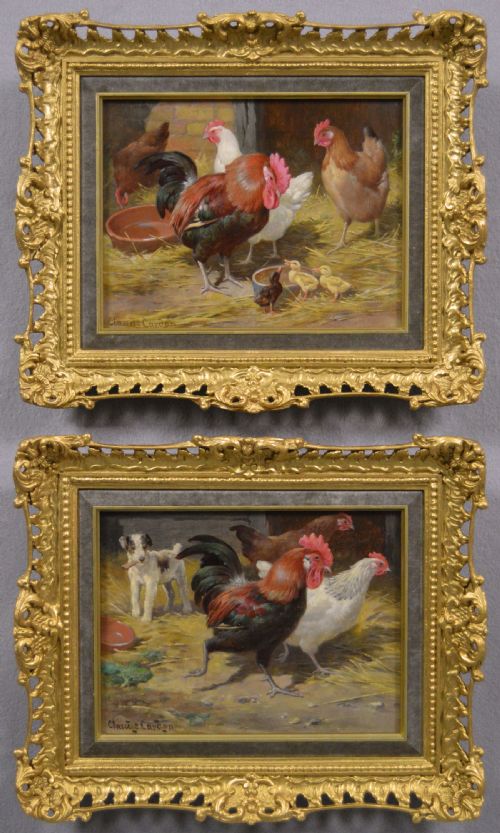
An antique farmyard animal canvas depicts domestic livestock and poultry within rural landscapes, often featuring horses, pigs, chickens, ducks and cattle. These paintings document agrarian life through traditional oil painting techniques on canvas supports.
The pieces on this page span the Victorian and Edwardian eras, with dates reaching from the nineteenth century into the twentieth century. Common subjects range from quiet poultry groups to bustling farmyard scenes with multiple animal species and figures.
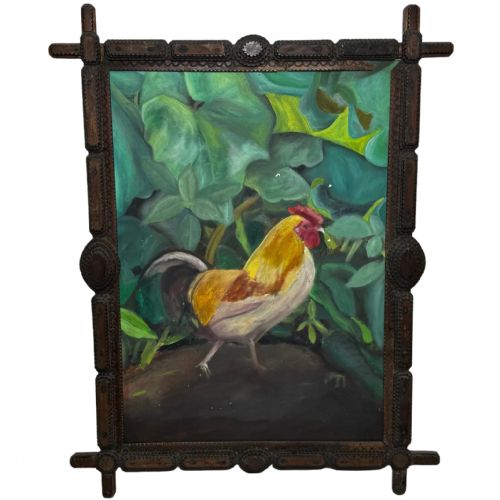
Makers represented in these listings include established painters of animalier subjects and genre scenes. Alongside named British artists, the selection includes continental folk art and nineteenth century landscape works.
How They Were Made
These works are executed in oil paint on woven canvas stretched over wooden frames. The medium allows for fine detail in animal textures, feather rendering and atmospheric landscape backgrounds.
Many canvases are housed within original giltwood or gold leaf wood frames, which complement the warm palettes of the paintings. The combination of oil paint and layered wood framing defines the physical structure of these pieces.
What Varies in Quality
Quality in these oil paintings rests upon the precision of draughtsmanship in rendering animal anatomy and the vitality of the composition. Works by accomplished artists display careful handling of light across feathers, hides and country landscapes.
The condition of the canvas surface and the preservation of the original oil pigments influence the visual impact. Additionally, the craftsmanship of the accompanying giltwood frame contributes to the overall integrity of the piece.
George Augustus Holmes·Edgar Hunt·Claude Cardon·Percival Glenfern·John Frederick Herring·Pierre Emmanuel Dielmans·John Frederick Herring Jnr·J L VAN Leemputten
The Antique Farmyard Animal Canvas Glossary
- Animalier
- A style of art dedicated to the realistic representation of animals. This term applies to painters and sculptors who focused on wildlife and domestic livestock.
- Genre Realism
- A style depicting scenes from everyday life with a high degree of fidelity. In these paintings, farmyard activities and rural chores form the primary subject matter.
- Giltwood
- Wood that has been covered with a thin layer of gold leaf or gold paint. Frames finished in this manner are frequently found enclosing nineteenth century oil paintings.
- Oil on Canvas
- A painting medium where pigments are suspended in a drying oil, applied to a stretched canvas support. This technique permits subtle blending and rich colour depth.
Antique Farmyard Animal Canvas: Frequently Asked Questions
How do I identify a Victorian farmyard canvas?
Victorian farmyard canvases are typically identified by their realist painting style, subject matter involving domestic livestock and poultry, and specific nineteenth century framing materials like giltwood.
Examination of the canvas weave and the backing wood can also provide clues to the period of origin.
Who are the prominent artists in this category?
Prominent artists associated with these works include Edgar Hunt, John Frederick Herring and Claude Cardon. These painters specialised in animalier and genre realist subjects during the nineteenth and early twentieth centuries.
Their works often feature meticulous detail in rendering poultry, horses and farmyard animals.
What materials were used to frame these paintings?
Many of these oil paintings retain their original wooden frames finished with gold leaf or giltwood. These frames were designed to complement the warm tones of the oil paint on canvas.
The craftsmanship of the frame often matches the period of the painting itself.
Where were these rural art styles popular?
These pastoral and animalier painting styles were particularly prominent in Britain during the Victorian and Edwardian periods. Similar folk art traditions also flourished in continental Europe, such as Spanish folk art.
Artists frequently drew inspiration from actual rural farm environments and country landscapes.