



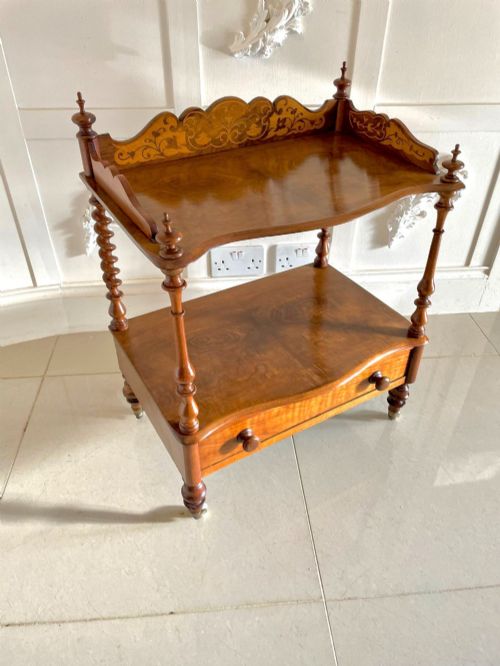

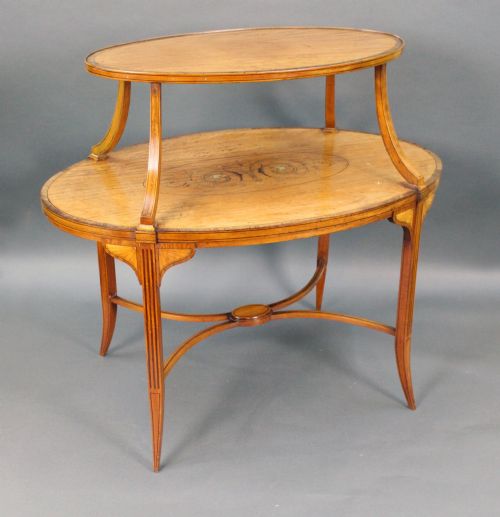
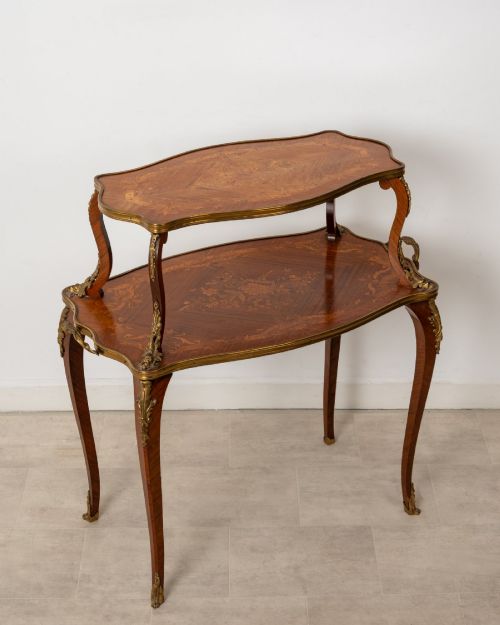
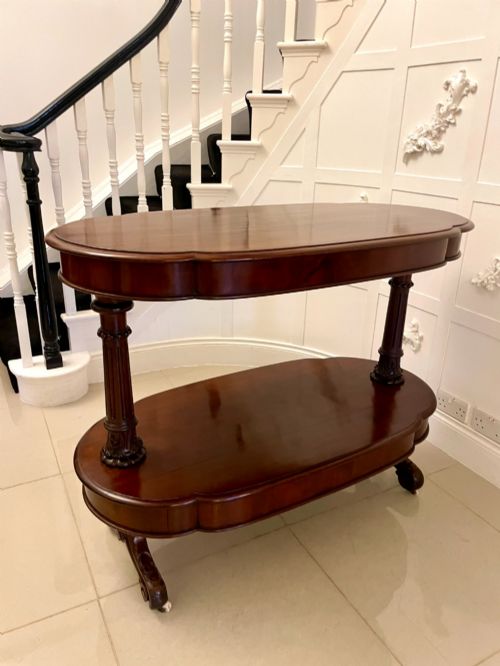
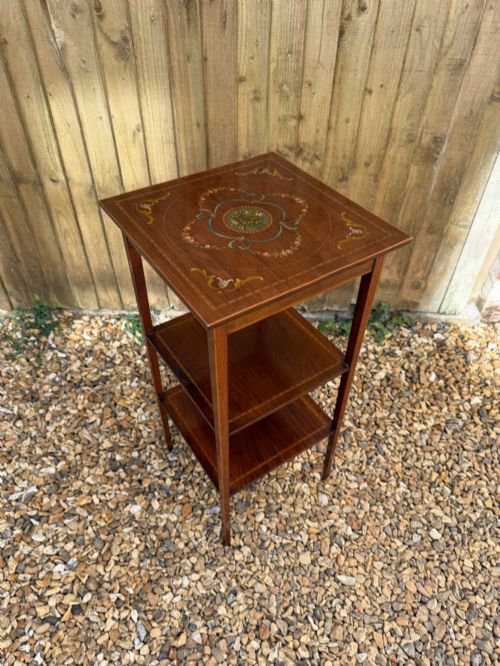
Antique Etagere Side Table
An antique etagere side table brings tiered display space and open shelving to a room, combining the utility of a table with the vertical lines of a small cabinet.
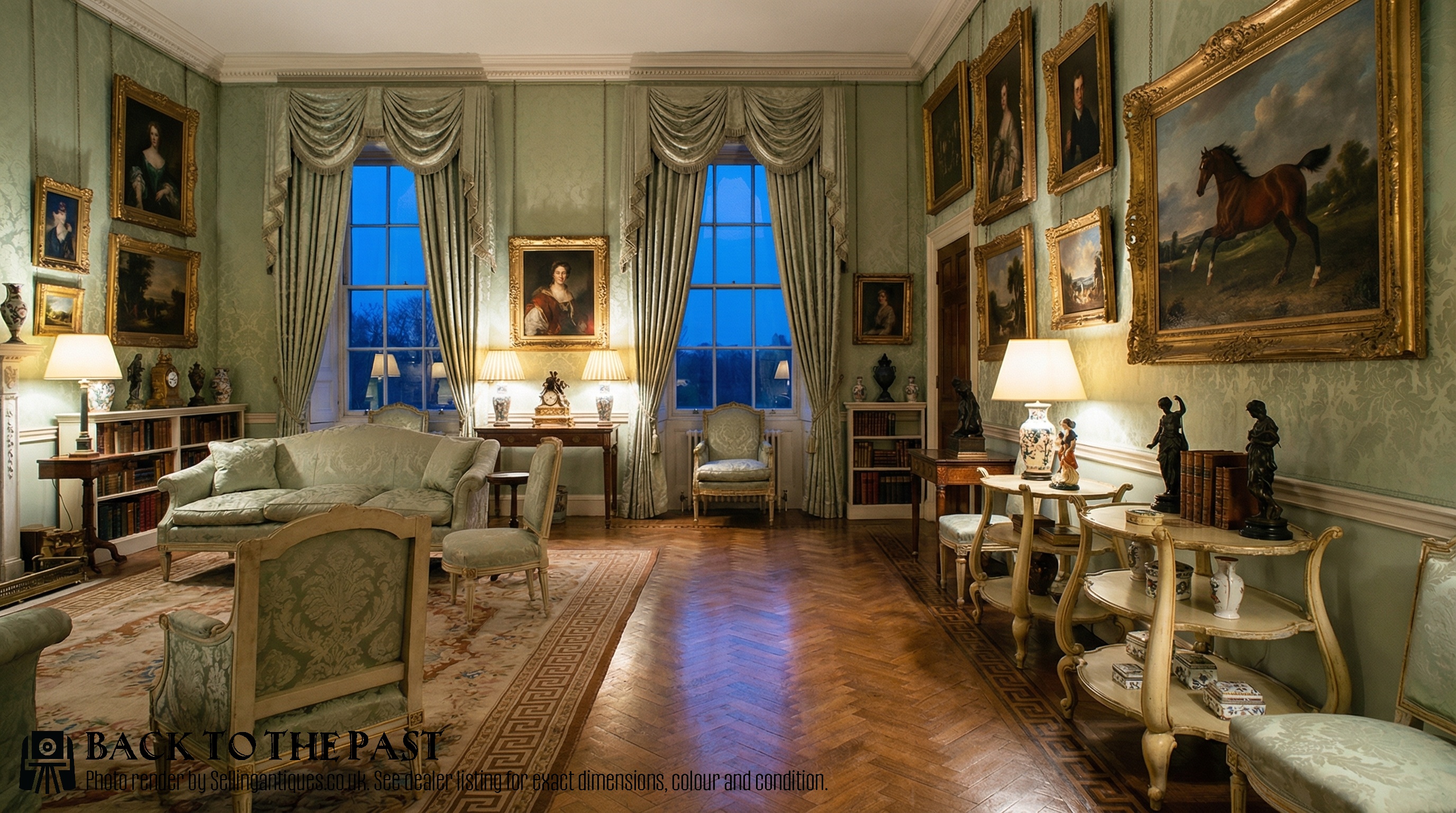
Antique Etagere Side Table
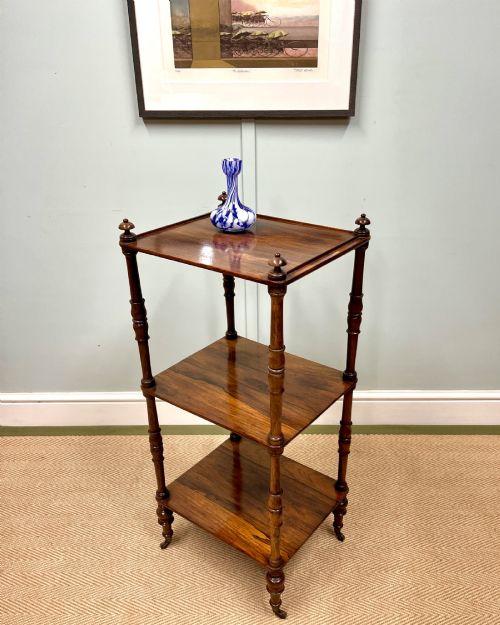
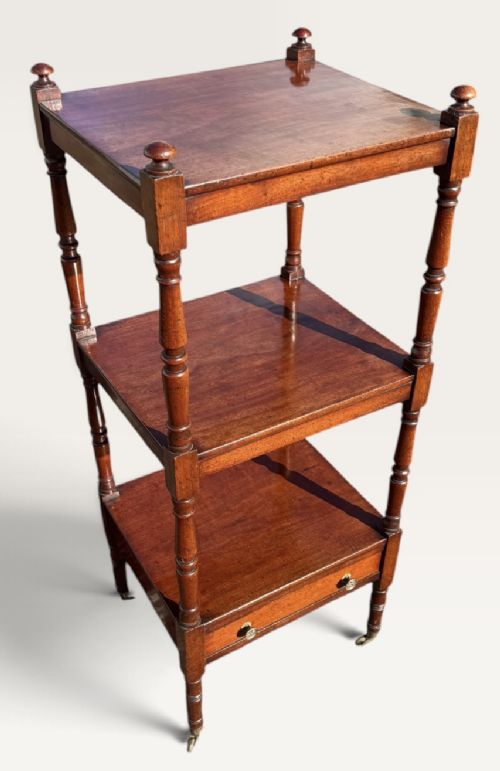
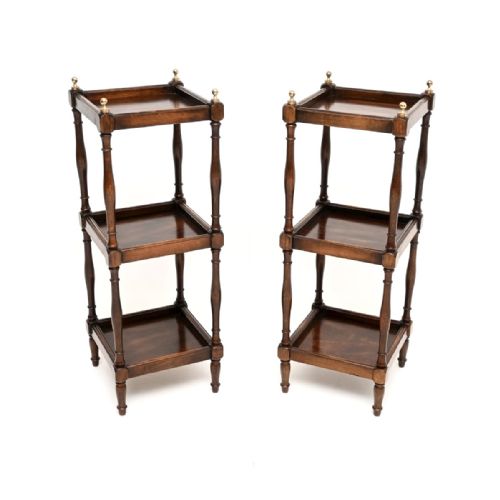
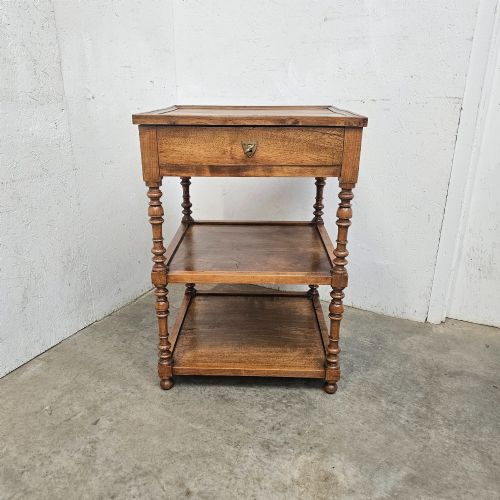
An antique etagere side table combines the surface area of a standard occasional table with multiple open tiers for display or storage. These pieces bridge the gap between traditional side tables and tall whatnots, offering two or three distinct levels held by slender supports.
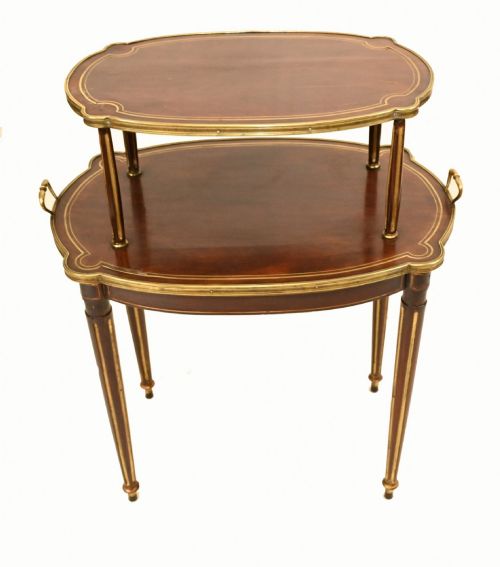
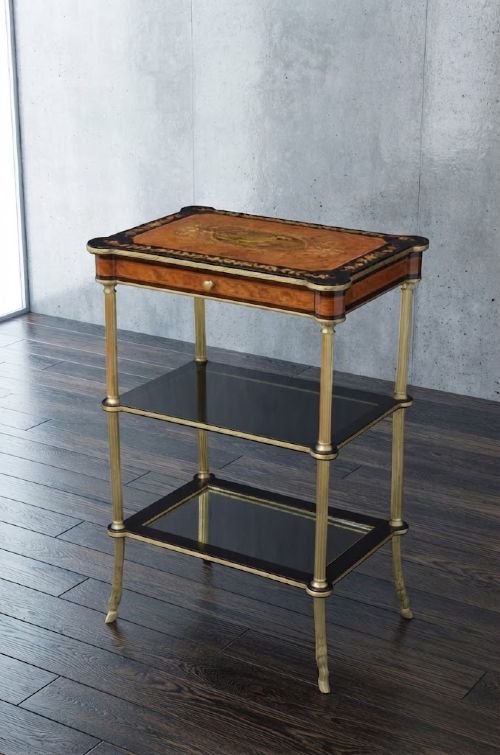
The pieces appearing on this page span the Georgian, Regency, Victorian, and Edwardian periods, alongside later twentieth-century examples. English mahogany and rosewood versions sit alongside French marquetry and ormolu-mounted designs from the nineteenth century.
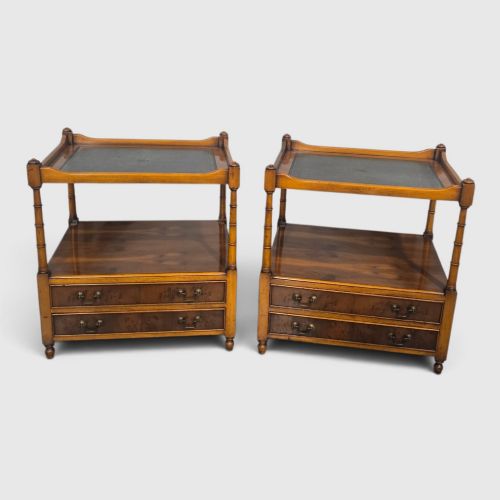
Most examples function as lamp tables, bedside stands, or compact display surfaces in a drawing room. Their multi-tiered form provides space for small objects while occupying a minimal floor footprint.
Materials and construction methods
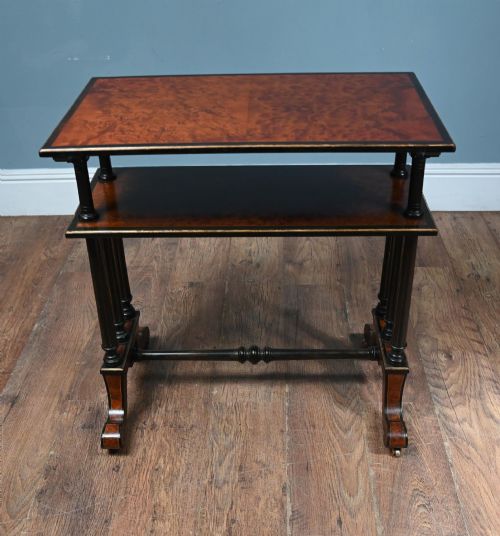
Cabinetmakers utilised dense timbers such as mahogany, walnut, rosewood, and kingwood, often shaping them into slender uprights and flat panels. Finer examples incorporate decorative veneers, including burr walnut, satinwood, and amboyna, arranged in geometric parquetry or floral marquetry patterns.
Metal mounts cast in brass or ormolu appear frequently on French-influenced and later nineteenth-century pieces, edging shelves and capping legs. Japanning, lacquered brass, and hand-tooled leather surfaces also occur in the later decades recorded here.
Antique Etagere Side Table Retail Price Guide 2026
Typical asking prices for etagere side table among the pieces listed under this phrase on Sellingantiques today, from the lower quarter to the upper quarter. They describe what is for sale here now, not the wider market.
Some nineteenth-century tables doubled as sewing cabinets, keeping threads tucked quietly beneath the tea.
Distinctions in construction and design
Quality rests in the crispness of the timber grain, the precision of inlaid marquetry, and the stability of the tiered uprights. Pieces featuring solid secondary woods and tightly fitted joints demonstrate superior workshop standards.
The refinement of cast bronze ormolu mounts and the depth of hand-polished finishes separate standard utilitarian pieces from high-style workshop productions. Balance and proportion across multiple tiers dictate the visual success of the piece.
Mallett of London·Edwards & Roberts·W. Turner Lord & Co·Druce and Co
The Antique Etagere Side Table Glossary
- Etagere
- A piece of furniture consisting of several open shelves or tiers for displaying small objects. The form originated in France during the eighteenth century.
- Whatnot
- A nineteenth-century English term for a set of open shelves used for books or ornaments. It shares a similar multi-tiered structure with the etagere.
- Marquetry
- The art of applying pieces of veneer to a structure to form decorative patterns. Craftsmen use various coloured woods to build pictorial or geometric designs.
- Ormolu
- Gilt bronze mounts applied to furniture edges and feet. This technique gained widespread popularity in French nineteenth-century cabinetmaking.
- Japanning
- A type of European finish that emulates East Asian lacquerware. It involves layering varnishes and curing them under heat.
Antique Etagere Side Table: Frequently Asked Questions
What is an etagere side table used for?
These tables provide tiered surfaces suited for holding lamps, books, and decorative objects. Their open shelves allow items to be displayed clearly from multiple angles in a sitting room or bedroom.
Historically, they also served as bedside stands, sewing tables, or small serving tiers during tea service. The compact footprint makes them useful for adding surface space without crowding a room.
How do I tell a Victorian etagere from a Regency one?
Regency examples often feature cleaner classical lines, frequently rendered in dark mahogany or rosewood with restrained brass mounts. They lean towards architectural simplicity and balanced proportions.
Victorian pieces tend to introduce heavier ornamentation, including elaborate marquetry, turned walnut legs, and ebonised finishes. Later nineteenth-century versions frequently adopt French revival styles with extensive ormolu mounts.
Are these tables sturdy enough for daily use?
Most tiered tables are constructed to support moderate weight such as lamps, books, and small ceramic objects. The upright supports are designed to bear vertical loads effectively.
However, because they feature multiple shelves connected by slender pillars, they require careful placement to avoid heavy lateral impacts. Placing them out of high-traffic pathways helps preserve their structural joints.
What is the difference between an etagere and a whatnot?
The terms are often used interchangeably in antique listings, though they stem from different traditions. Etagere generally denotes a French-influenced tiered piece, sometimes featuring refined marquetry or ormolu.
Whatnot typically refers to English multi-tiered shelving units from the Georgian and Victorian eras. Both forms prioritise open vertical display space over enclosed storage.