



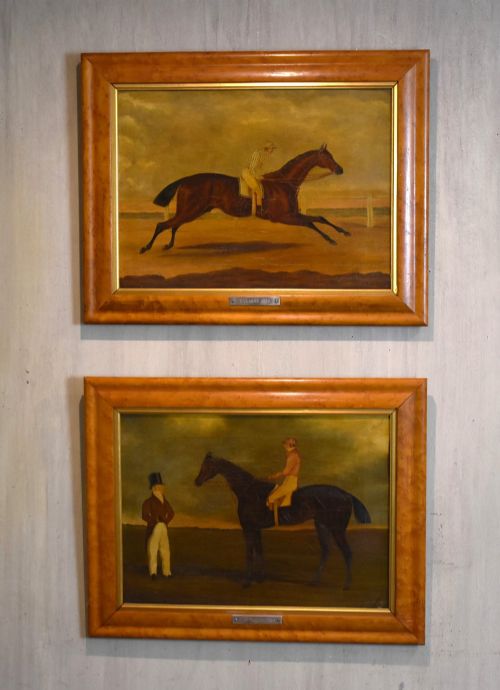
Antique Equine Wall Art
Antique equine wall art captures the powerful presence of horses through centuries of fine portraiture and rural scenes.
Antique Equine Wall Art
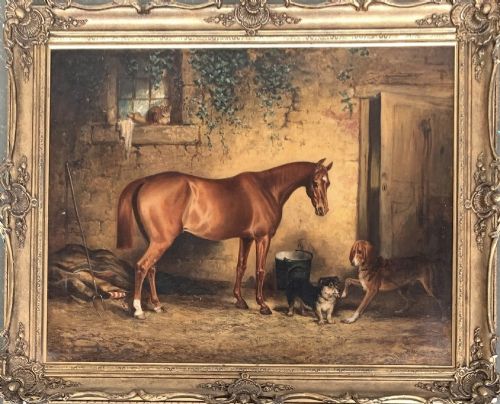
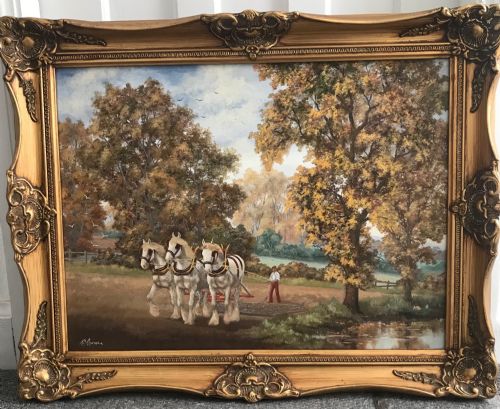
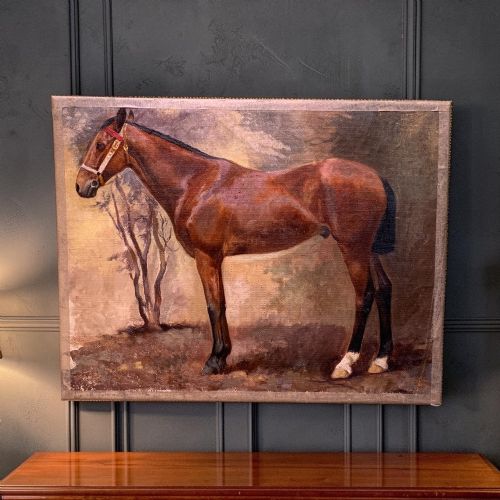
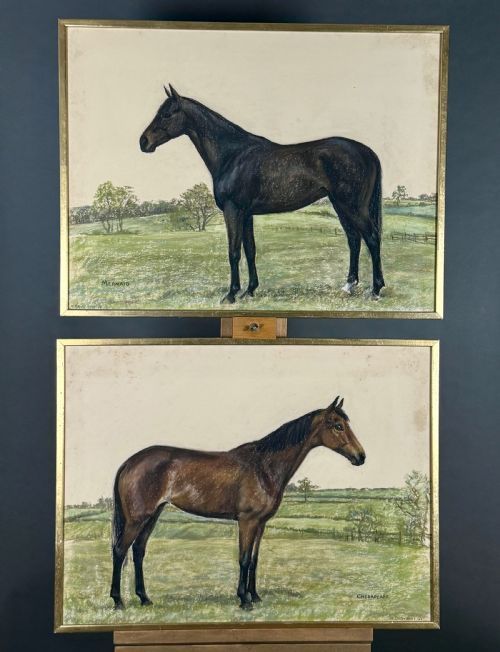
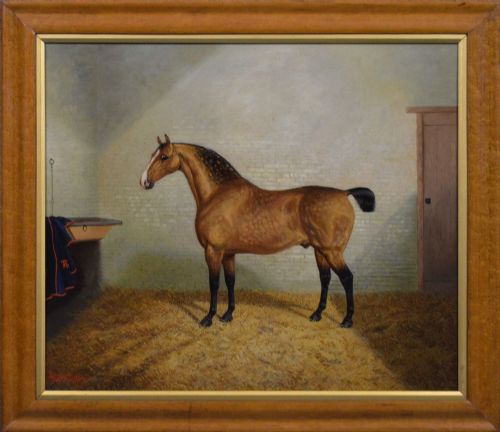
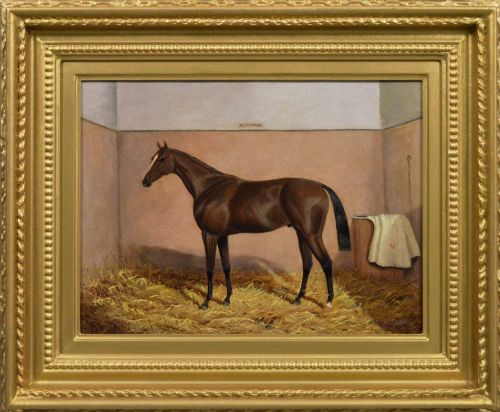
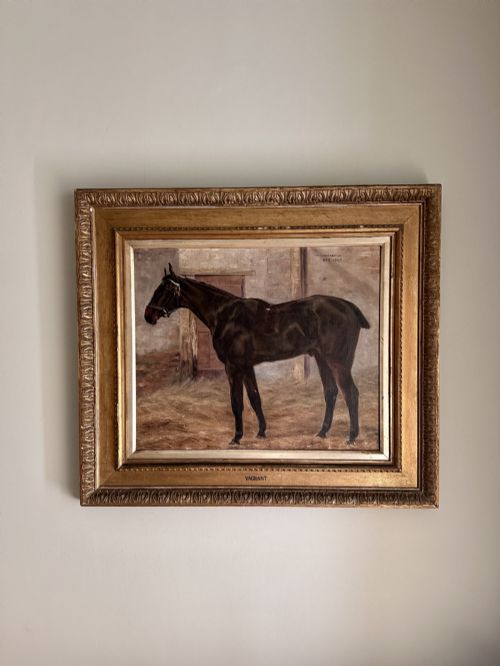
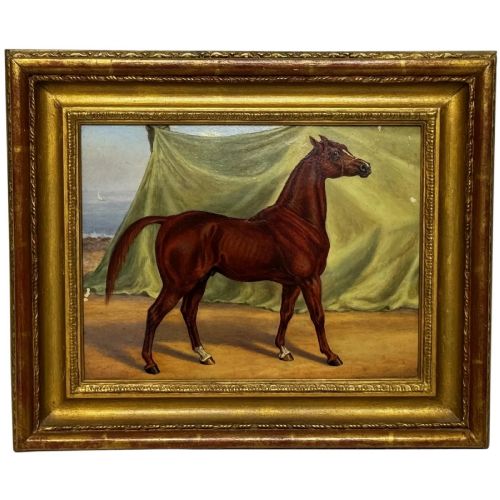
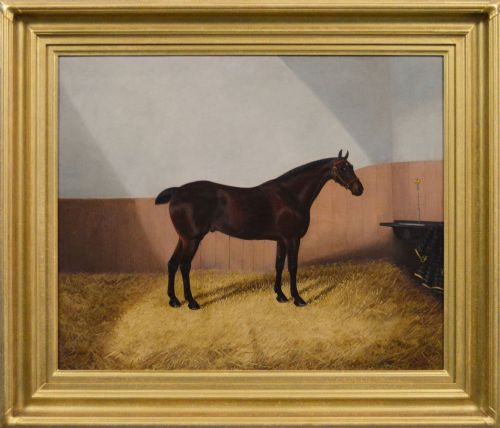
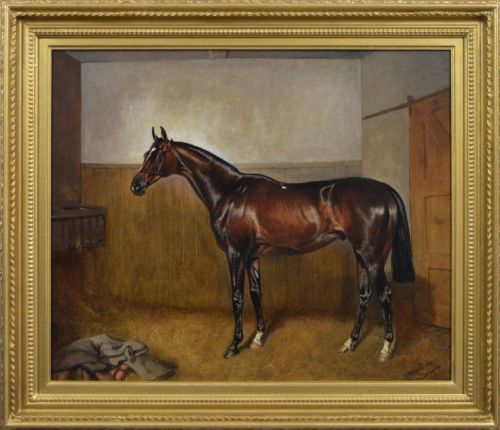
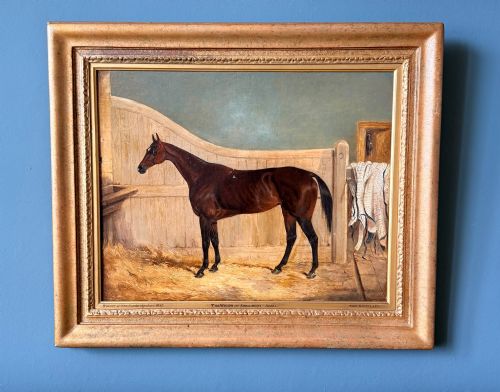
Antique equine wall art comprises traditional oil paintings, watercolours, pastels, and framed prints focused on horses. These works range from individual portraits of named racehorses and hunters to rural landscape scenes featuring working farm horses.
The selections on this page lean heavily towards nineteenth-century and early twentieth-century British and Irish sporting art. Buyers regularly encounter detailed studies of thoroughbreds in stables, racing scenes, and pastoral compositions from the Victorian and Edwardian periods.
How they were made
Painters used oil paint on canvas or pine panels, building up layers of pigment to capture the musculature and sheen of horse coats. Works on paper utilise watercolour, pastel, or ink to render softer equestrian studies.
Many surviving pieces retain their period frames, constructed from wood with giltwood mouldings or gold leaf accents. Glazing and paper mats protect delicate watercolours and pastel drawings from atmospheric damage.
Antique Equine Wall Art Retail Price Guide 2026
Typical asking prices for equine wall art among the pieces listed under this phrase on Sellingantiques today, from the lower quarter to the upper quarter. They describe what is for sale here now, not the wider market.
Listings feature works spanning the eighteenth to the twentieth centuries, utilising oil paint, watercolor, canvas, and giltwood.
What varies in quality
Anatomical accuracy and depth of background detail separate accomplished academic painting from competent commercial work. Master artists render the bone structure, tension, and expression of the animal with complete conviction.
The integrity of the original surface, pigment preservation, and the quality of the period framing influence the overall standing of each piece. Finer works maintain clear provenance and attribution to documented equine artists.
Henry Barraud·Albert Clark·Fred Fitzpatrick·John Alfred Wheeler·Thomas Walker Bretland·John Frederick Herring Snr·John Ferneley Senior·King Edward VII·W Williams·George E Sharpe·John Frederick Herring·Helena Maguire·Benjamin Cam Norton·Clifton Tomson·Alfred Moginie Bryant·Arthur Winter Shaw·Abraham Cooper RA·Charles Bilger Spalding RA·George Goodwin Kilburne
The Antique Equine Wall Art Glossary
- Sporting art
- A genre of painting dedicated to equestrian subjects, hunting, racing, and rural pastimes. These works document the history of bloodstock and field sports.
- Provenance
- The documented history of ownership of an artwork from its creation to the present day. This record confirms authenticity and historical context.
- Giltwood
- Wood carved and coated with gold leaf or metallic paint to create a decorative frame finish. It was standard for framing fine portraits in the nineteenth century.
- Stable portrait
- A specific composition style depicting a prized horse standing within its stall or stable architecture. These pieces often highlight specific anatomical traits of champions.
Antique Equine Wall Art: Frequently Asked Questions
What subjects appear in equine art?
These works depict named racehorses, hunters, working farm horses, and stable scenes. Many pieces place the animal within a rural landscape or hunting environment.
Commissioned portraits often record the exact lineage and achievements of celebrated thoroughbreds and champions.
How do I date a horse painting?
Stylistic clues, artist signatures, and framing materials help establish the period of creation. Nineteenth-century works often employ specific canvas preparations and rich varnishes.
Clothing styles of handlers or grooms included in the composition also offer reliable chronological markers.
Where should I hang these paintings?
Equestrian art suits studies, hallways, and living spaces with traditional architectural character. Matching the frame finish to existing timber furniture unifies the display.
Direct sunlight and damp environments should be avoided to protect oil surfaces and paper works from degradation.
What is sporting art?
Sporting art encompasses paintings and prints that record field sports, horse racing, and rural livestock. It flourished in Britain during the eighteenth and nineteenth centuries.
Artists specialised in capturing the precise conformation and movement of animals for wealthy patrons and owners.