





Antique Equine Landscape
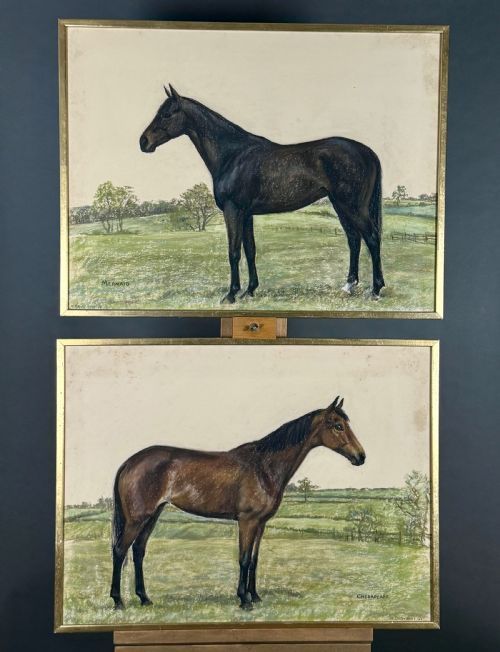
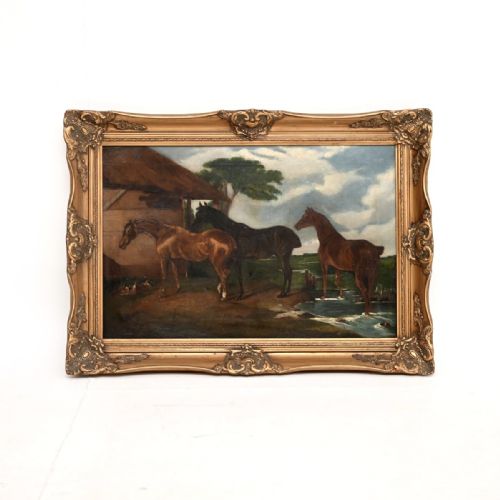
These antique equine landscape works combine the power of horses with open countryside, bringing rural history and sporting heritage directly onto the wall.
Antique Equine Landscape
An antique equine landscape presents horses within pastoral, rural or sporting settings, merging animal portraiture with topography. These works range from intimate watercolours and pastel studies to large oil paintings on canvas.
The selections span distinct historical eras, including the Regency and Victorian periods, alongside later twentieth-century interpretations. English School traditions and British Sporting Art heavily influence the compositions found here.
Subjects stretch from working farm animals and hay wagons to prized hunters and ponies near coasts or rivers. Figures such as grooms, ploughmen and farmhands frequently accompany the animals in these outdoor scenes.
Materials and technique
Oil paint applied to canvas remains the dominant medium, often housed within giltwood frames enriched with gold leaf. Artists also utilised watercolour and pastel on paper for lighter, more immediate studies.
Wood provides the structural support for stretchers and frames, while traditional canvas preparation created the fine grounds necessary for detailed brushwork. Pigments capture the varied tones of chestnut, bay and grey horses against natural light.
Materials across these listings span oil paint, canvas, wood, giltwood, gold leaf, pastel, and paper.
Judging quality
Superior examples demonstrate a precise understanding of equine anatomy combined with atmospheric handling of the surrounding landscape. The integration of the horse into its environment separates accomplished academic works from simpler decorative pieces.
The handling of light, texture in coats and the natural posture of the animal reveal the painter's skill. Finer compositions maintain balance between the central animal subject and the expansive rural backdrop.
C R Breytle·John Ferneley Senior·Eugene Joseph Verboeckhoven·John Frederick Herring·Clifton Tomson·Arthur Winter Shaw·Paul Jones·George Goodwin Kilburne·Walter Duncan·Ernest Higgins Rigg·Edward Lloyd·James Barenger·George Cole·John Parker Davis
The Antique Equine Landscape Glossary
- Equine landscape
- A painting or work on paper depicting horses as the primary subject set within a recognizable outdoor environment. These scenes often incorporate rural elements such as farm buildings, rivers or coastal views.
- British Sporting Art
- A genre of painting dedicated to horses, hounds, shooting and rural sports that flourished across the eighteenth and nineteenth centuries. It emphasises accurate animal depiction and field sports traditions.
- Giltwood
- Wood, typically carved, that has been coated with a thin layer of gold leaf or metallic powder. It is commonly found framing nineteenth-century oil paintings.
- Pastel on paper
- A dry medium using powdered pigments held together by a binder, applied directly to paper surfaces. It produces soft, velvety textures well suited to quick animal studies.
Antique Equine Landscape: Frequently Asked Questions
What defines an antique equine landscape?
These works feature horses as the central focus within a natural, agricultural or sporting setting. They blend animal portraiture with detailed views of the countryside.
Most examples date from the nineteenth century, utilising oil on canvas or works on paper to capture rural life and sporting traditions.
How do I hang and light these paintings?
Traditional oil paintings require stable indoor environments away from direct sunlight and excessive humidity. Proper picture lighting enhances the giltwood frames and brings out the subtle tones in the canvas.
Ensure wall fixings match the weight of the heavier timber frames and canvas stretchers typical of this period.
How can I tell the period of a painting?
Stylistic clues such as costume, agricultural equipment, and framing techniques help determine the era. Regency and Victorian works often show meticulous academic detail in the horse's musculature.
Signatures, stretcher construction, and canvas stamps also provide reliable indicators of age and origin.
Were these painted as portraits or scenes?
Many function as specific portraits of named horses commissioned by owners, while others record broader rural genres like harvest time or ploughing. Both approaches integrate the animal deeply into the surrounding topography.
Figures such as grooms and farmhands frequently appear to provide scale and context to the working scene.