

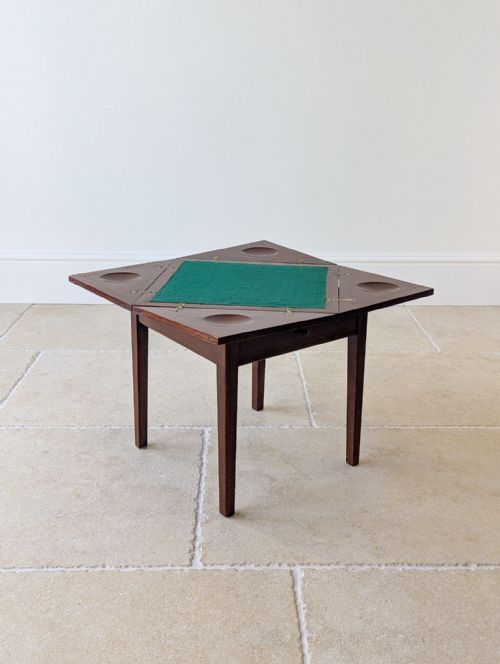


Antique Envelope Top Table
An antique envelope top table is a clever folding games table with a four-flap top that opens like an envelope.
Antique Envelope Top Table
When you search for an antique envelope top table, you are looking at specialised occasional and games furniture designed for card playing and social gatherings. These pieces appear most frequently from the Victorian and Edwardian periods, alongside earlier Regency examples and specific stylistic revivals.
Makers utilised woods such as mahogany, rosewood, walnut, and satinwood, often enhanced with marquetry or boxwood stringing. Origins span standard British cabinet-making traditions through to French Rococo revival pieces, Aesthetic Movement designs, and Chinese export work.
How they were made
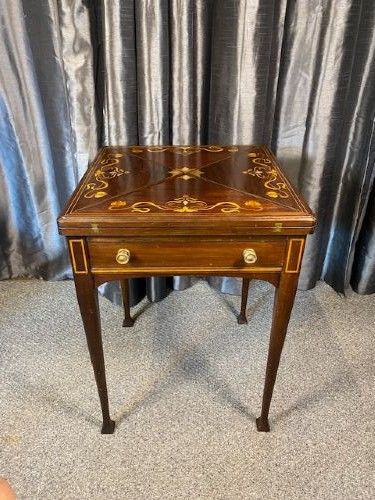
Cabinet-makers constructed these tables using solid and veneered timbers including mahogany, walnut, rosewood, and satinwood. Tops frequently incorporate intricate marquetry and boxwood stringing alongside brass fittings and hinges that allow the four leaves to pivot and fold simultaneously.
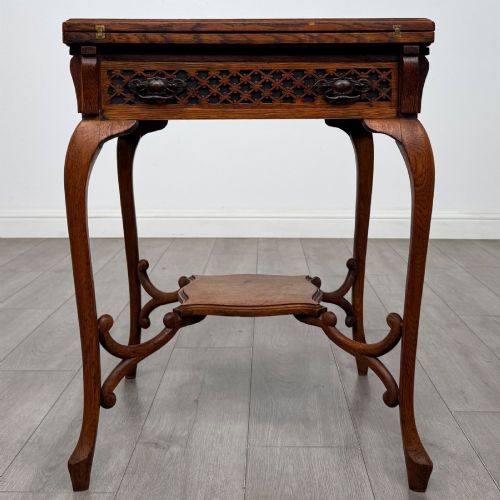
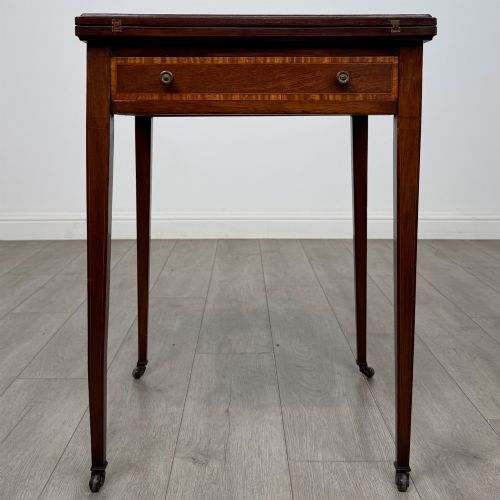
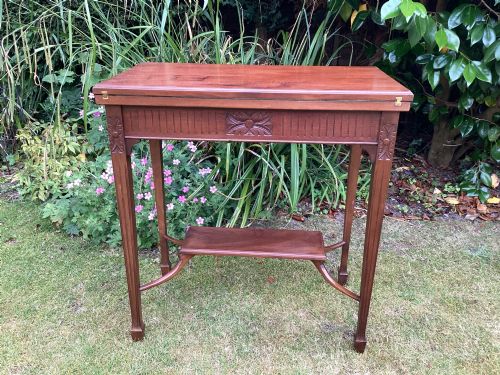
The folding mechanisms rely on precise joinery so the triangular flaps close flush and flat when not in use. Interior surfaces are typically lined with baize to provide a tactile playing field, while legs range from slender Edwardian spade-foot supports to bold Regency pedestals and carved console bases.
Card and games tables appear across multiple stylistic revivals including Louis XVI style, Art Nouveau, and the Aesthetic Movement.
What varies in quality
The distinction between standard examples and finer pieces lies in the crispness of the timber selection and the complexity of the marquetry inlay. Tables featuring figured veneers like burr walnut or detailed satinwood and boxwood work demonstrate higher craftsmanship from the maker.
Mechanical precision sets apart superior envelope tables. A top-tier table operates smoothly as the swivel action engages all four flaps into a seamless square without binding or looseness in the brass hinges.
The Antique Envelope Top Table Glossary
- Envelope top
- A table design where four triangular flaps fold over each other diagonally like an envelope. Rotating the top reveals the concealed playing surface beneath.
- Baize
- A coarse woolen fabric used traditionally to line the playing surfaces of card and games tables. It provides a durable, flat texture for handling cards.
- Marquetry
- Decorative patterns formed by inserting pieces of different coloured wood, veneer, or shell into a solid wood ground. This technique defines the ornate tops of many Victorian and Edwardian tables.
- Gaming wells
- Small recessed compartments built into the corners of a card table surface. These were designed to hold counters, chips, or coins during play.
- Stringing
- Thin inlay lines of contrasting wood, such as boxwood, used to outline the edges and geometric panels of table tops.
Antique Envelope Top Table: Frequently Asked Questions
What is an envelope table?
An envelope table is a clever multi-functional piece of furniture designed primarily for card games and social gatherings. Its top consists of four triangular leaves that swivel and fold open to reveal a baize-lined playing surface.
When closed, it functions as a compact side or console table. The design became particularly popular during the Victorian and Edwardian periods.
How do the leaves open?
The mechanism relies on a central pivot that allows the entire square top to swivel diagonally. As the top rotates, the four triangular flaps unfold outward in a synchronized motion to form a flat square surface.
Underneath the flaps, clever pivoting arms support the leaves as they lock into position. Closing the table simply requires reversing the rotation and folding the flaps back down.
What were gaming wells used for?
Gaming wells are small recessed compartments set into the corners of the table surface. Players used them to hold counters, chips, or coins during card games.
They keep small items from sliding off the playing area during active play. Not all envelope tables include wells, as some feature a completely flat baize surface.
Where should I place one?
These tables suit hallways, drawing rooms, or living spaces as occasional furniture. Their compact closed footprint allows them to sit neatly against a wall as a console or side table.
Placing one in a central spot requires allowing enough clearance around the piece to open all four flaps fully. Keep them away from direct heat sources to protect the delicate wood veneers and baize lining.
How do I date an envelope table?
Dating relies on observing the wood choices, decorative motifs, and leg styles. Regency examples display classical pedestal bases, while Victorian and Edwardian pieces frequently feature mahogany or rosewood with delicate marquetry and inlay.
Art Nouveau and Aesthetic Movement variations show distinct linear or organic motifs in their construction. Comparing the secondary timbers and hinge hardware also helps narrow down the era of manufacture.