

Antique Entry Seating
These antique entry seating pieces offer practical hallway furniture in woods like oak and mahogany, shaped by centuries of craftsmanship.
Antique Entry Seating
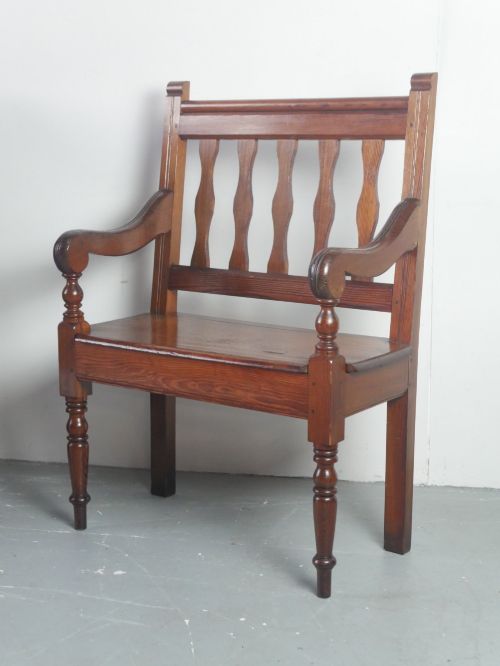
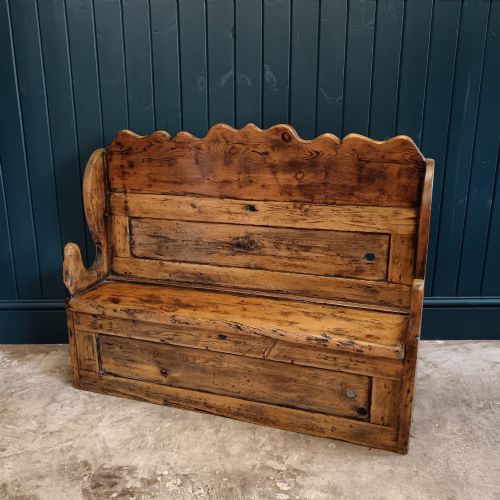
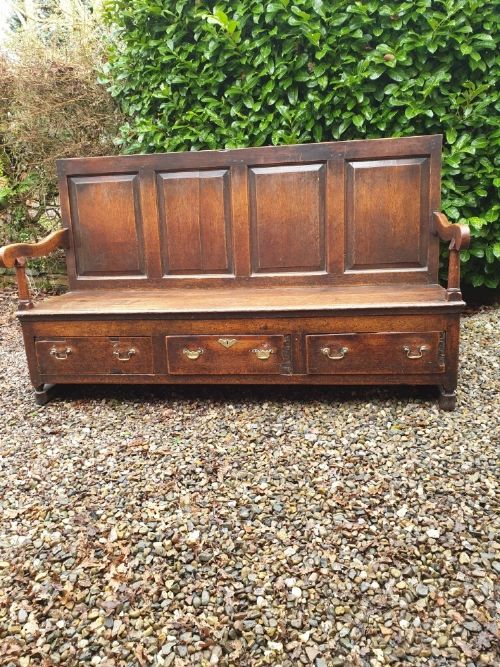
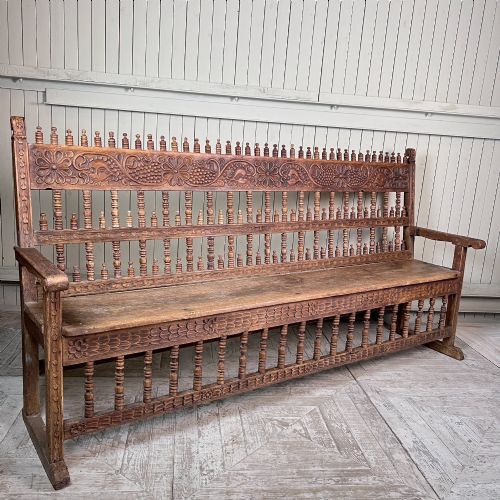
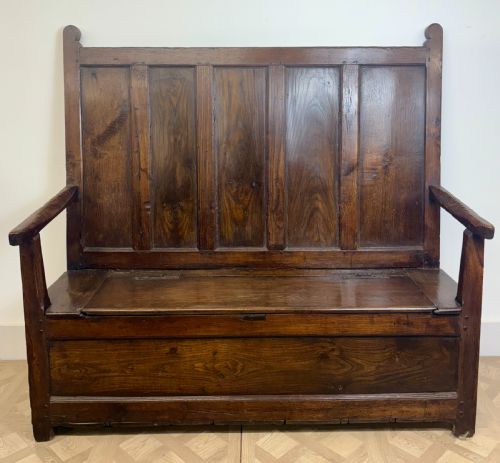
Antique entry seating encompasses a diverse range of furniture designed for hallways, corridors, and reception spaces. Buyers searching for antique entry seating encounter forms such as individual hall chairs, long benches, settles, and box settles.
The pieces on this page span several centuries and styles, stretching from 18th-century Georgian and Regency designs through to Victorian, Edwardian, and early 20th-century examples. Oak and mahogany dominate the selection, often accompanied by pine, cherrywood, and elm.
Stiff-backed hall chairs and long wooden benches appear most frequently, serving the traditional function of providing a place to sit when removing outerwear. Regional pieces, including Welsh and Scottish variants, sit alongside continental Hungarian painted items.
Materials and construction methods
Cabinet makers and country joiners utilised solid hardwoods like oak, mahogany, and walnut, alongside softer timbers such as pine and pitch pine. Joints relied heavily on traditional mortise and tenon construction to withstand the heavy wear expected in entrance halls.
Carving and panelising form the primary decorative techniques on backrests and box bases, executed by hand using gouges and chisels. Rush seating appears on country examples, while other chairs utilise carved solid timber seats rather than upholstery.
Listings feature 18th-century Georgian and Regency forms alongside Victorian, Edwardian, and Arts & Crafts seating in oak, mahogany, pine, and pitch pine.
Factors that distinguish quality
The grade of timber and the crispness of hand-carved details separate standard utility items from finer reception seating. Superior pieces display dense, well-figured grain in woods like mahogany or quarter-sawn oak, coupled with deeply articulated relief carving on shield backs or panelled settles.
Structural integrity and originality of elements dictate the merit of a piece. Retaining original lift-up lids on box settles, unaltered timber patination, and matching pairs of hall chairs command greater appreciation than heavily restored or mismatched examples.
The Antique Entry Seating Glossary
- Box settle
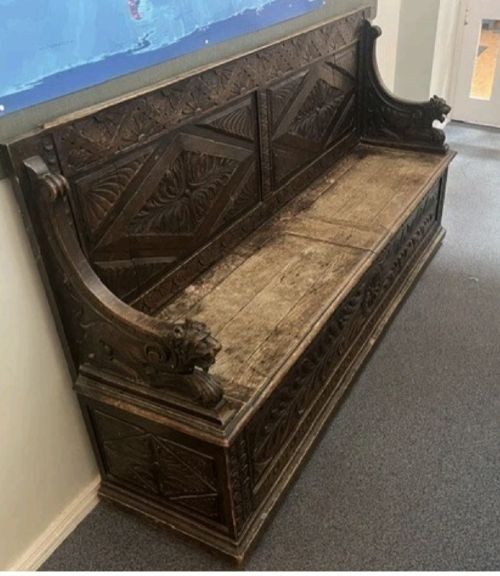
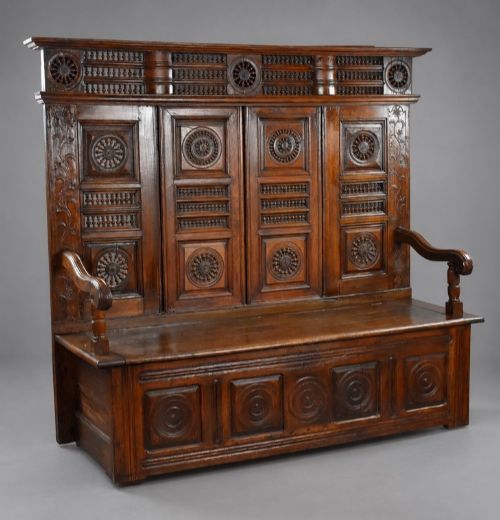
- A high-backed wooden bench featuring a concealed storage compartment beneath the hinged seat. This form kept draughts away from the doorway while storing household items.
- Hall chair
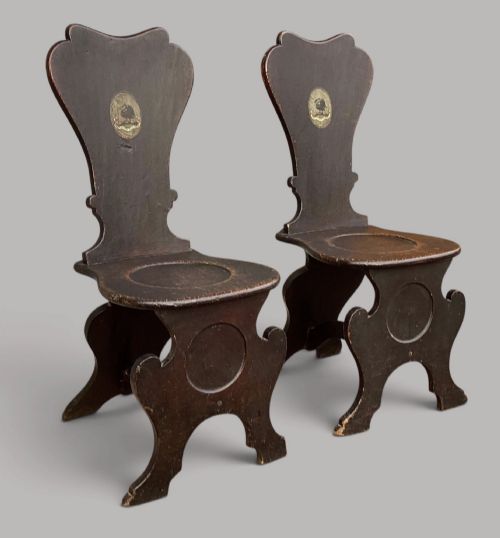
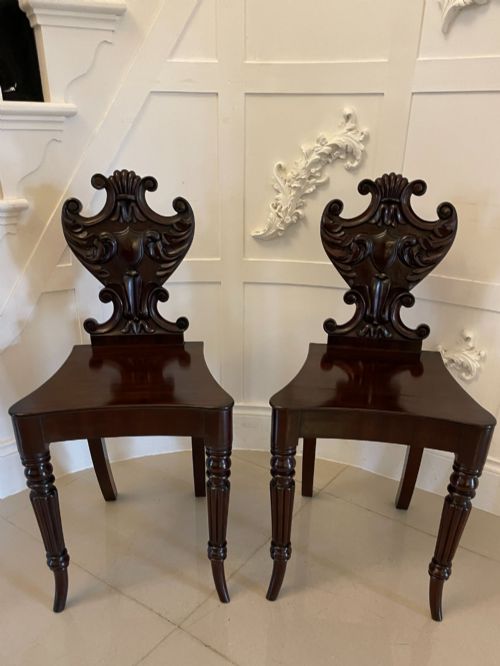
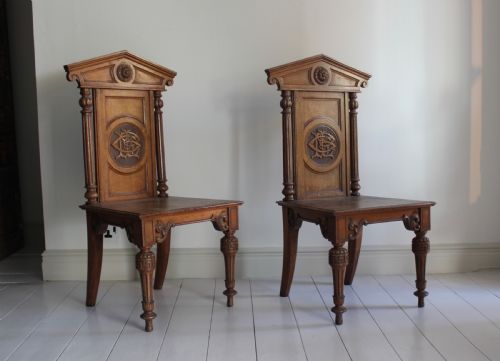
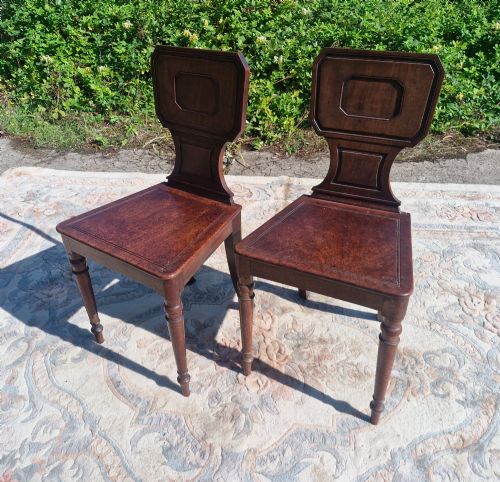
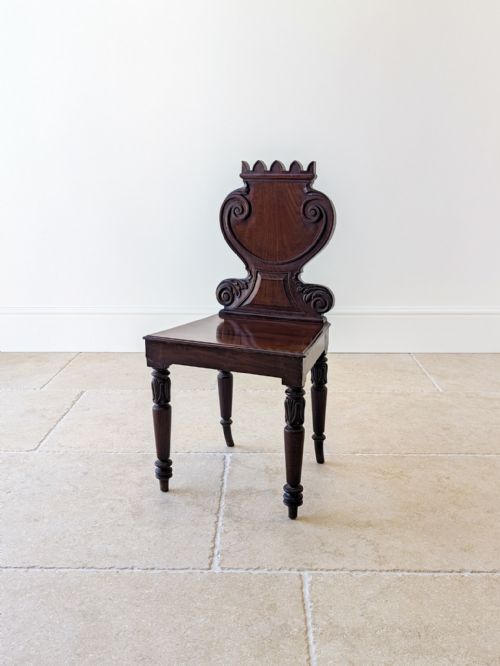
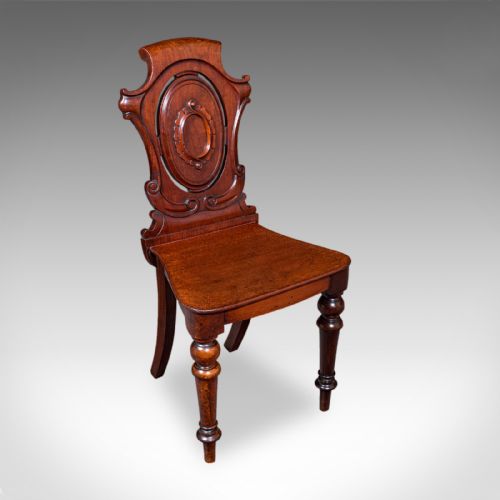
- A rigid wooden seat, usually without arms, designed for occasional use in an entrance hall. They frequently display carved family crests or shield backs.
- Settle
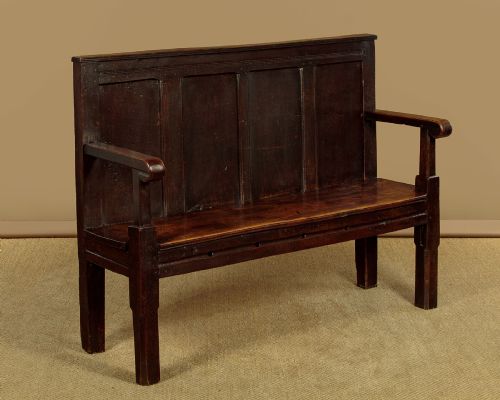
- An early wooden bench with solid arms, a high panelled back designed to block cold air, and a closed base. They anchor period hallways and country interiors.
- Shield back
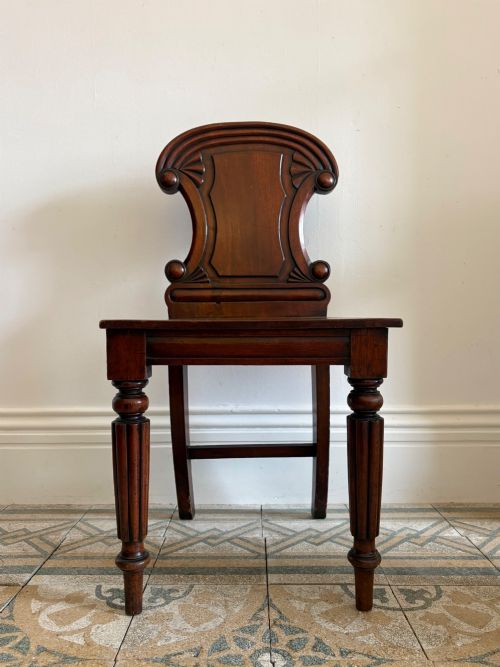
- A chair back shaped like a heraldic shield, popularised during the Georgian and Regency periods. Cabinet makers carved these from solid mahogany or walnut.
- Sgabello
- An Italian Renaissance chair form consisting of a wooden seat mounted on two trestle supports or a box base, featuring an ornamented backrest.
Antique Entry Seating: Frequently Asked Questions
What is a hall bench?
A hall bench is a long wooden seat designed specifically for placement in an entryway or hallway. These pieces provide practical seating for putting on or taking off boots.
They appear in various styles across the 18th, 19th, and early 20th centuries, ranging from simple country pine forms to heavily carved oak and mahogany examples.
How do I use a box settle?
A box settle functions primarily as hallway seating while offering concealed storage beneath the hinged seat lid. Historical households utilised this compartment for heavy outdoor wear, blankets, or boots.
The high wooden back also helped block cold draughts blowing in from external entrance doors.
Are hall chairs comfortable?
Traditional hall chairs generally prioritise rigid posture and durability over comfort. Makers constructed them from solid woods like oak and mahogany with wooden seats rather than cushions.
They served as brief, upright seating for visitors waiting in reception areas rather than lounging furniture.
How do I identify Victorian hall chairs?
Victorian hall chairs frequently display robust proportions and distinct revival styles such as Gothic Revival or Jacobean Revival. They often feature dark carved oak or reddish mahogany.
Makers frequently incorporated carved shield backs, pierced splats, or heavily moulded wooden seats characteristic of 19th-century production.