

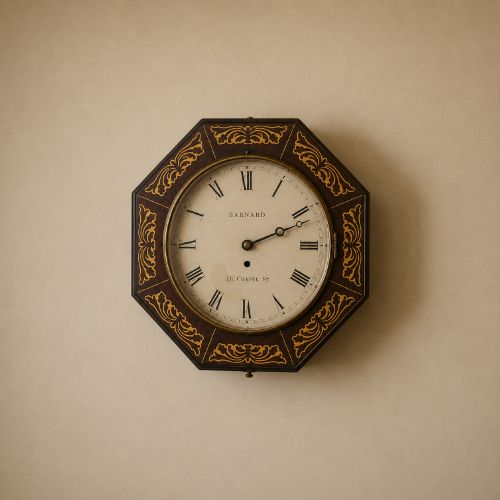
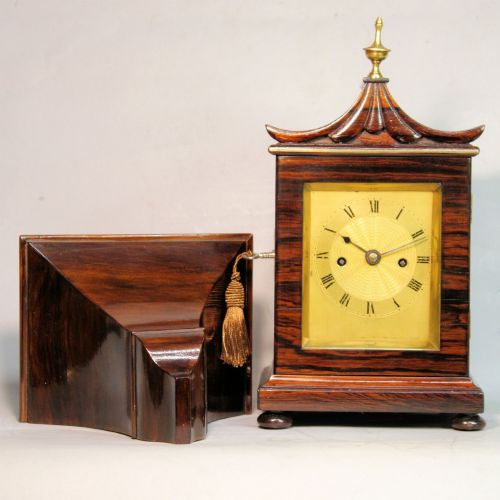

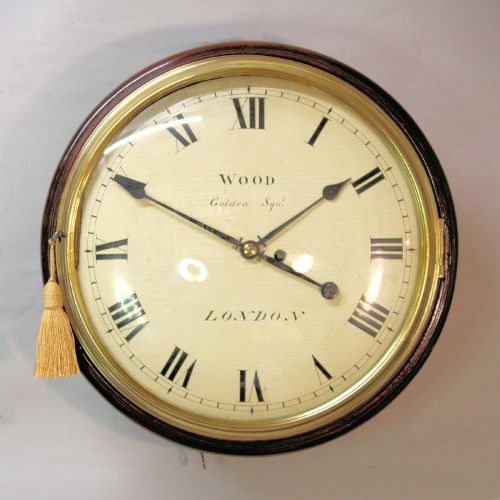
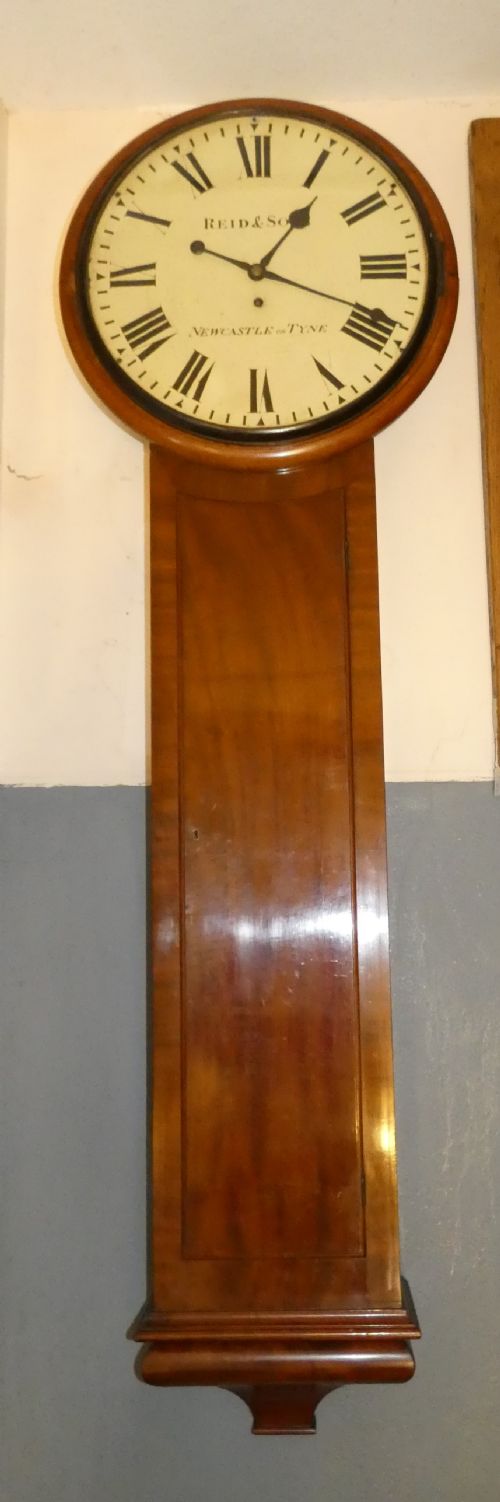

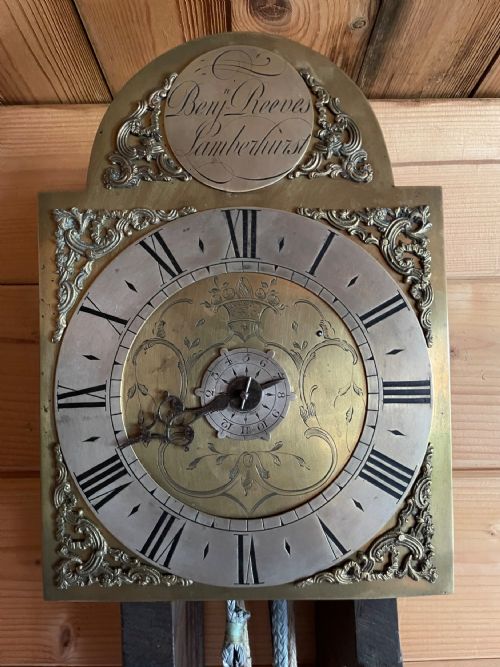


Antique English Wall Timepiece
An antique English wall timepiece keeps time with precise mechanics while housing centuries of cabinet-making skill in mahogany, walnut and oak.
Antique English Wall Timepiece
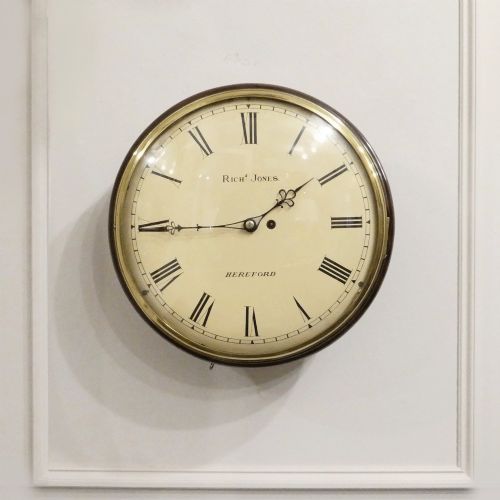
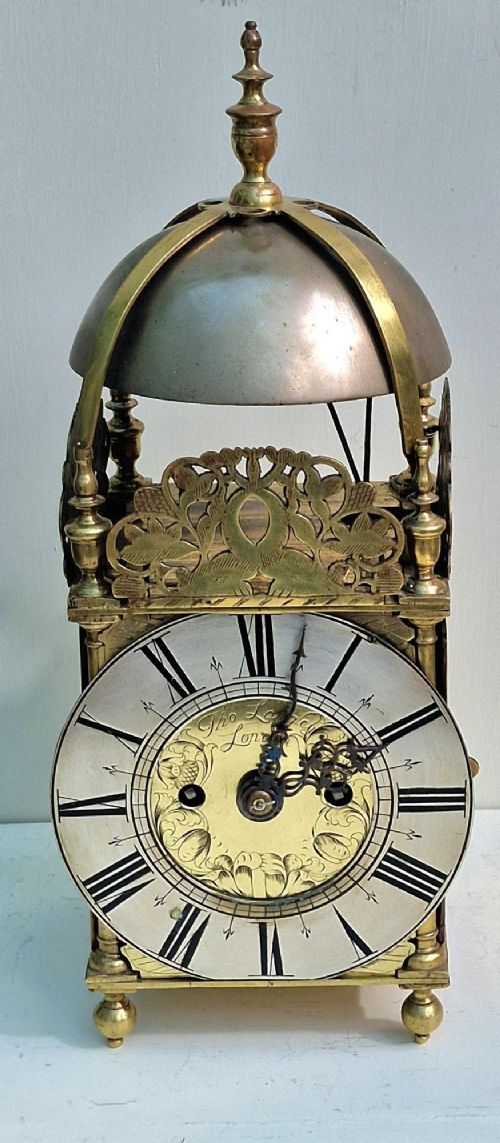
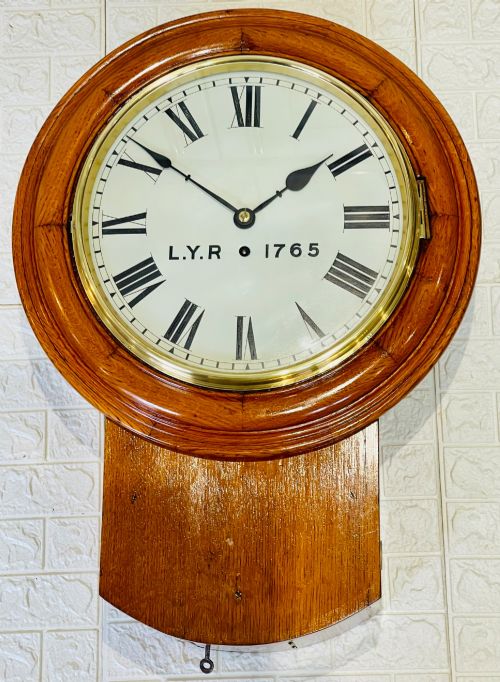
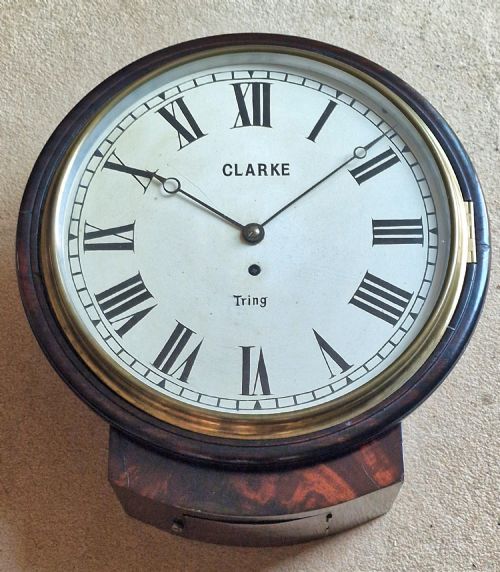
An antique English wall timepiece encompasses dial clocks, drop-dial clocks, railway timepieces and early lantern clocks designed to hang securely in public rooms, offices and domestic halls. These pieces range from compact circular dials to large drop-case variants governed by fusee movements.
Victorian and Georgian examples dominate the selection, spanning strict railway timepieces to elegant domestic mahogany and rosewood models. Early seventeenth-century lantern clocks and twentieth-century Art Deco variants appear alongside regional maker-signed dials.
The primary function of these clocks is pure timekeeping without hourly bell strikes, relying on a regulated weight or spring drive. Collectors encounter pieces shaped by provincial makers as well as signed London firms.
Materials and Construction
Cabinet makers utilised dense hardwoods including mahogany, oak, walnut and rosewood to construct robust dial surrounds and drop-cases that protect delicate internal gear trains. Brass bezels frame glass panels, while iron and steel components form the intricate fusee movements and wheels.
Dial construction varies from traditional painted wood and convex wooden faces to metal dials bearing engraved maker signatures. Brass and iron feature heavily in weight-driven lantern clocks and spring-driven fusee mechanisms alike.
Some early country examples packed an alarm function alongside the standard timepiece, ensuring nobody slept through the morning.
Craftsmanship and Proportion
Quality rests in the crispness of the cabinet joinery, the proportion of the dial to the case, and the original integrity of the movement. Finely inlaid brass work, well-figured timber grain and clean dial lettering separate standard utility clocks from master-signed London pieces.
The preservation of original hands, bezels and movement components dictates the standing of an antique wall timepiece. Untouched maker signatures and clean gear train execution denote superior workshops.
Richard Jones of Hereford·Thomas Langley·George Clarke·John Spershott·Benj Reeves·Dent of London·John Walker·Kleyser of London·John Thwaites·Perivale of England
The Antique English Wall Timepiece Glossary
- Fusee
- A conical pulley used in mechanical clocks to maintain an even pull on the gear train as the mainspring unwinds. This mechanism ensures consistent timekeeping across the duration of the wind.
- Dial Clock
- A wall-mounted timepiece featuring a prominent circular face framed by a wooden or brass bezel. These were standard fixtures in railway stations, offices and large homes.
- Drop-Dial Clock
- A wall clock where the circular dial extends downward into a trunk or case that houses the pendulum. This form became common in Georgian and Victorian interiors.
- Lantern Clock
- An early form of domestic brass weight-driven clock developed in the seventeenth century. They typically hang from a wall bracket with exposed side doors and bell ornamentation.
- Cartel Clock
- An ornate wall-mounted clock housed within a decorative carved, giltwood or metal frame. They gained popularity during the Georgian and later revival periods.
Antique English Wall Timepiece: Frequently Asked Questions
What is a fusee wall clock?
A fusee wall clock is a spring-driven timepiece governed by a conical pulley system that equalises the power delivery as the spring winds down.
This mechanism allows the clock to maintain high accuracy without requiring a heavy hanging weight.
How do I hang a heavy wall clock?
Heavy wall clocks require secure fixing directly into wall studs or solid masonry using appropriate weight-rated screws and brackets.
Hanging them securely prevents vibration and ensures the pendulum swings evenly.
Did all wall clocks strike the hour?
Many traditional wall clocks are timepieces, meaning they are designed solely to tell the time without a striking train.
Some variants include bells or alarm mechanisms, but purely functional timekeeping models remain common.
How do I date an antique wall clock?
Dating relies on examining the timber species, case style, dial materials and the mechanical signatures inscribed on the movement plates.
Maker signatures and regional tax stamps also provide clear windows into the era of manufacture.