

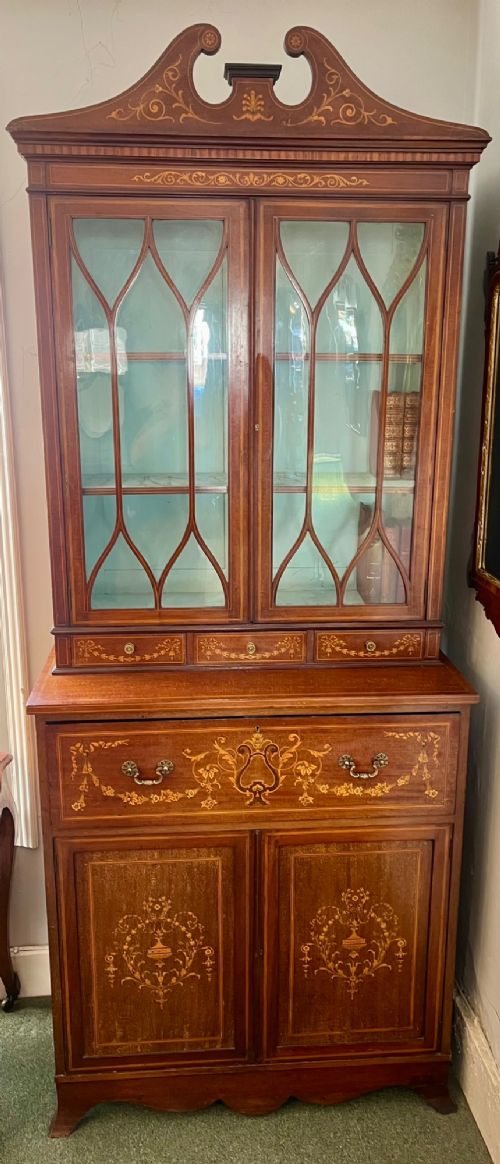
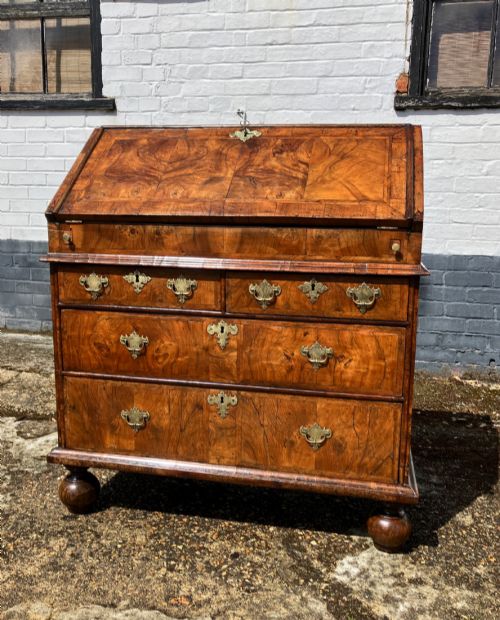
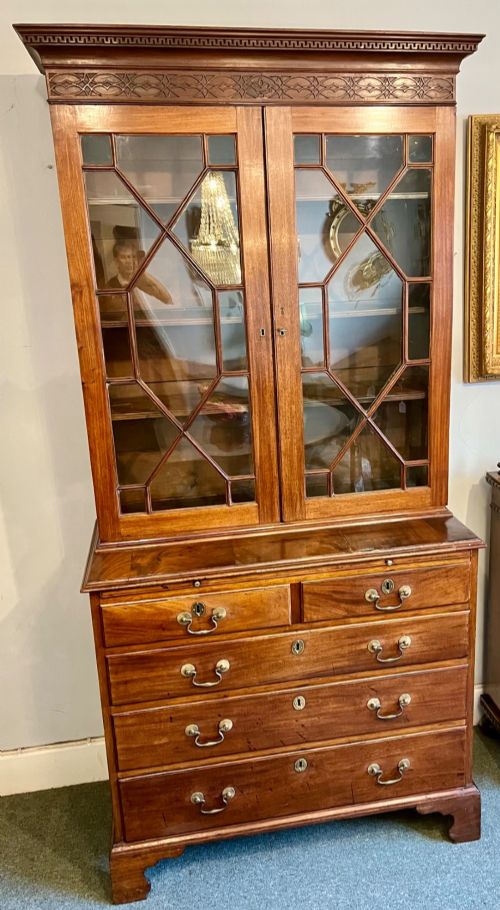
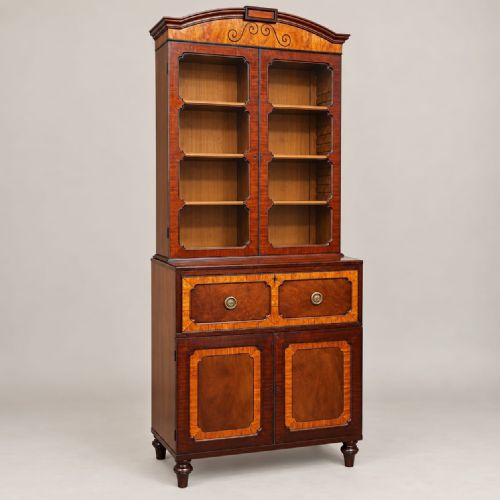
Antique English Secretary
An antique English secretary brings fitted pigeonholes, fall-front writing surfaces and shelved upper cabinets into domestic studies from across the centuries.
Antique English Secretary
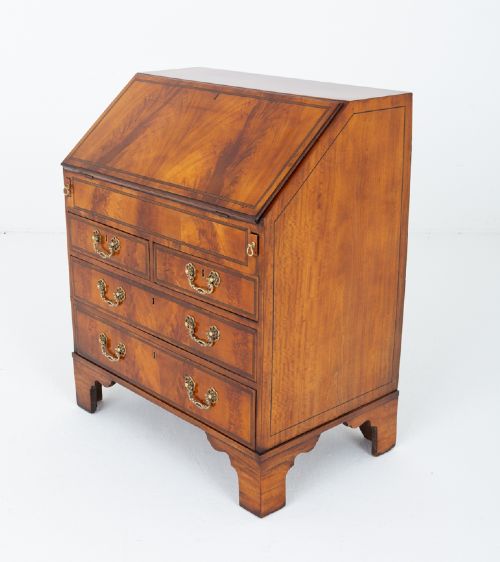
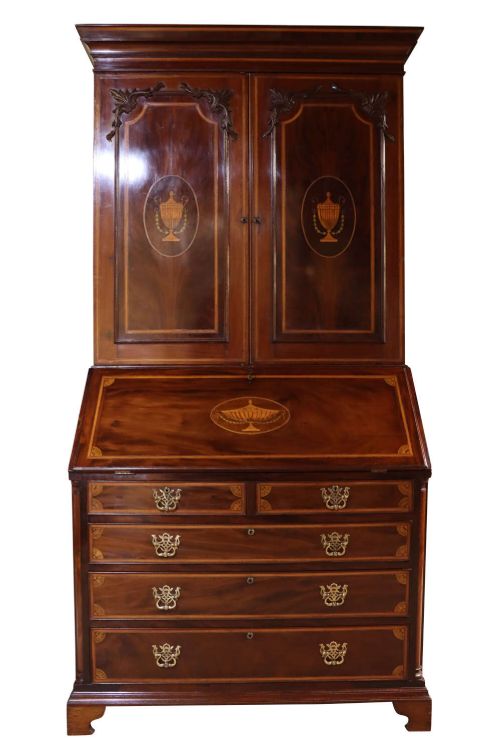
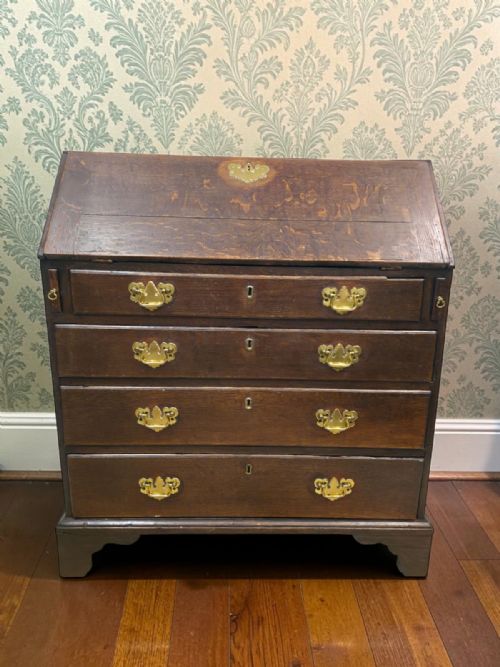
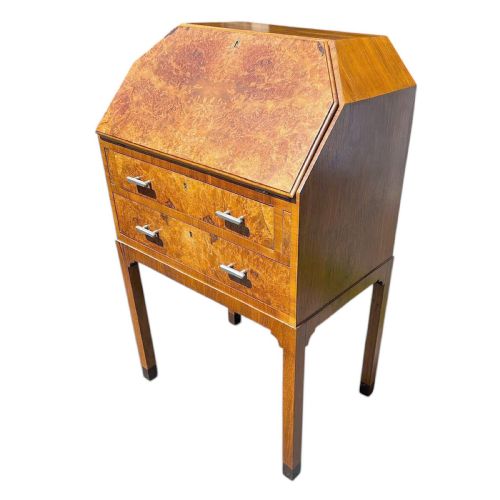
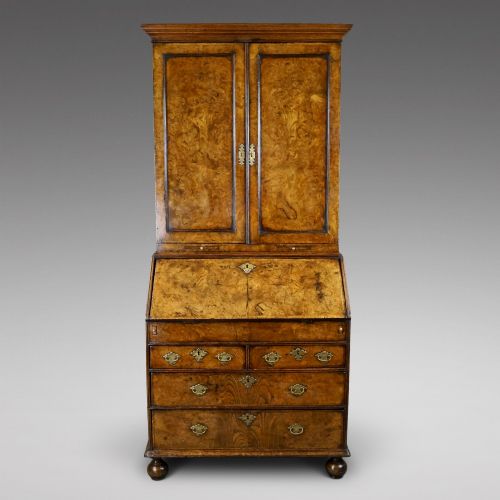
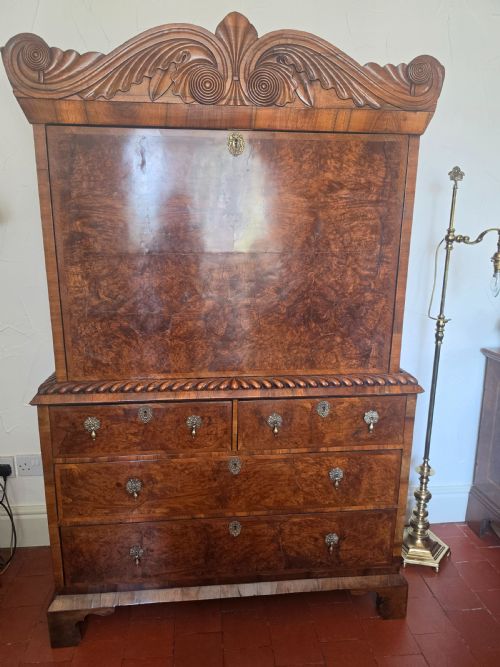
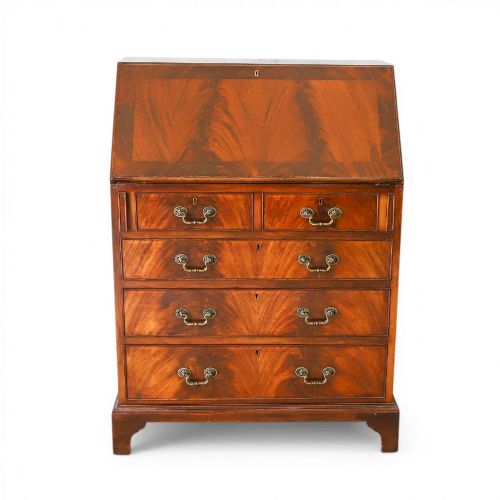
An antique English secretary covers a wide lineage of fall-front desks, escritoires and bureau bookcases designed for private correspondence and manuscript storage. When searching for an antique English secretary, buyers encounter diverse forms ranging from compact fall-front writing cabinets to grand cabinet pieces surmounted by glazed bookcases.
The pieces listed span centuries of domestic woodwork, drawing heavily on walnut, oak and mahogany timbers shaped through Georgian, Edwardian and earlier reigns. Bureau bookcases and tall escritoires dominate the selection, offering fitted interiors hidden behind hinged writing flaps or drop fronts.
Makers and cabinetmakers constructed these workstations to anchor the parlour or library, incorporating tiered drawers, pigeonholes and secret compartments. Surviving examples reflect shifting domestic habits from the seventeenth century onwards, prioritising secure letter storage and display shelves.
How they were made
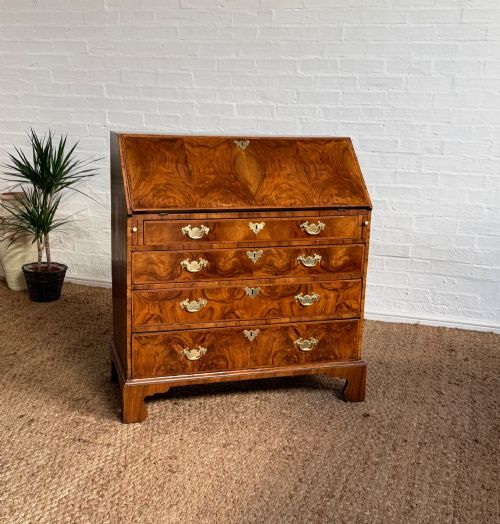
Cabinetmakers relied upon dense hardwoods like walnut, mahogany and oak as the foundational carcasses for these desks and bookcases. Timber selection dictated the character of the piece, often enhanced through figured veneers, flame-fronted grains or satinwood inlay.
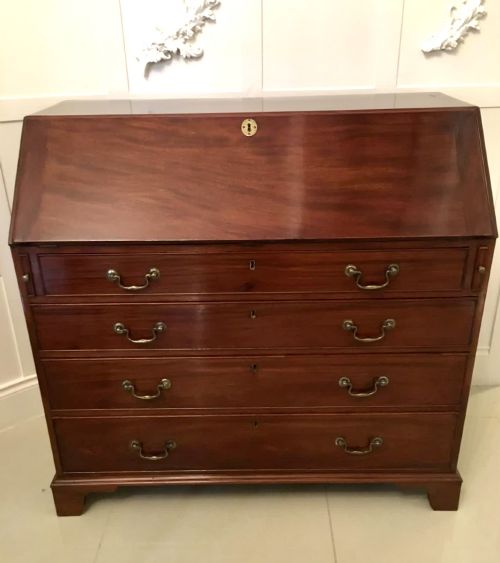
Structural integrity relied upon dovetailed drawer construction and framed fall-front panels designed to bear the weight of a writing surface. Brass hardware, including drop handles, escutcheons and hinges, secured internal compartments and exterior doors.
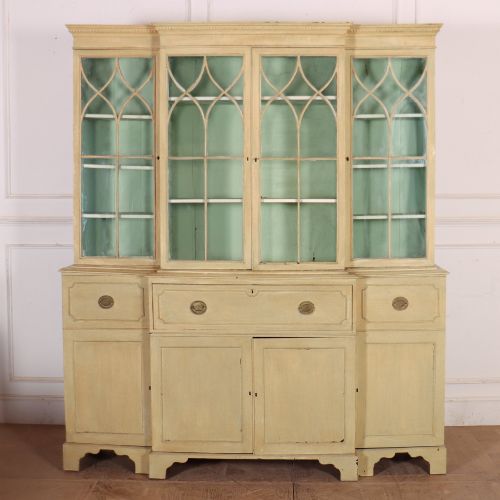
Glazing bars divided the upper cabinet doors of taller secretaire bookcases into geometric panes, protecting books and papers while displaying bindings. Secondary treatments included red lacquer, painted finishes and leather writing inserts.
Antique English Secretary Retail Price Guide 2026
Typical asking prices for english secretary among the pieces listed under this phrase on Sellingantiques today, from the lower quarter to the upper quarter. They describe what is for sale here now, not the wider market.
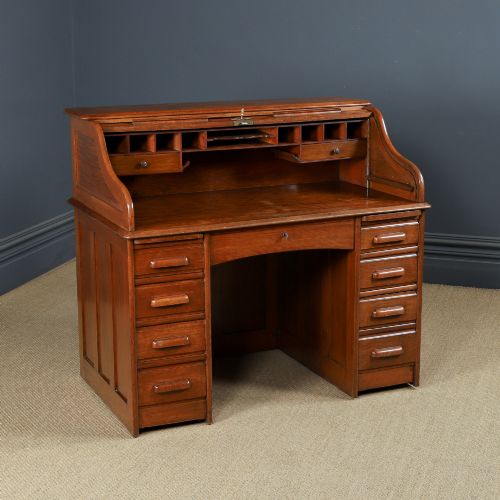
The inventory includes bureau bookcases, kneehole desks, escritoires and roll-top office furniture.
What varies in quality
Timber selection and veneer matching dictate visual hierarchy across the fall front and drawer facades. Dense burr walnut, figured mahogany and delicate satinwood stringing elevate the visual depth of the cabinet.
Proportion and architectural harmony define the stature of tall bureau bookcases and library cabinets. Well-balanced cornices, crisply cut bracket feet and original brasses sustain the integrity of the period.
Robert Mouseman Thompson
The Antique English Secretary Glossary
- Bureau
- A writing desk featuring a sloping fall front that opens to reveal internal compartments and drawers. Early forms sit on bracket feet or frame stands.
- Secretaire bookcase
- A tall cabinet combining a writing drawer or fall-front desk section with upper shelving enclosed by doors. These pieces served as dual-purpose library and writing furniture.
- Fall front
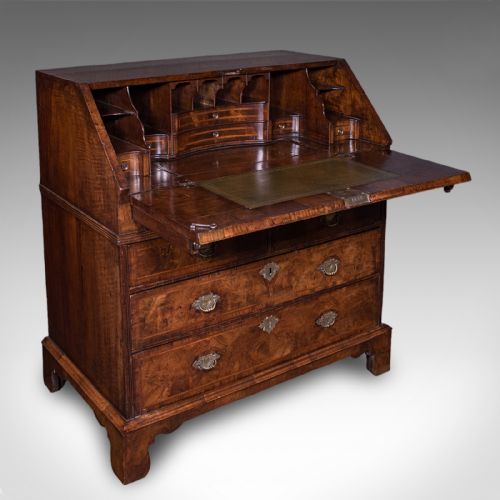
- A hinged writing panel that drops into a horizontal position to create a desk surface. When closed, it conceals the fitted interior of pigeonholes and small drawers.
- Burr walnut
- Wood harvested from walnut tree growths that produces swirling, highly figured grain patterns. Cabinetmakers prized this material for high-status bureau facades.
- Pigeonhole
- A small, open compartment within a desk interior used for sorting letters and documents. These compartments often sit beneath small secret drawers.
Antique English Secretary: Frequently Asked Questions
What is an antique English secretary?
An antique English secretary is a piece of case furniture designed for writing and storage, encompassing bureau bookcases, escritoires and fall-front desks.
These pieces feature a hinged writing flap that conceals pigeonholes and small drawers, often paired with upper shelving for books.
How do I date an antique secretary?
Dating relies on identifying the primary wood, construction techniques, hardware and stylistic vernacular of the period. Walnut and oak dominate seventeenth and early eighteenth-century pieces, while mahogany becomes prevalent through the Georgian era.
Changes in foot styles, brass handles and interior drawer configuration provide further clues for chronological placement.
How were antique secretaries used?
Owners used these cabinets for writing letters, managing household accounts and storing correspondence securely behind locked panels.
The upper bookcase sections held libraries, while the fitted interior compartments kept stationery and valuable documents organised.
Where should I place a secretary?
These tall cabinets suit studies, libraries or living rooms where wall space accommodates their height and depth. Adequate clearance must be left in front of the piece for the fall-front writing surface to open fully.
Placing them away from direct sunlight and heat sources protects fragile wood veneers and leather inserts.