

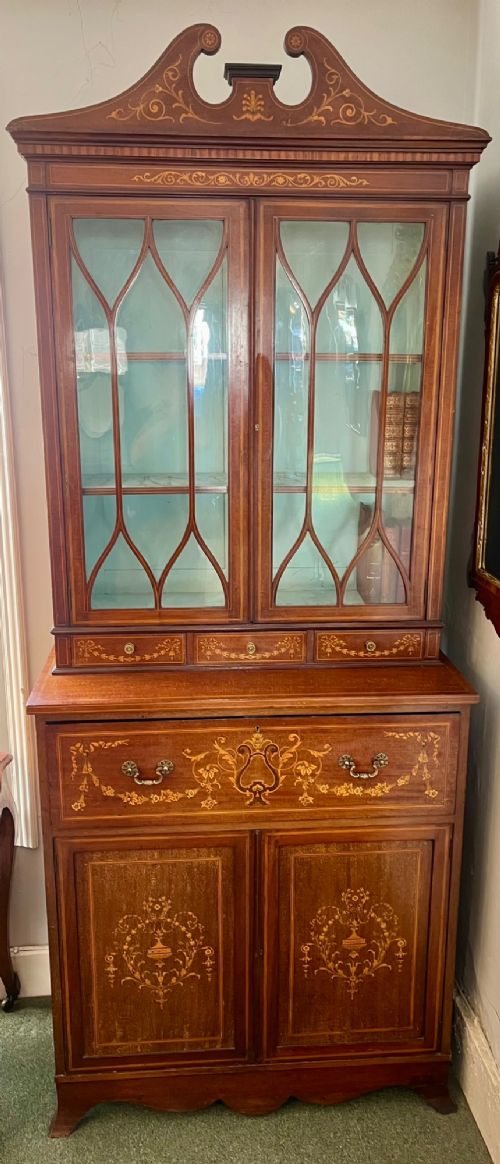
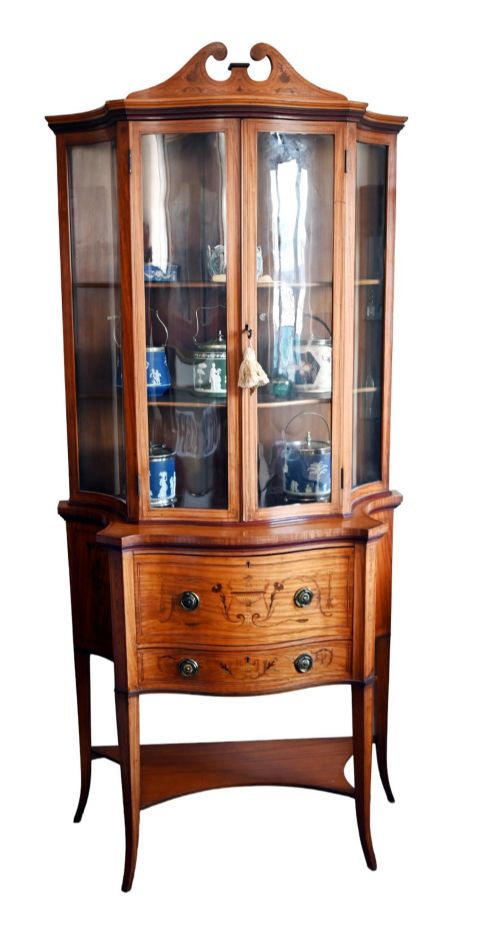
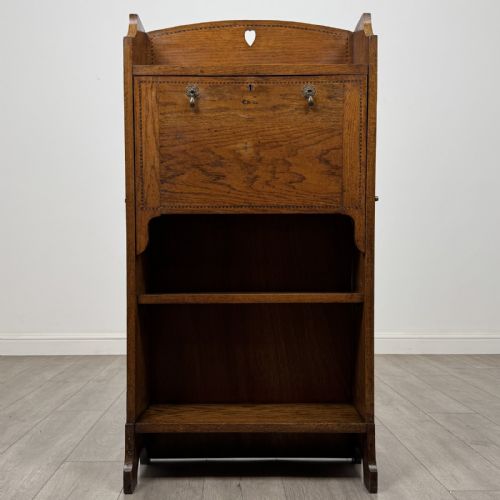
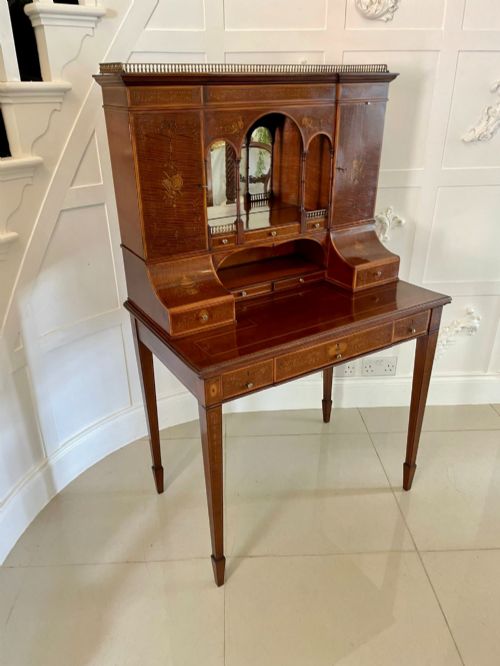
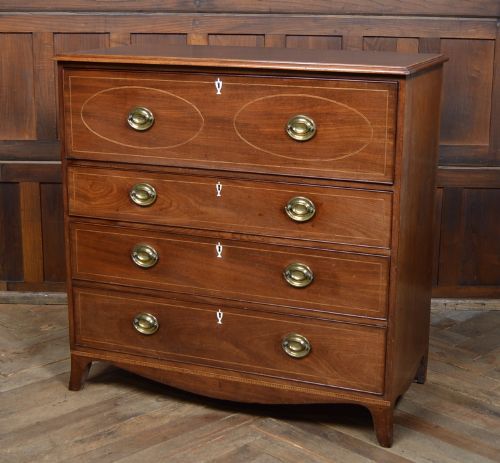


Edwardian Inlaid Secretaire
An edwardian inlaid secretaire combines fitted writing compartments with fine cabinetwork, offering hidden desks and display space for the home.
Edwardian Inlaid Secretaire
When you search for an edwardian inlaid secretaire, you are looking at dual-purpose writing furniture that typically pairs a drop-front desk drawer with upper bookcase cabinets or lower drawer chests. These pieces range from compact bureau forms to tall secretaire bookcases designed for domestic studies and reception rooms.
The versions you are most likely to meet on this page span the Edwardian period and associated revival styles, frequently utilising lighter decorative timbers like satinwood alongside structured mahogany carcasing. They combine practical storage with decorative marquetry and banded inlay work characteristic of the era's cabinetmaking.
How they were made
Makers constructed the primary carcase of an edwardian inlaid secretaire from solid timbers such as mahogany, oak, or walnut, providing a stable frame for internal pigeonholes and drawers. External surfaces received finely cut veneers of satinwood and exotic hardwoods, arranged to create geometric panels and decorative borders.
Inlayers applied contrasting woods and brass hardware by hand, recessing stringing and marquetry motifs into the primary timber surfaces. Writing drawers required balanced internal hinges and fitted pigeonholes to support the drop-front writing surface without warping under daily use.
Edwardian Inlaid Secretaire Retail Price Guide 2026
Typical asking prices for edwardian inlaid secretaire among the pieces listed under this phrase on Sellingantiques today, from the lower quarter to the upper quarter. They describe what is for sale here now, not the wider market.
Listings on this site span the eighteenth century through the Edwardian era, featuring mahogany, satinwood, and oak across secretaire bookcases and writing cabinets.
What varies in quality
The distinction between standard commercial pieces and finer cabinetwork lies in the precision of the timber matching and the complexity of the marquetry. Higher-grade examples display continuous grain across drawer fronts and intricate, hand-cut inlay rather than printed or stamped substitutes.
Internal construction also separates cabinet tiers, visible in the choice of secondary woods for drawer linings and the neatness of dovetail joints. Pieces that retain their original brass fittings and undamaged veneer work maintain greater integrity than those with extensive timber replacements.
Edwards and Roberts
The Edwardian Inlaid Secretaire Glossary
- Secretaire
- A piece of furniture containing a drawer or compartment that folds down to form a writing desk. It conceals small drawers and pigeonholes for correspondence.
- Marquetry
- Decorative patterns formed by the insertion of small pieces of wood, veneer, and shell into a veneered surface. This technique creates pictorial or geometric designs across cabinet doors and fall-fronts.
- Satinwood
- A durable, yellowish timber prized for its lustrous sheen and smooth grain. It served as a primary veneer for contrasting borders and light panels on Edwardian furniture.
- Stringing
- Thin, narrow lines of contrasting wood inlay used to outline panels and drawers. It defines the geometric borders typical of Sheraton Revival design.
- Tambour
- A flexible sliding shutter formed of narrow strips of wood glued to canvas. It conceals writing compartments on specific cabinet writing desks.
Edwardian Inlaid Secretaire: Frequently Asked Questions
What is an edwardian inlaid secretaire?
It is a cabinet or chest featuring a drop-front writing drawer that opens to reveal internal compartments, often paired with upper bookcase shelving.
These pieces were built to serve as both a compact writing desk and a storage unit for books and papers in domestic interiors.
How do I use a secretaire desk?
The front flap drops down on hinges to create a horizontal writing surface supported by sliding brackets or arms.
Inside, small drawers and pigeonholes hold stationery while the surface supports everyday writing tasks.
How do I live with this furniture?
Place these cabinets away from direct sunlight and household heat sources to protect delicate satinwood veneers and polished mahogany surfaces from drying out.
Their upright proportions make them suitable for studies, living rooms, and hallways where floor space is limited.
How do I tell periods apart?
Edwardian pieces often feature lighter satinwood banding and refined revival styles, whereas earlier Georgian examples rely on heavier mahogany proportions and simpler brasses.
Construction details like machine-cut dovetails and secondary wood choices also help distinguish twentieth-century revivals from eighteenth-century originals.