



Antique English Pottery Group
These antique English pottery group figures capture the theatrical and moral narratives of the nineteenth century.
Antique English Pottery Group
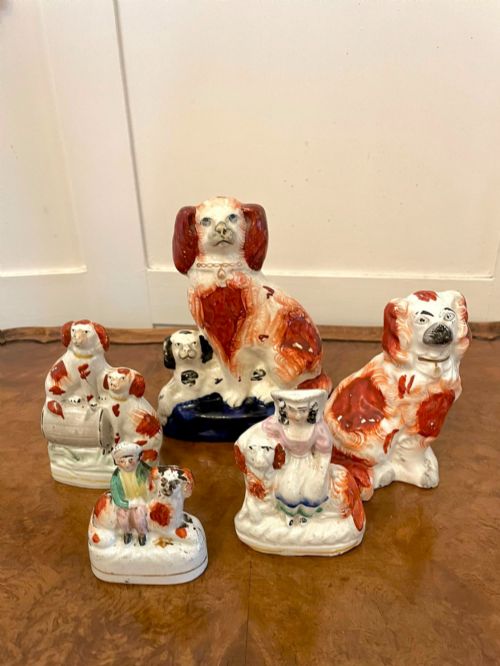
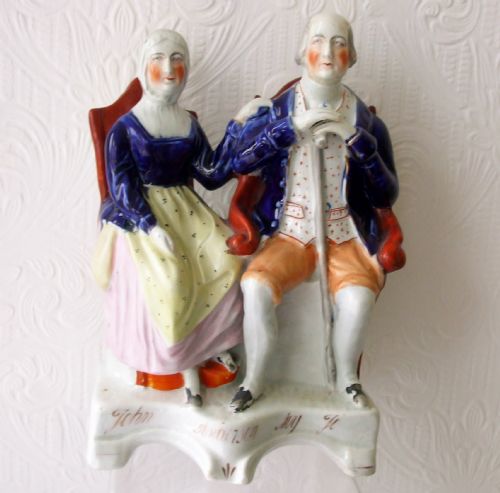
An antique English pottery group brings together figures and animals modelled in clay, spanning the nineteenth century with a strong representation of Victorian Staffordshire production. These domestic ornaments range from literary subjects and theatrical pairings to royal portrait groups and theological scenes.
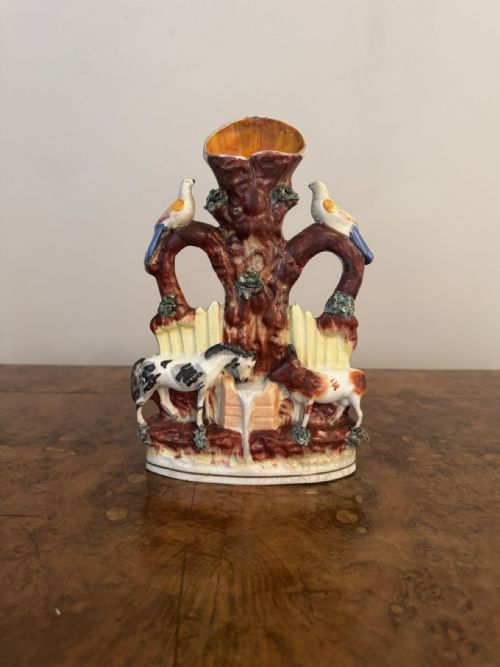
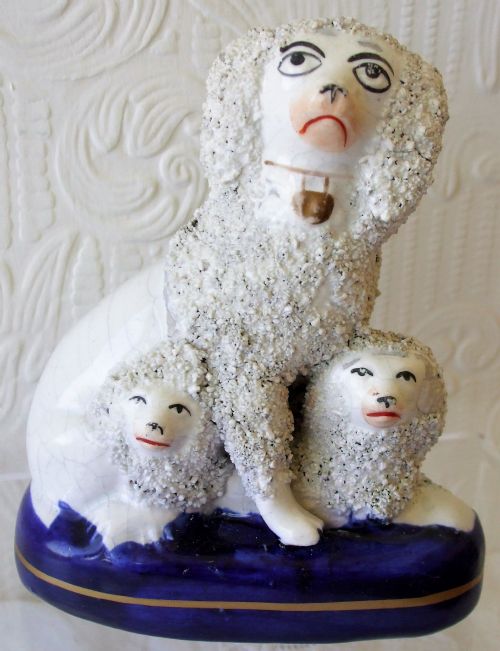
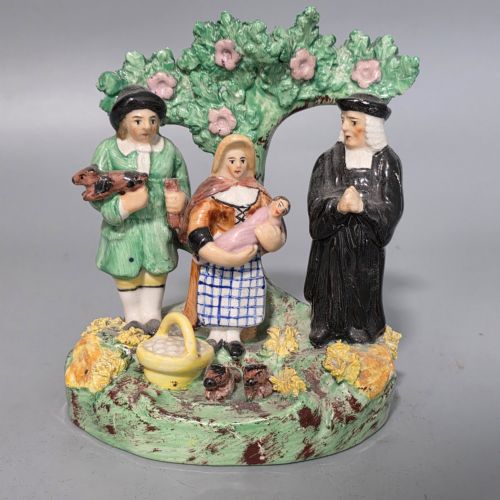
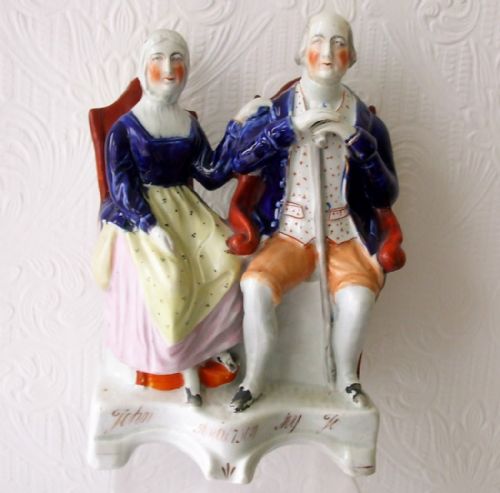
Buyers encounter flatback figures designed to stand against a mantelpiece, alongside spill vases, poodles, and multi-figure groups like the Tithe Pig or the Band of Hope. The forms vary from modest individual pairs to elaborate multi-character historical tableaus.
Most examples originate from the Victorian period, though earlier pieces from around eighteen thirty bridge the transition from pearlware to later earthenware bodies.
Materials and construction
Poodles appear frequently carrying shredded clay in their mouths, doubling as charming mantelpiece ornaments and wool holders.
Assessing quality and character
The sophistication of the narrative group also defines the tier, where complex multi-figure scenes such as Peace and Plenty or the Tithe Pig demand greater skill in composition and balance than standard pairs.
The Antique English Pottery Group Glossary
- Flatback
- A figure moulded with a finished front and a plain, unglazed or minimally decorated flat rear designed to stand flush against a wall.
- Spill vase
- A hollow cylindrical holder integrated into the figure group, intended to hold wooden spills for lighting fires and candles.
- Pearlware
- A refined earthenware body developed in the late eighteenth century featuring a bluish glaze that pools in recesses.
- Enamel paint
- Vitreous pigments applied over the fired glaze and fixed with a lower temperature second firing to provide vivid surface colour.
- Lead glaze
- A glossy coating containing lead oxide that adds transparency and shine to the earthenware body underneath.
Antique English Pottery Group: Frequently Asked Questions
What are Staffordshire flatback figures?
Staffordshire flatbacks are pottery figures made with a flat, undecorated back because they were intended to sit on mantelpieces or shelves against a wall.
Potters utilised this method to save material and manufacturing time while creating decorative ornaments for nineteenth-century homes.
How do I date an antique pottery group?
Dating relies on the style of dress, the ceramic body, and the subject matter, such as Crimean War references or royal portraits from the Victorian era.
Earlier pieces often use pearlware bodies, whereas later nineteenth-century figures utilise heavier earthenware with flat backs.
What subjects appear on these figures?
The subjects range from royal portrait groups and literary characters to biblical scenes, temperance groups, and domestic animal pairings.
Many figures commemorated contemporary events, news stories, or moral lessons of the Victorian period.
How were spill vases used?
Spill vases combined ornamental figures with a functional holder designed to store thin wooden spills used for transferring flames.
Households used these spills to light candles, oil lamps, and coal fires before the widespread availability of safety matches.
Where should I display pottery groups?
These figures suit mantelpieces, high shelves, and cabinets where their bright enamel colours and sculptural forms remain visible.
Because many are flatbacked, placing them near a wall mimics their original nineteenth-century domestic placement.