


Antique English Pottery Dogs
Antique English pottery dogs bring the hearth-side charm of the nineteenth century into modern rooms as enduring mantelpiece companions.

Antique English Pottery Dogs
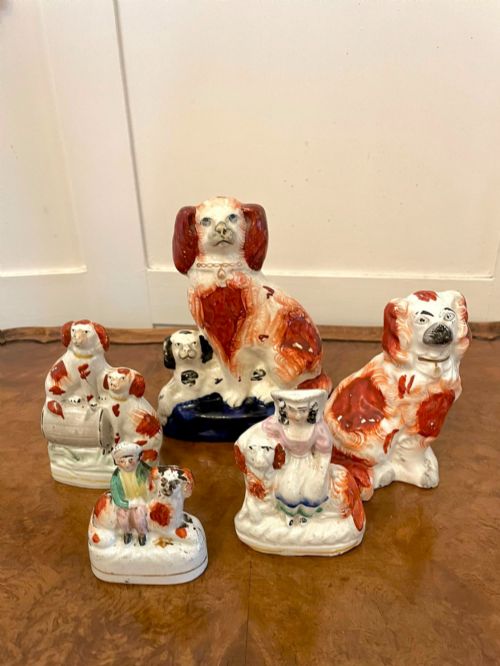
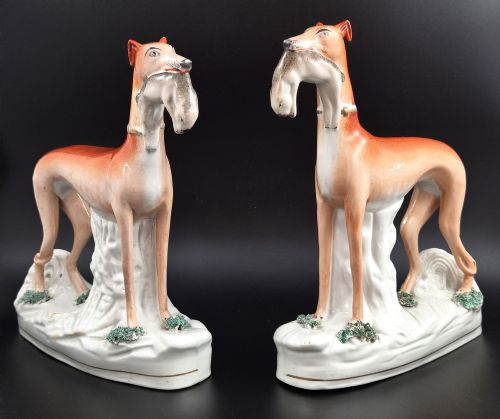
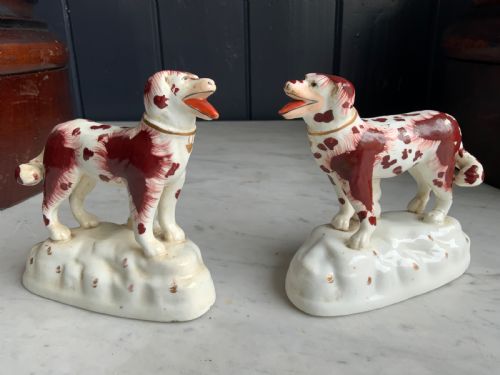
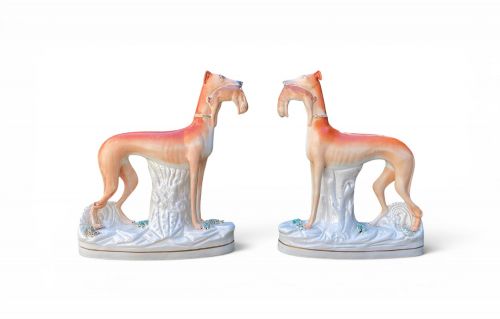
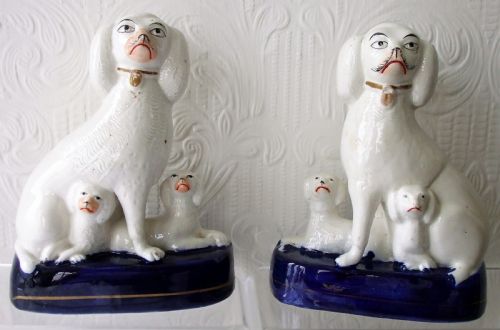
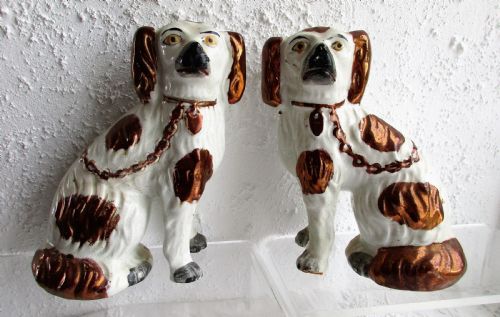
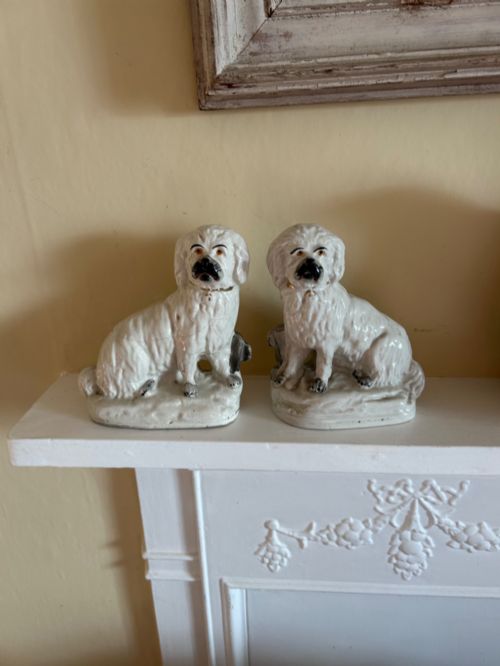
When you search for antique English pottery dogs, you encounter sculptural earthenware figures that populated British mantelpieces throughout the nineteenth century. These ceramic animals depict breeds such as spaniels, greyhounds, poodles, dalmatians, pugs, and setters, often modelled in pairs to sit symmetrically at either end of a fireplace.
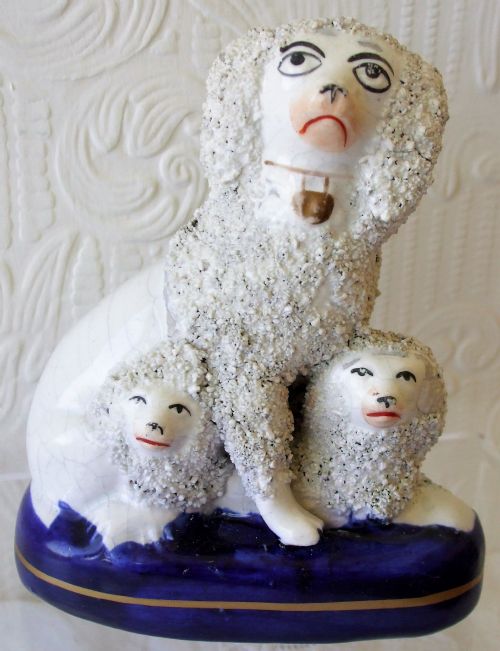
The majority of pieces on this page originate from the Victorian period, spanning the mid to late nineteenth century, alongside earlier Georgian examples. Formats range from large decorative pairs and quill holders to miniature figures, figure groups, and dogs accompanied by puppies or hares.
Makers produced these decorative objects primarily to satisfy a domestic appetite for animal subjects during the Victorian era. They survive today as characteristic examples of Staffordshire pottery, capturing the distinct breeds and decorative tastes of their time.
How they were made
Many examples incorporate gold leaf or gilt highlights on collars, chains, and lockets, catching the firelight in nineteenth-century parlours. Certain later nineteenth-century figures utilised inserted glass eyes to add realism to the ceramic expressions.
Several Victorian greyhounds double as quill holders, ready to assist with nineteenth-century correspondence.
What varies in quality
Scale and complexity also define the upper tier, with large pairs, complex figure groups involving children or prey, and unusual breeds commanding attention. The application of gilt highlights and the presence of original glass eyes further distinguish finer decorative figures.
James Dudson
The Antique English Pottery Dogs Glossary
- Earthenware
- A porous ceramic body fired at lower temperatures, commonly used for nineteenth-century Staffordshire figures. It requires a protective glaze to hold liquid and provide a smooth surface for enamel decoration.
- Comforter spaniels
- The affectionate name given to pairs of Staffordshire spaniels that traditionally guarded the hearth in Victorian homes. They usually face one another and wear chains and lockets.
- Lead glaze
- A glossy coating containing lead oxide applied to pottery before firing to create a shiny, impervious surface. This finish gives many nineteenth-century figures their characteristic reflective sheen.
- Quill holder
- A specialised desk accessory formed as a ceramic animal with an open vessel or trough on the back. Staffordshire greyhounds were frequently adapted into this functional desk form.
Antique English Pottery Dogs: Frequently Asked Questions
Why are Staffordshire dogs found in pairs?
Victorian households traditionally placed matching pottery dogs at opposite ends of the mantelpiece to create symmetrical decor.
This paired arrangement mirrored the formal interior design preferences of nineteenth-century parlours.
What breeds do these pottery figures represent?
Potters most frequently modelled King Charles spaniels, greyhounds, poodles, and dalmatians based on popular pets of the era.
Less common subjects include pugs, setters, Maltese terriers, and hunting dogs depicted alongside hares.
How do I date an antique pottery dog?
Dating relies on stylistic clues, the type of earthenware body, glaze characteristics, and any recorded period attributions.
Mid-nineteenth-century Victorian pieces often display distinct hand-painted enamel palettes, while later examples sometimes incorporate glass eyes.