
Antique English Footstool
An antique english footstool offers a low platform for resting feet or sitting by the hearth, drawing on centuries of timber and textile traditions.
Antique English Footstool
When searching for an antique english footstool, buyers encounter a broad sweep of domestic seating spanning from the seventeenth century through to the early twentieth century.
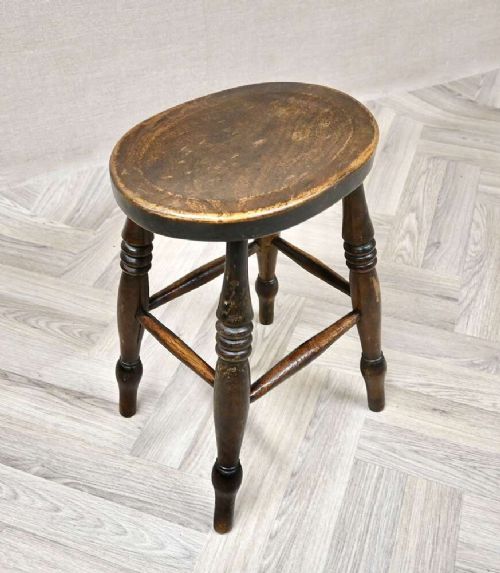
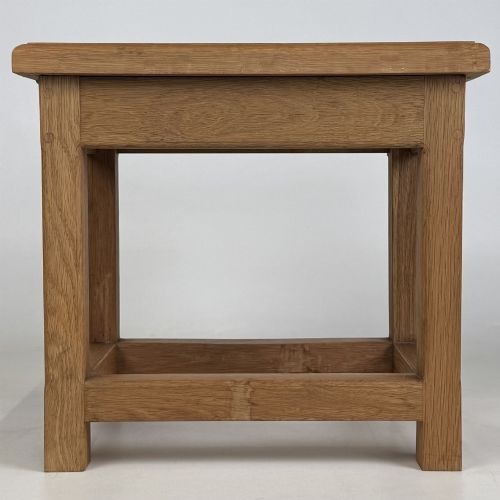
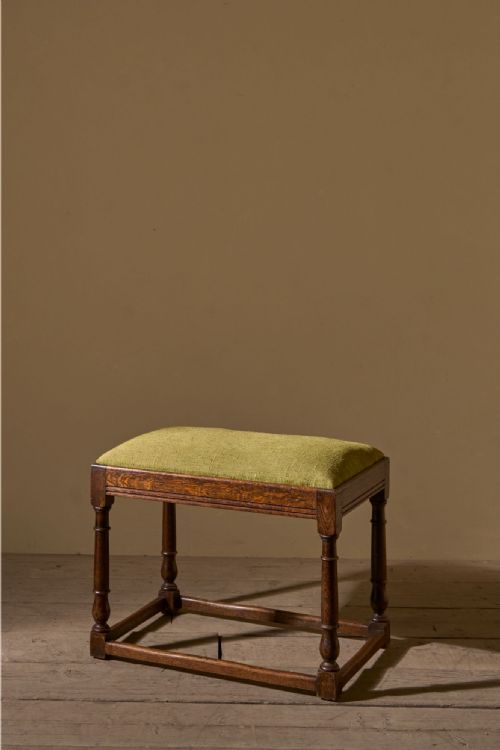
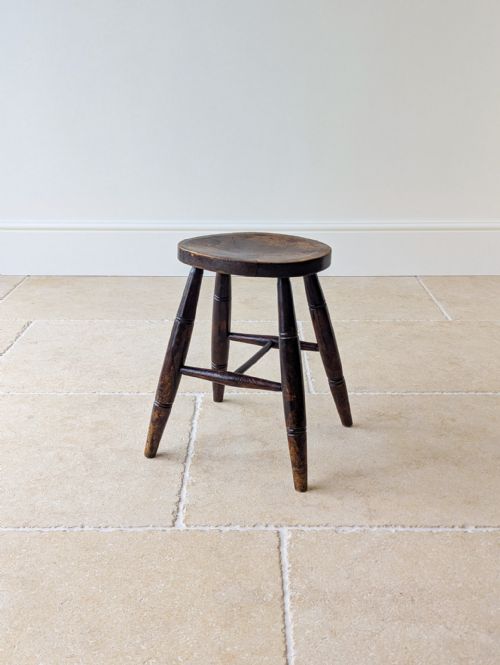
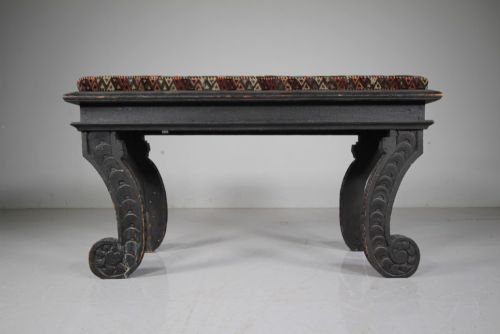
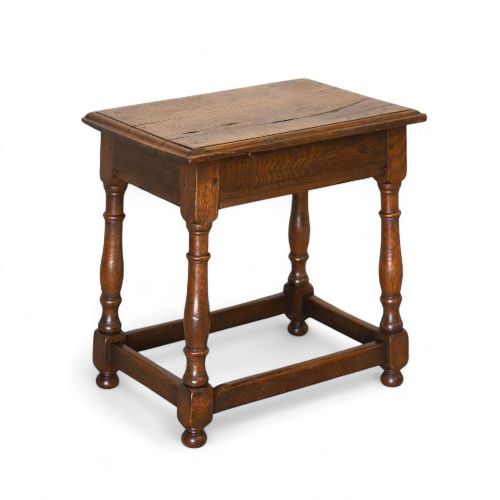
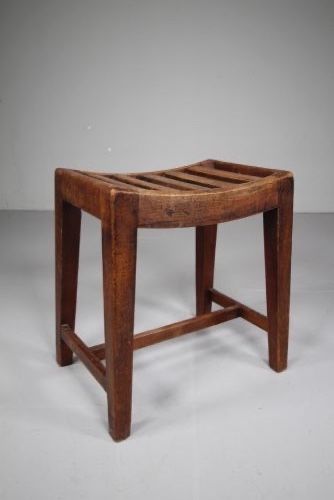
The selections on this page range from heavy oak joint stools and provincial elm examples to upholstered Victorian fireside rests, mahogany dressing stools, and low carriage footstools.
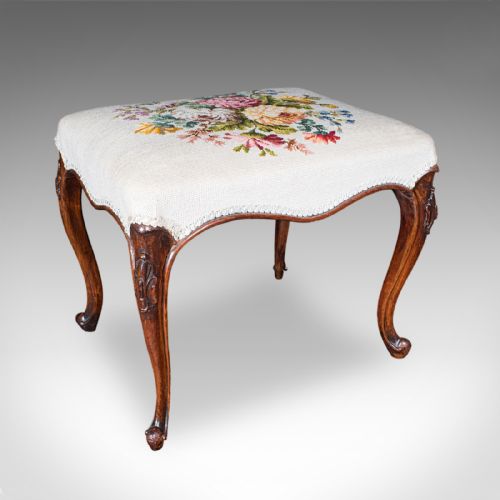
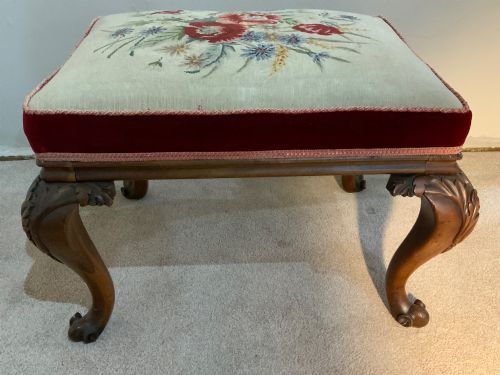
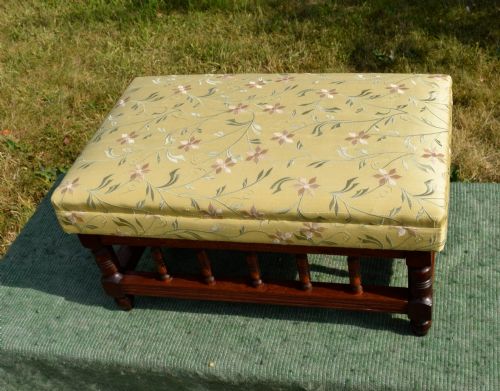
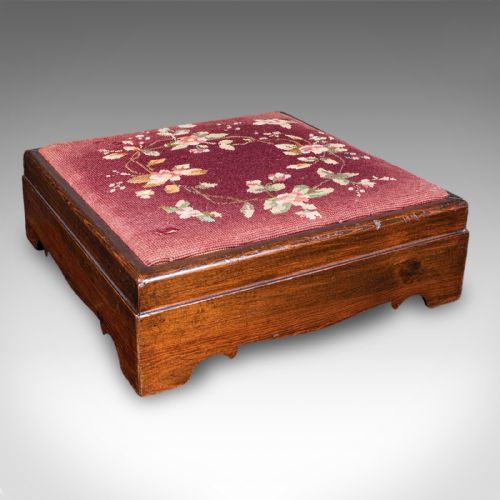
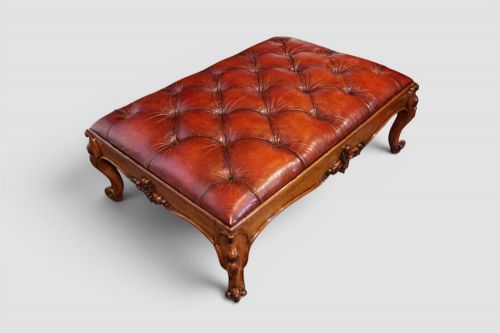
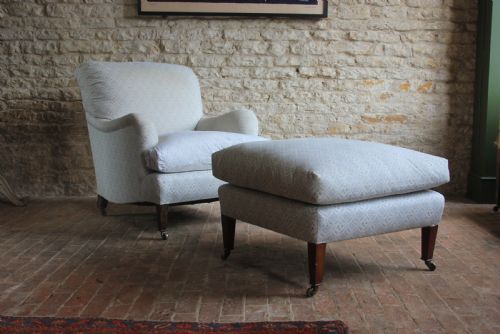
Victorian and nineteenth-century pieces upholstered in needlepoint, tapestry, or leather appear frequently alongside earlier timber frames.
Materials and construction
Cabinetmakers utilised sturdy native and imported hardwoods including oak, walnut, mahogany, pine, yew wood, and goncalo alves for the frames and legs.
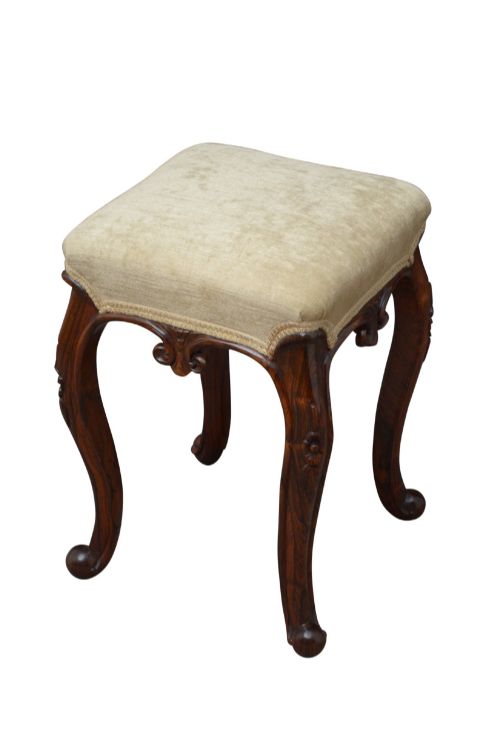
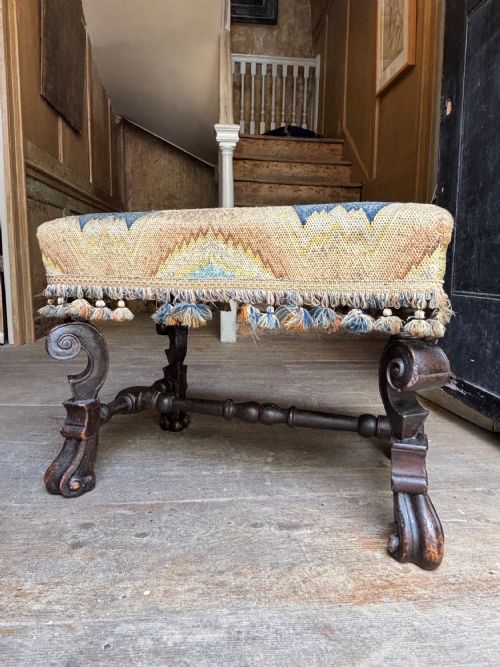
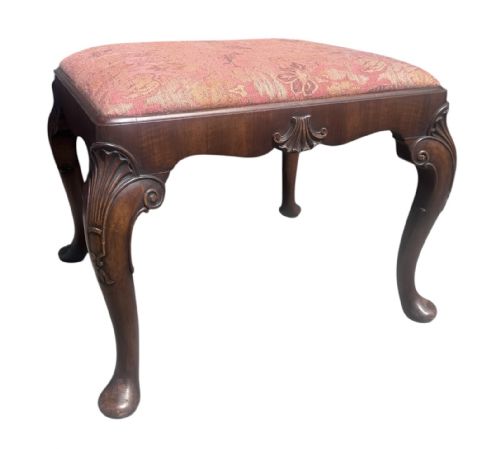
Joint construction relies on pegged framing and traditional joinery on seventeenth and eighteenth-century pieces, while later Victorian and Edwardian examples often feature turned or cabriole legs occasionally fitted with brass castors.
Upholstered surfaces utilise traditional stuffing finished with textiles, needlepoint, crewel work, beadwork, buttoned red leather, or heavy green linen.
Leather animal footstools bring a touch of whimsy to the fireside alongside traditional mahogany dressing stools and joint timber seats.
Assessing craftsmanship
The distinction between ordinary utility items and superior examples lies in the crispness of the timber carving, the selection of figured veneers like burr yew or walnut, and the integrity of the original frame construction.
Finer pieces display careful attention to secondary woods, robust joinery such as pegged tenons, and upholstery work executed with dense stuffing and durable textiles like hand-dyed leather or fine needlepoint tapestry.
Howard and Sons·Omersa For Liberty
The Antique English Footstool Glossary
- Joint stool
- A traditional wooden stool constructed with mortise and tenon joints secured by wooden pegs rather than glue or metal nails.
- Gout stool
- An adjustable or low footrest specifically designed to elevate and support the foot of a person suffering from joint pain.
- Needlepoint
- A form of counted thread embroidery stitched onto an open-weave canvas ground, frequently seen on Victorian footstool tops.
- Cabriole leg
- A furniture leg that curves outward in a convex arc before tapering inward in a concave sweep, popular on mid-Victorian seating.
- Carolean
- Pertaining to the reign of King Charles II, characterising seventeenth-century English furniture of baroque form and elaborate turned woodwork.
Antique English Footstool: Frequently Asked Questions
How were footstools used historically?
These low seats served multiple domestic purposes, acting as footrests by the fireside, carriage comforts for cold journeys, dressing seats in bedrooms, and occasional low coffee tables.
Victorian gout stools often featured adjustable mechanisms to ease foot pain, while heavy joint stools provided sturdy, movable seating in earlier provincial English homes.
How do I date an antique footstool?
Dating relies on identifying the primary wood species, construction techniques, and stylistic markers such as leg shapes and upholstery styles.
Seventeenth-century pieces typically show pegged oak joinery and rectilinear frames, whereas Victorian examples introduce walnut, mahogany, cabriole legs, and buttoned leather or needlepoint covers.
What is a joint stool?
A joint stool is an early wooden seating form constructed using tightly fitted mortise and tenon joints held together by pegged wooden dowels.
These seventeenth and eighteenth-century oak or elm pieces were built to withstand heavy daily use in provincial English households.
How do I care for antique upholstery?
Preserving textile and leather surfaces requires keeping the pieces away from direct sunlight and excessive heat sources that dry out natural fibres and wood.
Regular gentle dusting protects delicate needlepoint, tapestry, and crewel work, while leather benefits from occasional light conditioning to maintain its flexibility.