





Antique Enamel Centerpiece
An antique enamel centerpiece anchors a dining table or sideboard, bringing colour and metalwork together in a single focal vessel.
Antique Enamel Centerpiece
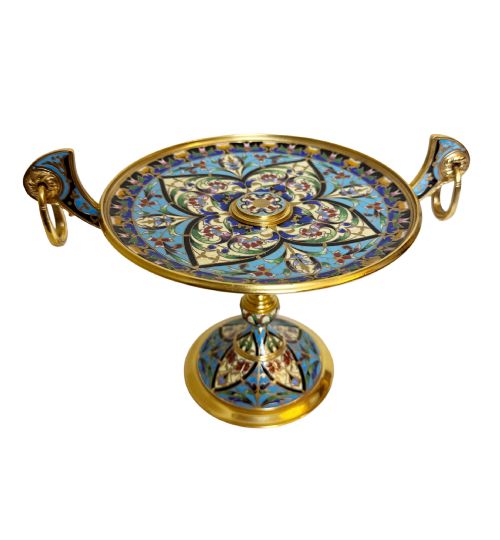
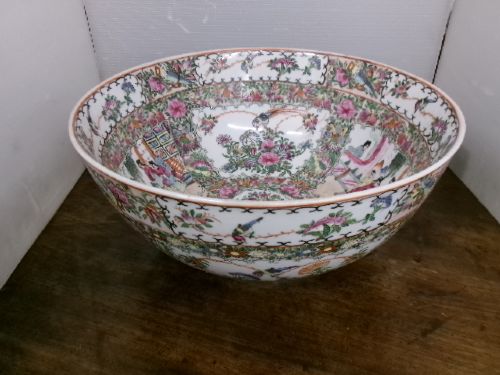
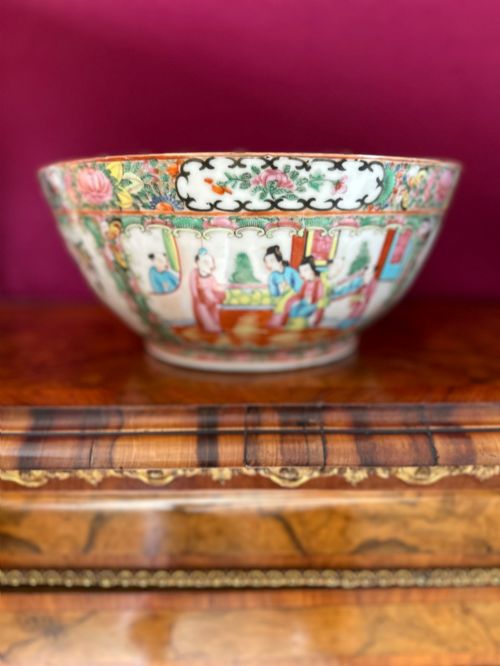
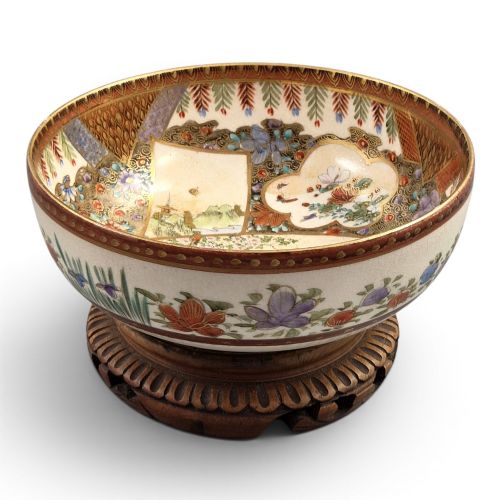
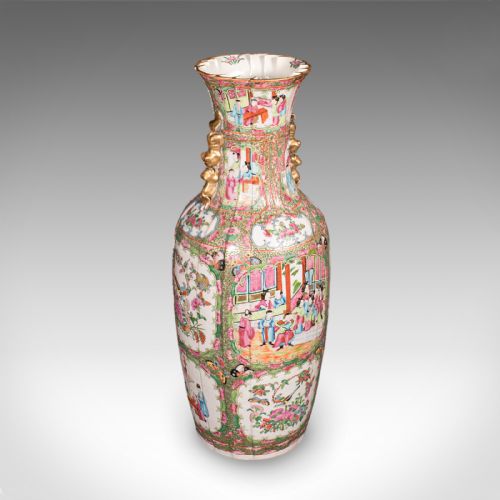
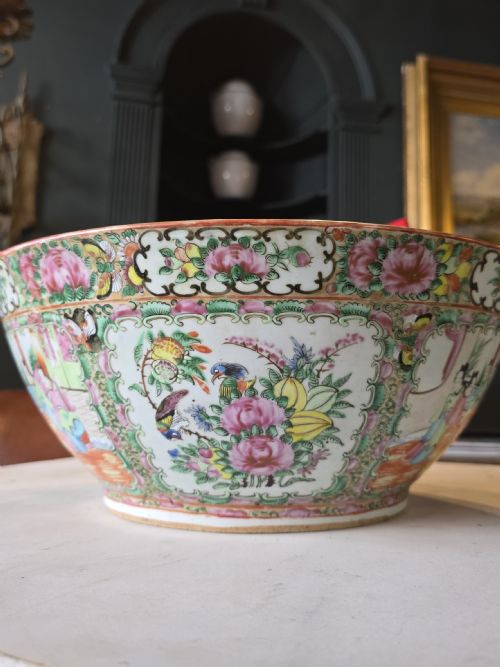
An antique enamel centerpiece takes the form of large bowls, tazzas, and trays intended for display or service. These items originate primarily from nineteenth-century French workshops, Meiji period Japan, and Chinese export kilns.
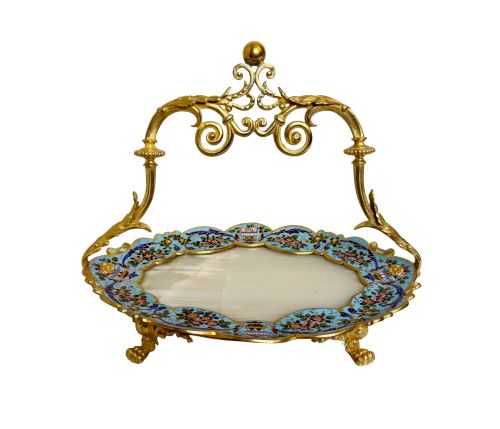
French examples often pair champlevé enamel with gilt bronze and green onyx or porcelain. Japanese pieces demonstrate cloisonné enamel and Satsuma or Imari porcelain, while Chinese examples showcase hand-painted famille rose and Canton motifs.
How They Were Made
Metalwork foundations utilise cast gilt bronze, copper, and brass, shaped into mounts, trays, and vessel bodies. Artisans applied enamel via champlevé and cloisonné techniques, fusing coloured glass pastes into metal recesses or wire cells.
Ceramic bodies combine porcelain and earthenware formed on the wheel or in moulds, then decorated with hand-painted mineral pigments and gold leaf. Glass pieces incorporate moulded crystal with applied enamel motifs.
Listings feature items from the 18th Century through the 1940s, spanning French, Japanese, and Chinese origins.
What Varies in Quality
Quality rests upon the crispness of the metal chasing and the precision of the enamel work. Finer champlevé and cloisonné feature clean cell boundaries and even colour saturation without pitting.
Ceramic and glass variants depend on the execution of the hand-painted details and the weight of the mounts. Superior French ormolu and heavy bronze mountings display deeper relief and more secure joinery.
Kozan·St Louis glassworks·Samson Of Paris·François-Eugène Rousseau·Baccarat
The Antique Enamel Centerpiece Glossary
- Champleve enamel
- A technique where troughs or cells are carved into a metal surface and filled with enamel powder before firing. This method creates bold coloured designs bordered by metal lines.
- Cloisonne enamel
- A process using thin metal wires soldered to a metal base to form compartments that receive coloured enamel pastes. Subsequent firing and polishing yield a smooth, patterned surface.
- Ormolu
- Gilded bronze used widely for mounts and decorative fittings during the eighteenth and nineteenth centuries. The technique involves applying a gold amalgam to a bronze base.
- Tazza
- A shallow bowl or cup raised on a high foot, used historically for serving fruit or sweets. In decorative metalwork, it serves as a prominent table centrepiece.
- Famille rose
- A palette of opaque enamels dominated by pink or rose colours, introduced to Chinese porcelain during the Qing dynasty. It allowed artists to achieve subtle tonal gradations in floral and figural scenes.
Antique Enamel Centerpiece: Frequently Asked Questions
What is an antique enamel centerpiece?
An antique enamel centerpiece is a decorative vessel, tray, or tazza designed for table or sideboard display. These pieces combine metalwork, porcelain, or glass with fused enamel decoration.
They emerged from various traditions including nineteenth-century French salons, Meiji period Japanese workshops, and Chinese export trade. Collectors prize them for their vibrant colour palettes and intricate craftsmanship.
How were these centerpieces used?
Historically, large bowls and tazzas served fruit, flowers, or sweetmeats during formal dining. They acted as the visual anchor of the table setting.
Over time, many transitioned into pure decorative objects placed on sideboards, mantels, or display cabinets to showcase craftsmanship and material wealth.
How do I identify French champleve pieces?
French champlevé centerpieces from the nineteenth century typically feature heavy gilt bronze or ormolu mounts combined with onyx or porcelain. The enamel work shows deep, rich colours set into carved bronze channels.
Stylistic cues often point toward French Rococo revival or Art Nouveau aesthetics, frequently pairing with glass bodies from houses like Baccarat or St Louis.
What distinguishes Japanese cloisonne bowls?
Japanese cloisonné bowls from the Meiji period display exceptionally fine wirework depicting birds, flora, and natural scenes. The enamel surface is often polished to a mirror finish.
Unlike heavier European metal mounts, these pieces are constructed entirely of metal bodies coated inside and out with intricate geometric or pictorial enamel cells.