
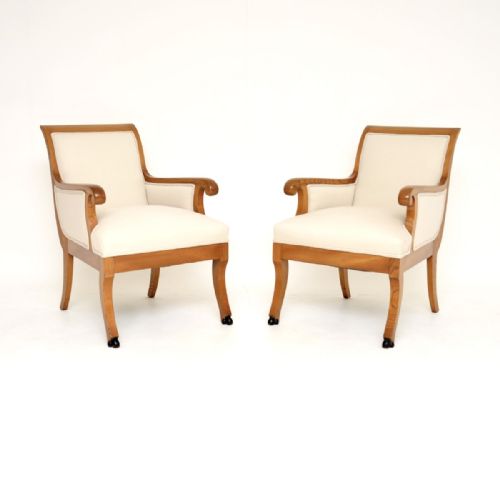


Antique Empire Seating
Antique empire seating comprises grand mahogany armchairs, giltwood stools and settees shaped by neoclassical lines and classical forms.
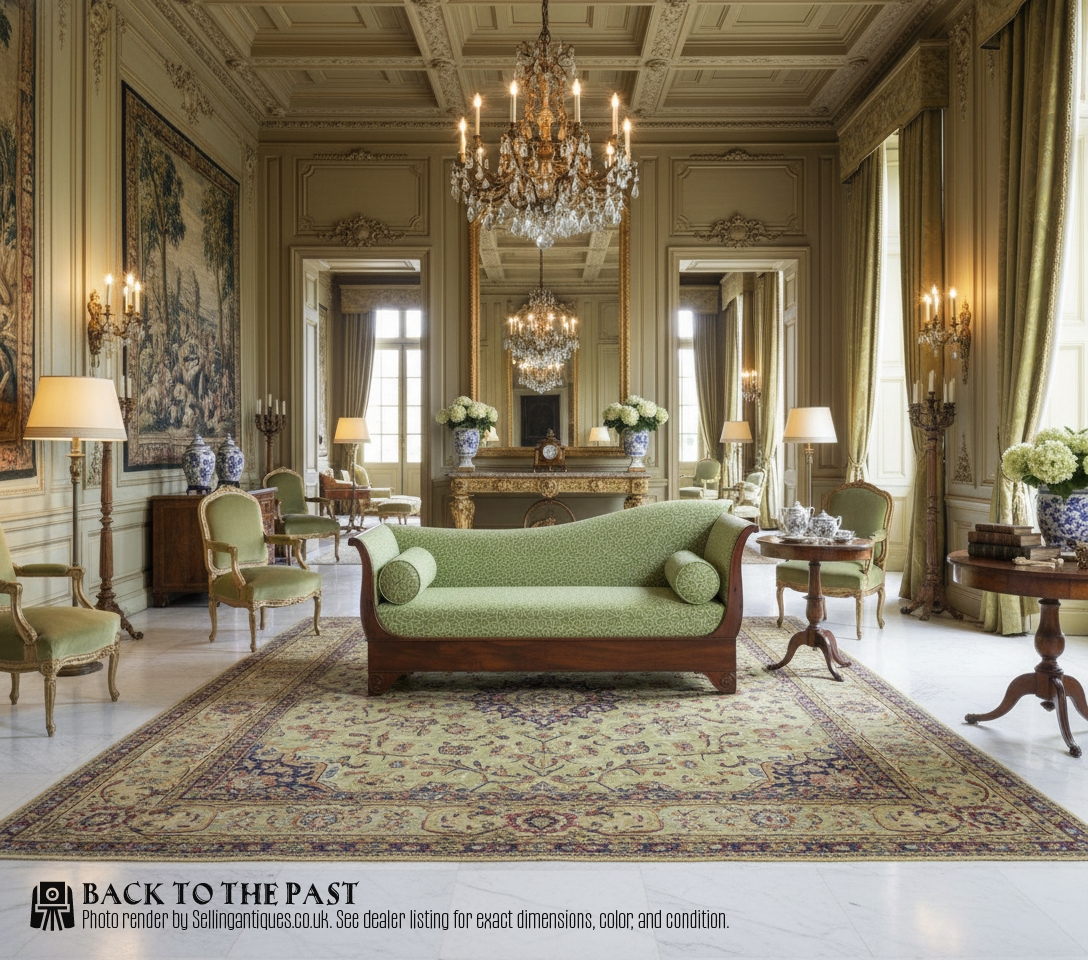
Antique Empire Seating
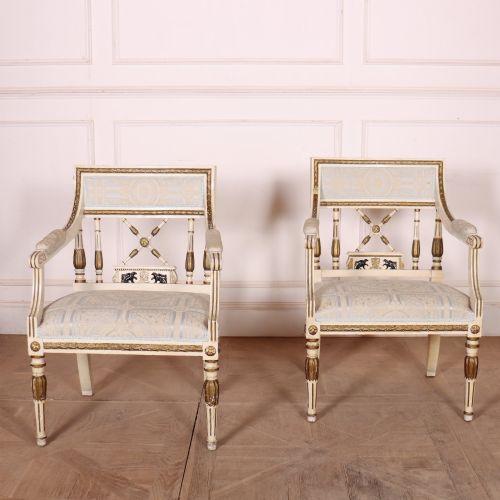
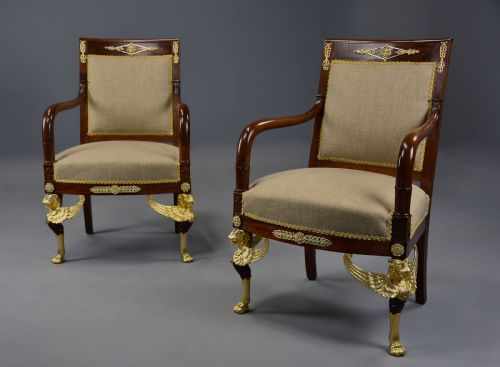
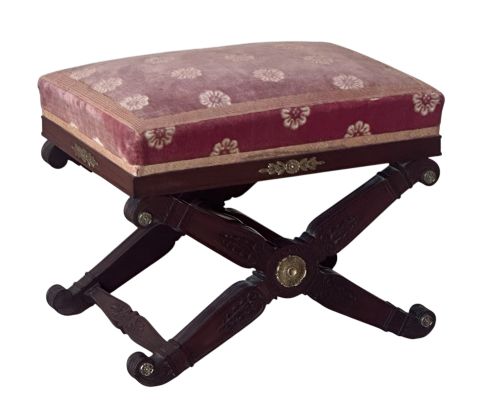
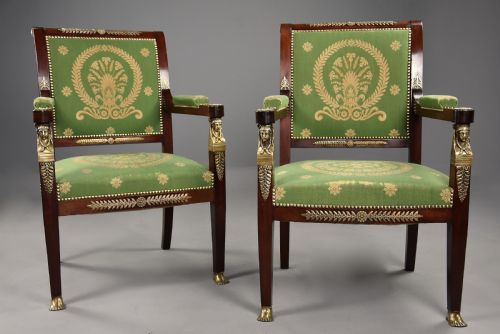
Antique empire seating encompasses a range of formal chairs, settees, and stools derived from nineteenth-century classical designs. Pieces frequently appear as pairs of mahogany armchairs, giltwood salon chairs, and X-frame stools reflecting French and Swedish interpretations of the style.
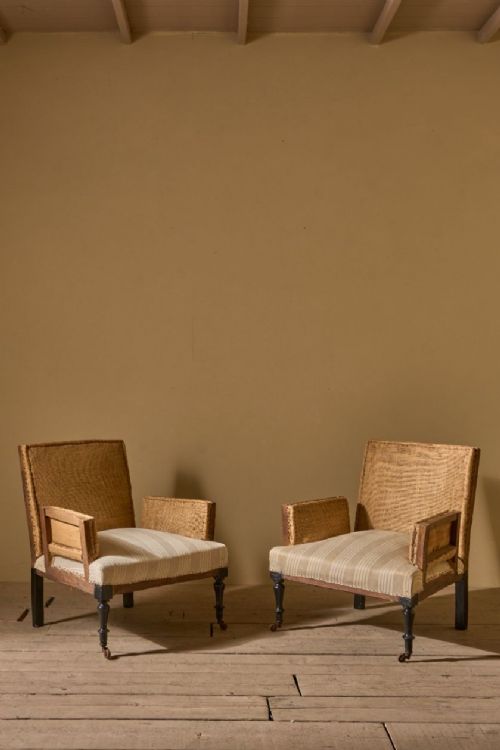
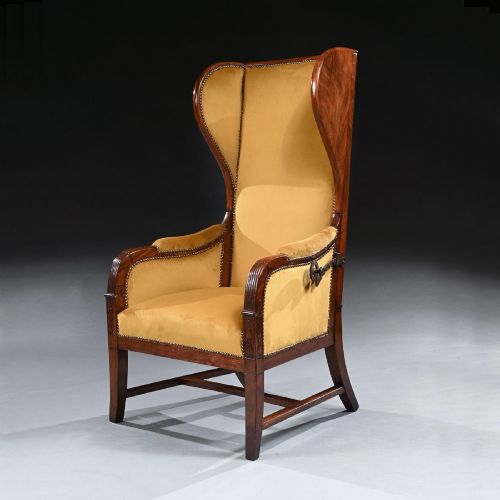
Buyers encounter numerous revival examples alongside nineteenth-century originals, including larger settees and modular lounge suites. Forms span from open armchairs and reclining wingbacks to piano stools and window seats used across drawing rooms and salons.
Materials and construction
Cabinetmakers constructed these frames primarily from solid mahogany, walnut, and birch, often applying rich polish to highlight the grain. Giltwood and gesso surfaces appear frequently on seating intended for formal reception rooms.
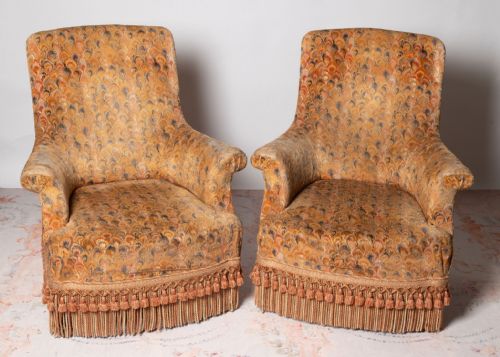
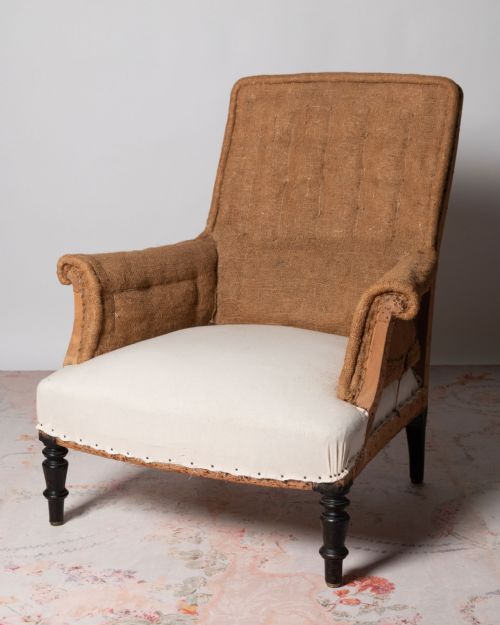
Metal ornamentation plays a prominent role, with cast ormolu and brass mounts fixed to wooden rails. Upholstery materials include velvet, patterned fabrics, and traditional textiles fitted over sprung or webbed bases.
Listings feature woods including mahogany, birch, walnut, and elm alongside giltwood and gesso finishes.
What separates examples in quality
Quality rests upon the crispness of carved wooden details and the precision with which ormolu mounts fit the frame contours. Finer specimens display deeply chiselled mounts and carefully selected wood veneers.
The integrity of the underlying joinery and the authenticity of the period surface finish dictate the standing of individual pieces. Suites and matched pairs command distinct interest due to the survival of complete sets.
The Antique Empire Seating Glossary
- Ormolu
- Gilded bronze mounts applied to furniture frames for decorative contrast. This technique defines much of the classical aesthetic.
- Fauteuil
- An open-armed French armchair featuring exposed wooden framing and upholstered arm pads. They typically sit within formal salon settings.
- Curule stool
- A classical seat type shaped with crossing legs resembling ancient Roman forms. Giltwood and mahogany versions survive from the nineteenth century.
- Canapé
- A decorative sofa or settee designed to match salon chair suites. These items share the carved mahogany or giltwood traits of smaller chairs.
Antique Empire Seating: Frequently Asked Questions
How do I identify empire style?
Empire style pieces display heavy classical influences inspired by ancient Rome and Greece, often featuring symmetrical proportions and dark woods.
Look for distinctive elements such as paw feet, scrolling arm supports, and prominent bronze or ormolu mounts.
Were these chairs meant for everyday use?
Most antique empire seating was built for formal reception rooms, parlours, and salons rather than casual lounging.
Frames were constructed to project status and visual weight, making them centrepieces in historic interiors.
Can I use antique chairs in modern rooms?
These seating forms work well as statement pieces paired with minimalist or contemporary interior designs.
Armchairs and settees add structural contrast and historical character when mixed with clean modern lines.
What is a revival piece?
Revival pieces are items produced later in the nineteenth century, such as during the Napoleon III or Empire Revival periods.
They replicate earlier classical designs while utilising the manufacturing methods and stylistic preferences of their own era.