




Antique Emerald Brooch
An antique emerald brooch brings rich green colour and period character to a lapel, spanning Victorian, Edwardian, and Art Deco designs.
Antique Emerald Brooch
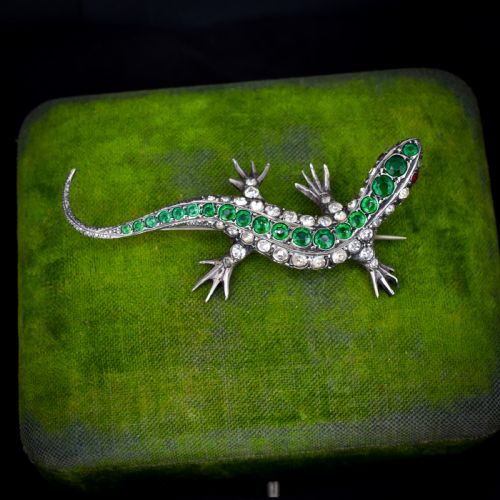
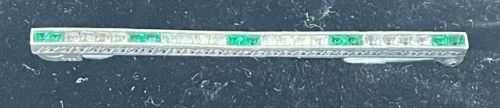
Victorian examples often feature silver and gold settings shaped as butterflies, bees, lizards, monkeys, or oval clusters. Art Deco versions lean toward geometric bar brooches and pieces utilising paste alongside genuine stones.
Origins stretch across Britain, France, and Continental Europe, utilising yellow gold, silver, platinum, and various multi-gemstone combinations. Buyers find both modest paste alternatives and substantial diamond and emerald clusters.
Materials and construction
Metals span 9ct, 12ct, 15ct, and 18ct yellow gold, alongside silver, platinum, and silver-topped gold. These metals provide the structural framework for mounting emeralds alongside diamonds, rubies, sapphires, and paste.
Craftsmen utilised techniques such as cluster settings, pave work, and bar construction. Natural and synthetic or paste stones were secured by hand in claw, bezel, and collet settings appropriate to each period.
Listings include Victorian, Edwardian, Belle Epoque, and Art Deco periods, utilising silver, platinum, 9ct, 15ct, and 18ct gold.
Quality factors
The standard of an antique emerald brooch depends upon the integration of the stones and the complexity of the metalwork. Finely pierced galleries, secure stone settings, and balanced gemstone weight distinguish superior examples from simpler pieces.
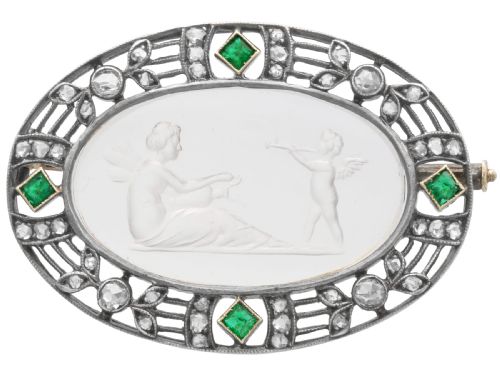
Materials also divide the range, as platinum and higher carat golds paired with natural diamonds and emeralds sit above silver-mounted paste alternatives. The artistry of figural designs, such as insects or coronets, dictates execution quality.
The Antique Emerald Brooch Glossary
- Bar brooch
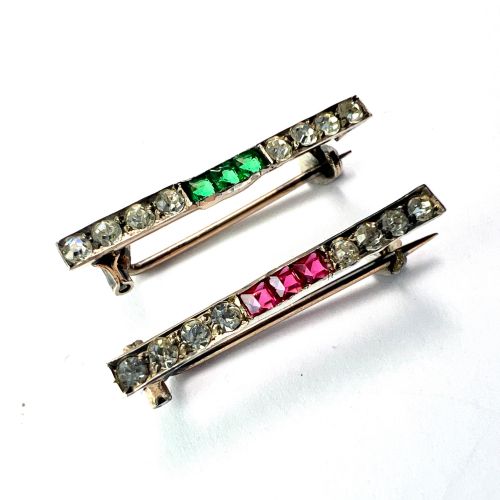
- A slender horizontal pin ornament popular during the Victorian and Art Deco eras. It often displays a central cluster or gemstone line.
- Brooch pendant
- A dual-purpose piece equipped with both a pin and a hidden loop. This allows the ornament to be worn on clothing or suspended from a chain.
- Paste
- Cut and polished lead glass utilised to imitate precious gemstones. It appears frequently in period costume and transitional jewellery.
- Rose cut
- An antique diamond cut featuring a flat base and a domed crown with triangular facets. It provides a soft, glowing reflection rather than modern brilliance.
- Cluster brooch
- An arrangement where a central stone is surrounded by a ring of smaller gems. This design maximises visual impact and light reflection.
Antique Emerald Brooch: Frequently Asked Questions
How do I wear a brooch?
Pin the piece securely through heavier fabrics like wool coats, lapels, or structured scarves to support the weight of the metal and stones.
For lighter silks or cottons, place a small backing piece behind the fabric to distribute tension and prevent pulling.
Can I convert a brooch into a pendant?
Many pieces featuring a hinged bail or loop at the reverse can slide directly onto a neck chain without alteration.
If the piece lacks a loop, a jeweller can sometimes attach a removable converter without damaging the original setting.
How do I date an antique brooch?
Examine the metal alloys, fastening mechanisms, and gem-cutting styles to establish the likely decade of manufacture.
Victorian pieces often display hinged pin stems extending beyond the safety catch, whereas later Edwardian and Art Deco pieces introduce platinum and more secure locking clasps.
Are emeralds heat treated?
Most antique emeralds receive traditional oil or resin treatments to enhance clarity and fill natural surface-reaching fissures.
Gentle cleaning with a soft dry cloth maintains the stability of these treated stones without harming the mounting.