
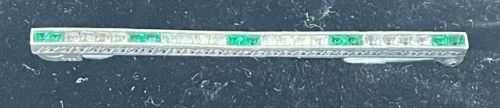
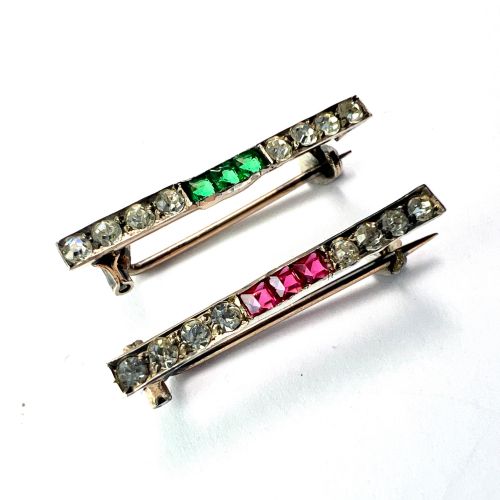


Vintage Emerald Pin
A vintage emerald pin is a striking piece of jewellery for a lapel or hat, offering vibrant green colour set in precious metals from various periods.
How they were made
Craftsmen utilised precious metals including platinum, silver, and gold ranging from nine to eighteen karats to form the structural mounts and settings for these pins. These metals were cast, fabricated, and hand-worked into delicate wirework, rigid bar frameworks, and figurative shapes such as ducks, frogs, and butterflies.
Gemstones were secured using traditional techniques appropriate to their era, integrating prong settings, cluster arrangements, and flush mounts for diamonds, sapphires, rubies, and paste alongside the primary emeralds.
What varies in quality
The calibre of the piece depends on the weight and saturation of the emeralds and accompanying diamonds, alongside the complexity of the metalwork. Substantial carat weights in precious platinum or eighteen-carat gold elevate a piece above simpler base-metal or paste alternatives.
Design sophistication and maker reputation separate standard commercial production from exceptional jeweled works of art. Pieces bearing signatures from established firms command greater attention than unsigned or generic items.
A tiny gold duckling waddles alongside jewelled frogs and butterflies in this glittering menagerie of emerald pins.
Gubelin·E. Wolfe & Co.·Asprey
The Vintage Emerald Pin Glossary
- Bar brooch
- A narrow horizontal pin featuring gemstones or decorative metalwork aligned in a straight line. This form was especially popular during the Victorian and Edwardian periods.
- Paste
- Faceted lead glass utilised as a substitute for gemstones in historic jewellery. It appears frequently in period pieces to mimic diamonds or emeralds.
- Platinum
- A dense, durable, and white precious metal used extensively in fine jewellery fabrication. It provides secure settings for delicate stone arrangements.
- Carat
- The unit of measurement used to weigh gemstones. Higher figures indicate larger individual stones or total gem weights within a piece.
- Novelty brooch
- A figurative pin shaped to resemble an animal, insect, or object. These pieces often capture the playful aesthetic of mid-century design.
Vintage Emerald Pin: Frequently Asked Questions
How do I wear a vintage emerald pin?
These pins attach securely to lapels, heavy scarves, hats, or structured collars using standard pin stems and safety catches. Placing them on heavier fabrics ensures the weight of gold and platinum settings hangs properly without pulling.
For convertible pieces that double as pendants, a delicate chain transforms the brooch into a necklace. This versatility allows the jewellery to adapt to different outfits and occasions.
How are different periods identified?
Stylistic cues such as geometric lines point towards Art Deco origins, while naturalistic insect forms often align with Victorian or late nineteenth-century manufacture. Hallmarks stamped into the gold, silver, or platinum mountings provide official stamps regarding metal purity and origin.
Examining the setting techniques and stone cuts offers further clues to the date of creation. Master jewellers adapted their methods across the decades, leaving distinct technical signatures.
Are emeralds treated in vintage pieces?
Natural emeralds frequently undergo traditional clarity enhancements to improve their appearance. These historical practices have been common in gemstone treatment for generations.
Inspecting the stones under magnification reveals natural inclusions unique to emeralds. These internal characteristics confirm the organic origin of the green crystals.
What metals are most common?
Yellow gold appears across Victorian, Edwardian, and mid-century items, varying from nine to eighteen karats. Platinum and silver are frequently found in earlier and Art Deco designs to provide a bright white contrast to gemstones.
White gold also emerges in later mid-century pieces alongside traditional yellow metal alloys. Each metal choice reflects the prevailing fashion and metallurgical technology of its specific era.