


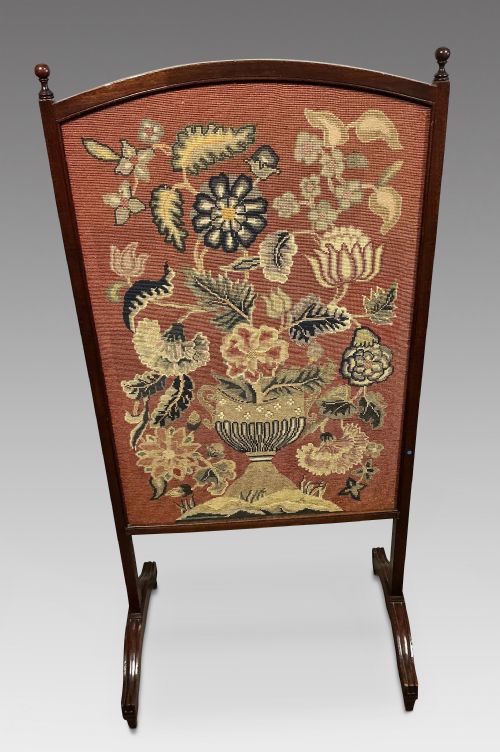


Antique Embroidered Screen
An antique embroidered screen brings warmth and texture to a room, functioning historically to deflect hearth heat or divide a space.
Antique Embroidered Screen
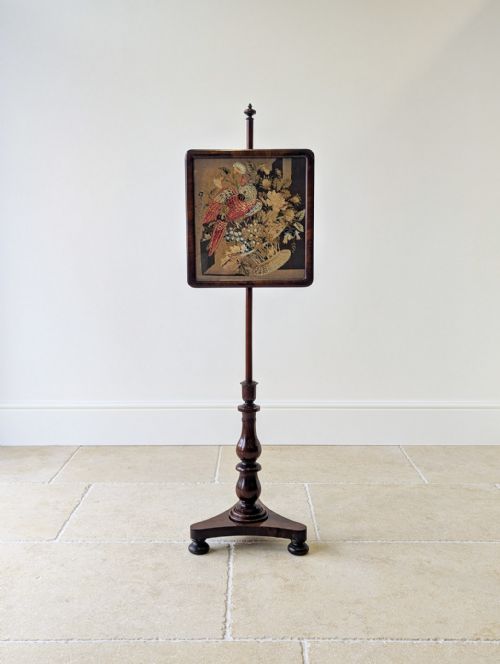
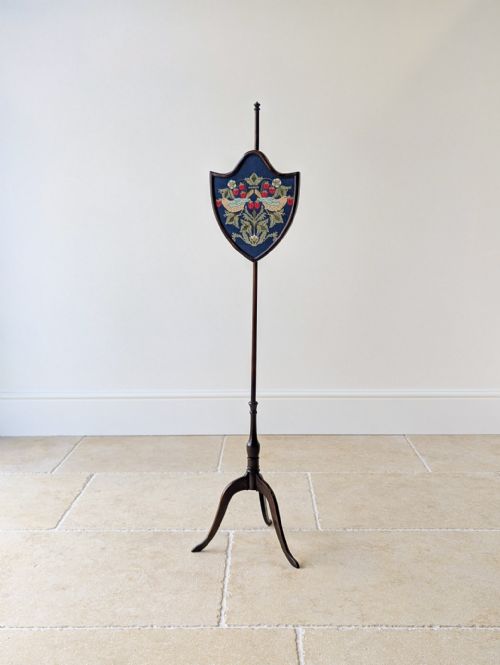
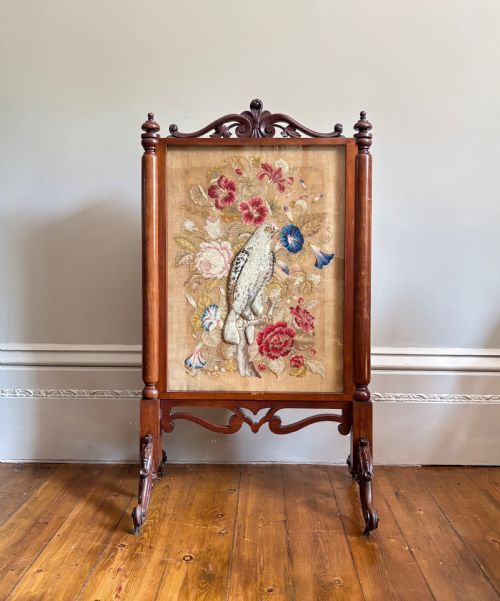
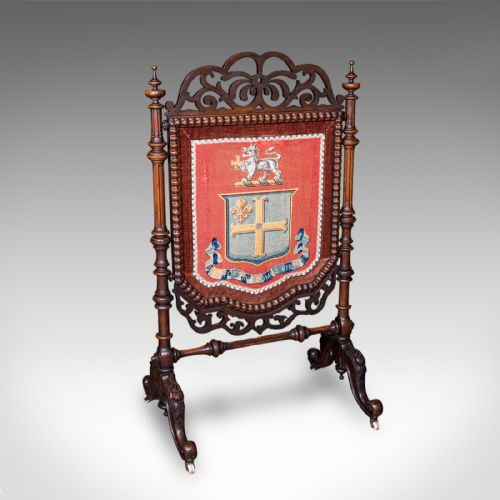
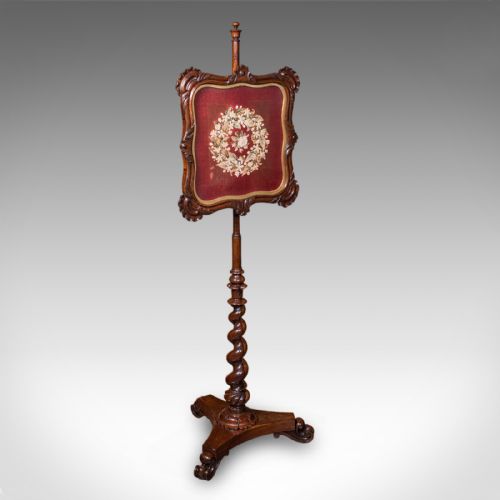
An antique embroidered screen serves as a decorative and functional division of space or a barrier against the direct heat of an open fire. Buyers seeking an antique embroidered screen frequently encounter pole screens designed to stand on a single pedestal before a fireplace, alongside folding room dividers.
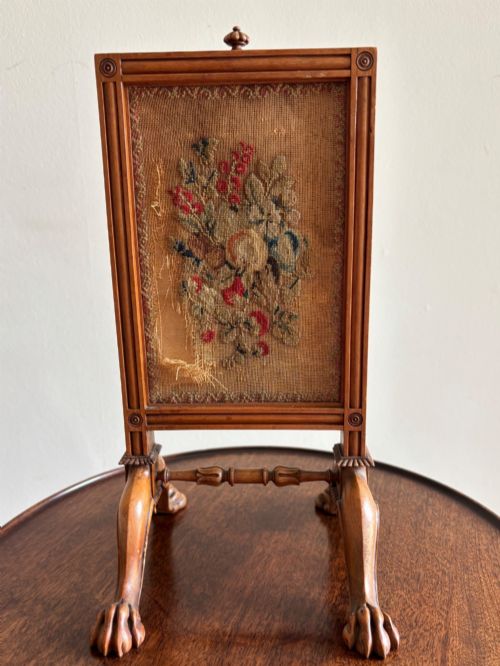
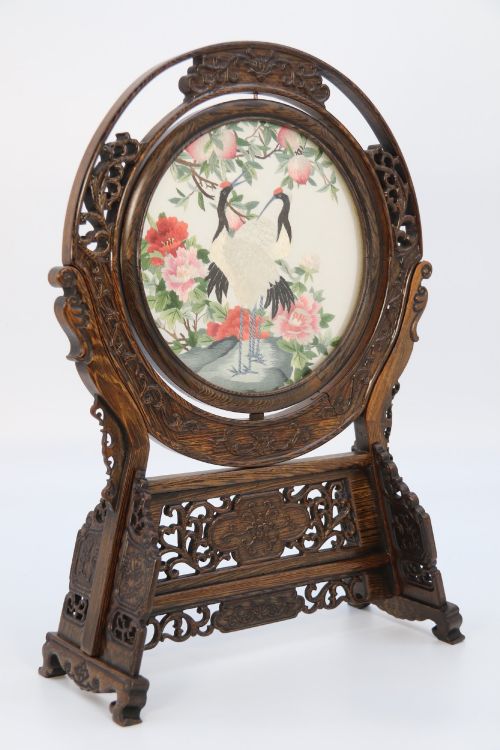
The selection encompasses tall multi-panel room dividers and compact table screens, spanning periods from the Georgian and Regency eras through to the Victorian age. English iterations sit alongside Chinese silk examples and Japanese textile works, reflecting diverse global manufacturing traditions.
What Varies in Quality
Quality depends heavily on the crispness of the timber carving and the complexity of the joinery within the frame or pedestal base. Higher grade pieces display refined turning, intricate giltwork, and stable mechanical adjustments on pole screens.
The execution of the textile panel dictates the overall standard, distinguishing simple utilitarian canvas work from finely detailed silk embroidery and armorial needlepoint. The integrity of the textile and the precision of the stitching determine the distinction between ordinary and superior examples.
Certain nineteenth-century examples doubled as photographic props in studios before finding their way into domestic parlours.
Gillows
The Antique Embroidered Screen Glossary
- Pole screen
- A freestanding screen featuring an adjustable vertical shaft and a sliding panel designed to shield the face from hearth heat.
- Berlin work
- A style of counted-thread embroidery popular during the nineteenth century that utilised brightly coloured wools on canvas grids.
- Needlepoint
- Any form of canvas work stitched with a needle, frequently seen forming the primary decorative surface of fire screens.
- Tripod base
- A three-legged support structure commonly found beneath the upright shaft of a pole screen.
- Tilt top
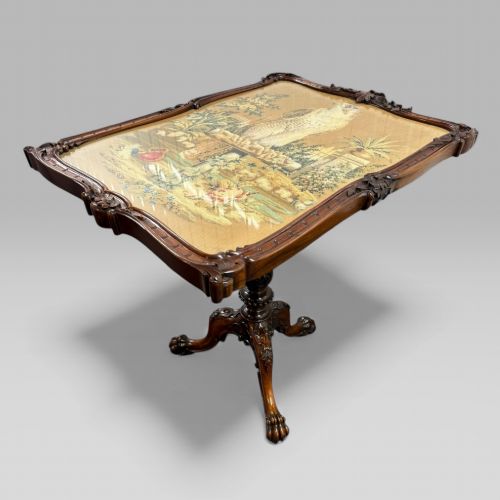
- A tabletop mechanism allowing the surface of a metamorphic screen or table to pivot into a vertical position.
Antique Embroidered Screen: Frequently Asked Questions
How did people use pole screens?
Pole screens stood between individuals and open hearths to deflect excessive radiant heat from faces and wax makeup.
The adjustable panel slid up and down the central pole to target the required height.
What is the difference between a pole screen and a room divider?
Pole screens consist of a single adjustable panel mounted on a floor-standing pedestal, primarily intended for fireside use.
Room dividers comprise multiple folding panels designed to partition larger spaces or provide privacy.
How do I care for antique embroidery?
Keep textile panels away from direct sunlight to prevent the fading of wool and silk threads.
Dust the frames gently and avoid moisture near the historic stitching.
Are these screens still functional today?
Folding screens function effectively to divide modern open-plan spaces or conceal storage areas.
Table screens and smaller pedestal versions serve as decorative art pieces on desks or side tables.