
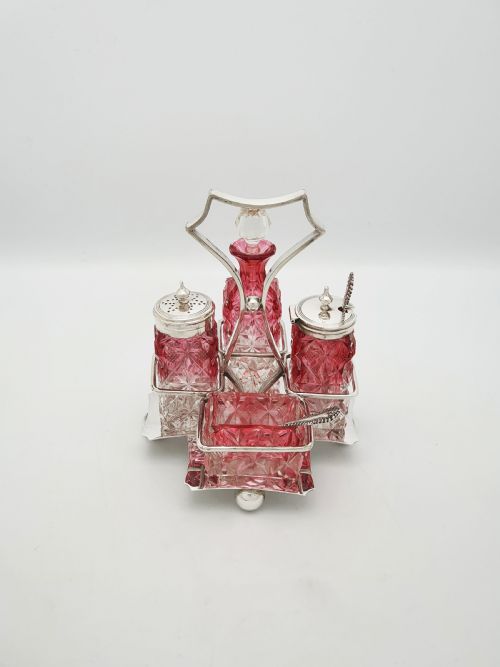


Antique Edwardian Cruet
When you choose an antique edwardian cruet, you bring a practical table accessory from the early twentieth century into your dining room.
Antique Edwardian Cruet
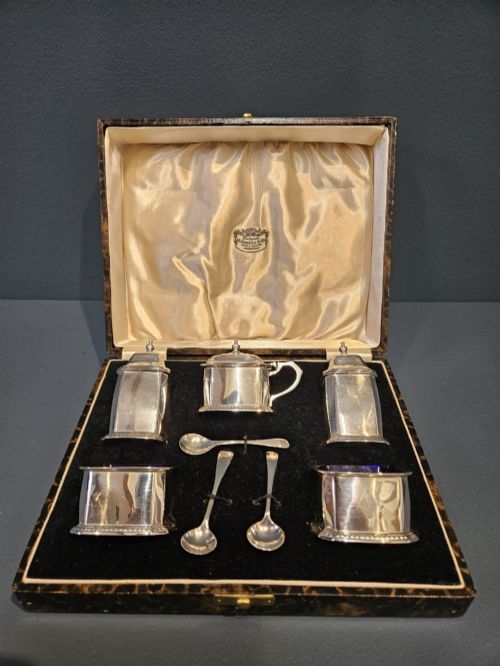
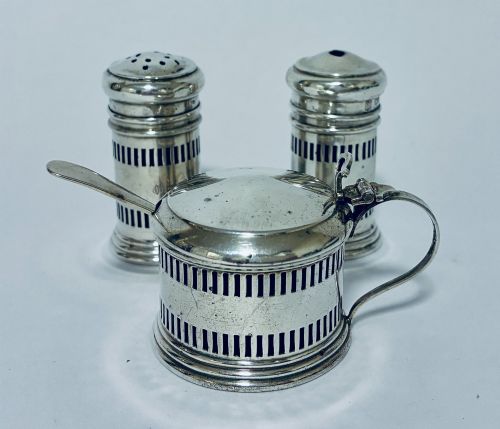
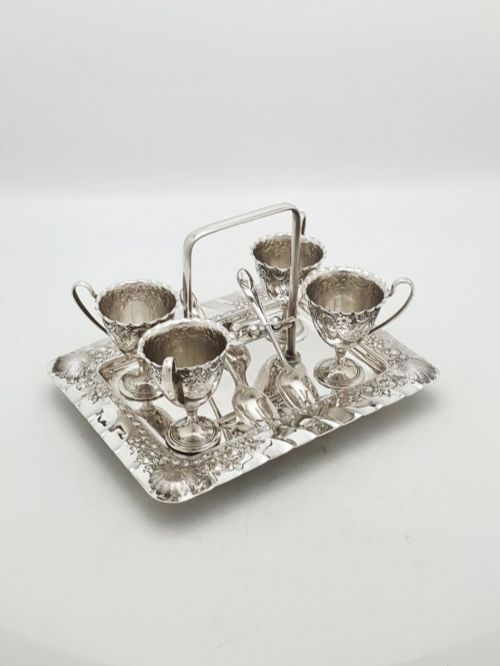
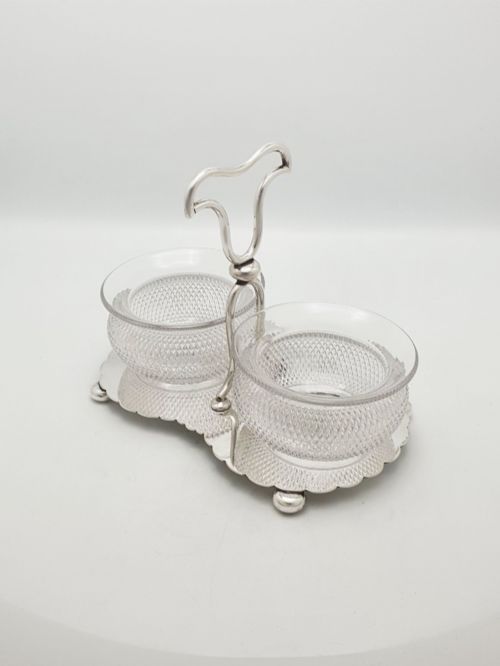
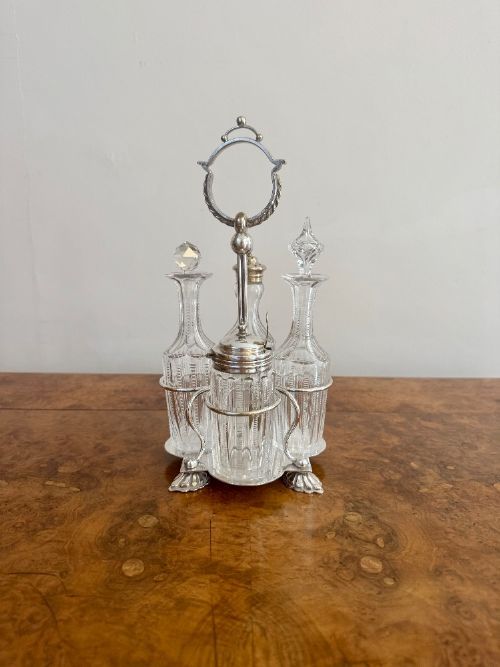
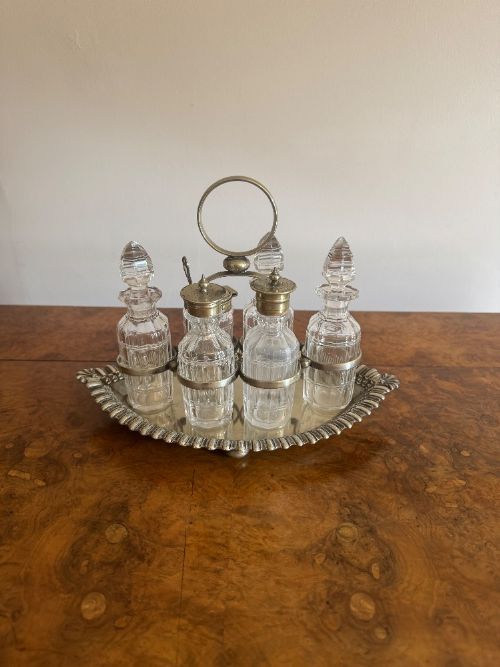
An antique edwardian cruet brings together containers for condiments, oils, vinegars, and eggs within a dedicated stand for the dining table. The most frequent examples on this page are silver plated frames fitted with cut glass bottles or jars, often originating from the Edwardian period.
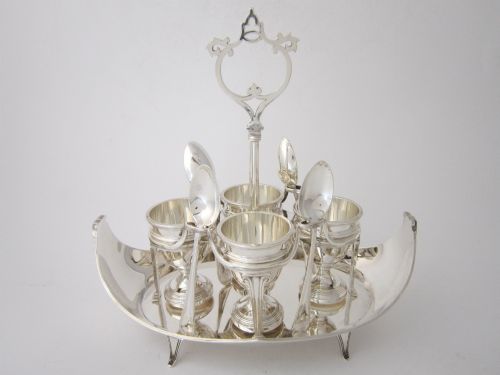
The selection ranges from large six bottle sets and egg cruets with fitted spoons to simpler three or five piece condiment sets. Alongside silver plate, sterling silver and solid silver examples appear across the Edwardian, Victorian, and later George V periods.
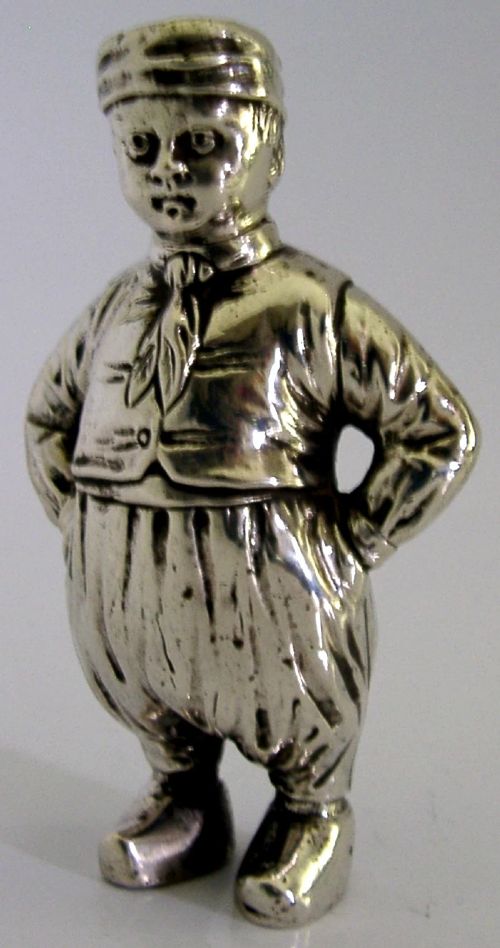
Makers designed these stands to sit centrally on the table during formal meals, allowing diners to season food to taste. Variations include novelty figural designs modelled as chicks or boys, as well as specialised decanter stands and oil and vinegar sets.
Measures of quality
Quality rests in the weight of the metal framework, the crispness of any embossed or chased decoration, and the clarity of the cut glass bottles. Sets that retain their original matching bottles and associated spoons demonstrate a higher degree of preservation than those assembled later from mismatched parts.
The reputation of the maker also distinguishes certain pieces, with well-documented firms applying superior plating techniques and more intricate engineering to handles and frames.
Listings feature items from the Victorian, Edwardian, and George V periods, utilising cut glass, sterling silver, and silver plate.
Walker & Hall·Mappin & Webb·Sampson Mordan·Goldsmith & Silversmith's·Bricks & Sons
The Antique Edwardian Cruet Glossary
- Cruet set
- A matched collection of bottles, jars, or shakers held within a dedicated stand for condiments. These sets typically include receptacles for mustard, pepper, salt, oil, and vinegar.
- Egg cruet
- A specialised table stand designed to hold boiled eggs upright alongside matching spoons and individual salt cellars. They frequently appear in four or six person configurations.
- Silver plate
- A manufacturing technique where a thin layer of silver is fused to a base metal such as copper or Britannia metal. This process provided the visual appeal of solid silver at a lower cost.
- Condiment stand
- The central metal frame or rack equipped with a handle for carrying multiple seasoning bottles to the table. They form the structural base of most cruet sets.
Antique Edwardian Cruet: Frequently Asked Questions
What is an antique edwardian cruet used for?
These sets served to hold seasonings like salt, pepper, mustard, oil, and vinegar during formal dining. Diners used the individual bottles and shakers to flavour food directly at the table.
Today, they function as decorative table centrepieces or practical dining accessories for everyday meals.
How do I clean silver plated stands?
Cleaning requires a soft cloth and a specialised silver polish formulated for plated items. Gentle wiping preserves the underlying metal layer while removing tarnish.
Glass components can be washed separately in warm soapy water and dried thoroughly before returning them to the frame.
How do I identify an Edwardian set?
Edwardian pieces often display hallmarks with specific date letters corresponding to the reign of King Edward VII between 1901 and 1910. Stylistic elements like floral embossing and specific font styles on mounts also point to this decade.
Matching registry numbers stamped into the metal provide further clues to the exact year of manufacture.
Are all cruet bottles removable?
Most bottles and shakers lift freely out of their designated rings within the metal frame for easy refilling and cleaning. Some specialised decanter stands and bottle holders use secure side clips to keep glass vessels in place during transport.
Checking the fit of each glass piece ensures it matches the original design of the stand.