

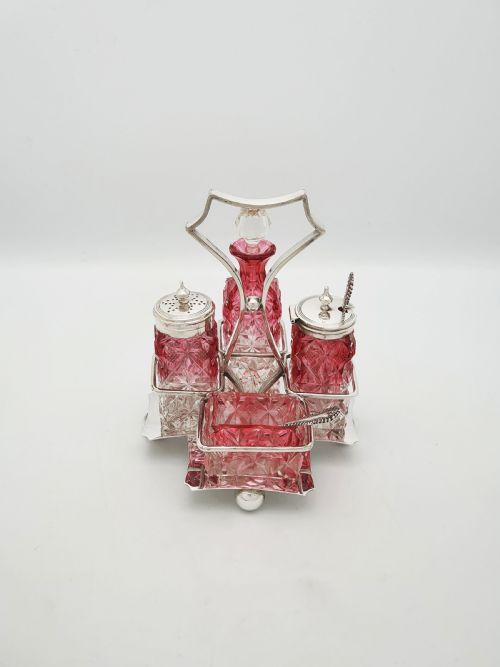


Vintage Table Condiment Caddy
These vintage table condiment caddy options bring practical elegance to dining, offering organised settings for seasonings across various historical periods.
Vintage Table Condiment Caddy
A vintage table condiment caddy serves as a collective holder for mealtime seasonings and sauces. The selection comprises cruet sets, condiment stands, and servers spanning several distinct eras.
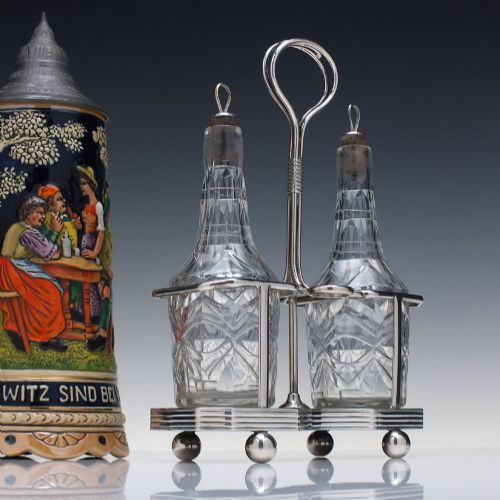
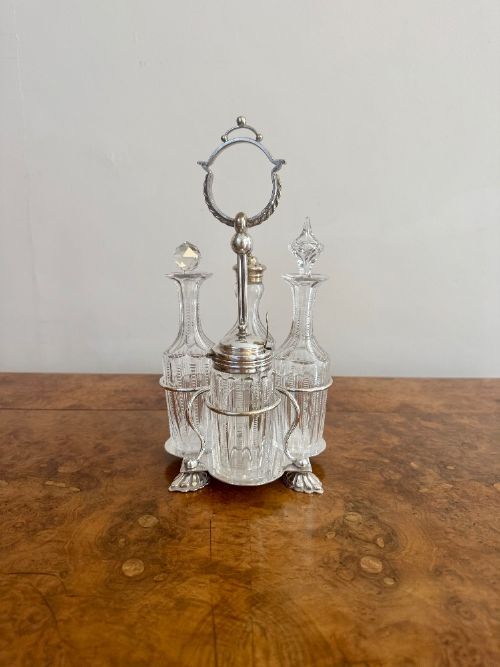
Edwardian examples appear frequently alongside Victorian and Georgian pieces. Buyers encounter multi-bottle frames designed for vinegar, oil, mustard, and pepper.
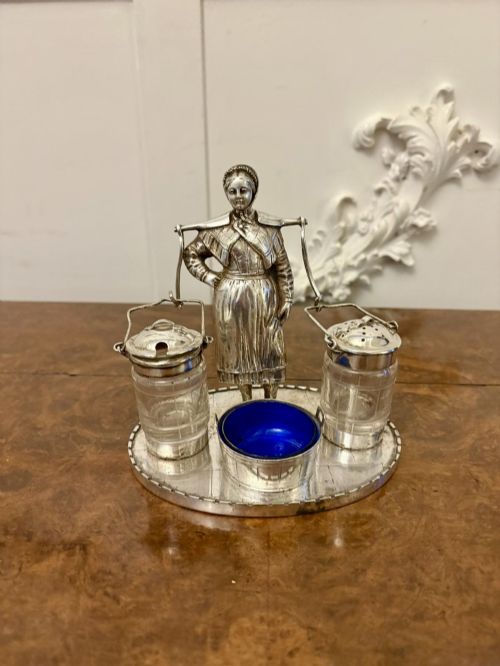
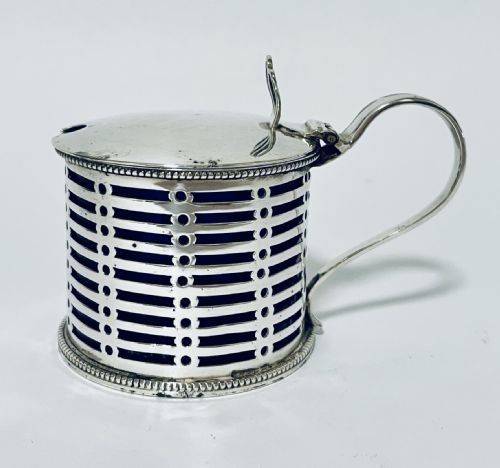
The assortment extends from standard silver plated cruet sets to individual mustard pots and novelty carriage frames. Certain pieces incorporate specialised forms such as caviar ice servers.
Materials and construction
Silver plate and sterling silver form the primary structural frameworks that house the glass vessels. Silversmiths shaped metal into frames, handles, and bottle mounts.
Cut glass and crystal provide the transparency required for bottles and cruets, sometimes enhanced by cranberry flashed colouration. Skilled glassmakers cut geometric patterns into the body of the containers.
Vintage Table Condiment Caddy Retail Price Guide 2026
Typical asking prices for vintage table condiment caddy among the pieces listed under this phrase on Sellingantiques today, from the lower quarter to the upper quarter. They describe what is for sale here now, not the wider market.
Listings feature items spanning the eighteenth, nineteenth, and twentieth centuries, incorporating Edwardian, Victorian, and Georgian styles.
Determining quality
The execution of the metalwork and the clarity of the glass determine the standing of an individual piece. Weight, proportion, and the integrity of applied silver plating distinguish superior examples from standard workshop production.
Completeness alters the character of a set, particularly when original bottles and casters remain intact within the frame. Maker attribution and refined casting details further separate exceptional specimens.
Wade Wingfield Wilkins
The Vintage Table Condiment Caddy Glossary
- Cruet set
- A matched assembly of glass bottles or cruets held within a metal stand for table condiments. These sets typically contained oil, vinegar, and various sauces.
- Silver plate
- A layer of silver fused to a base metal such as copper or Britannia metal. This technique provided the appearance of solid silver at a lower production cost.
- Cranberry glass
- A rich red glass produced by adding gold chloride to the molten batch. It appears frequently in decorative tableware from the Victorian and Edwardian periods.
- Caster
- A small perforated jar used for sprinkling sugar or dry spices onto food. They formed part of larger silver and glass condiment arrangements.
- Open salt
- A small open vessel used for holding loose salt at the dining table before the invention of mechanical shakers. Guests used small spoons to transfer salt to their plates.
Vintage Table Condiment Caddy: Frequently Asked Questions
What is a vintage table condiment caddy?
A vintage table condiment caddy is a metal frame or stand designed to hold bottles of sauce, oil, vinegar, and seasoning containers together on the dining table.
These pieces combine functional utility with decorative metalwork and glass to organise mealtime accompaniments.
How were these caddies used?
Dinners relied on these sets to pass condiments around the table during courses. Servants or diners lifted individual bottles from the frame to season food.
Different vessels held specific liquids or powders, keeping the table tidy and the seasonings close at hand.
How do I date a condiment set?
Stylistic indicators such as Edwardian silver plate, Victorian novelty forms, or Georgian silver work help establish the era of manufacture. Examining construction methods provides further clues.
Design motifs reflect the prevailing aesthetic of the period in which the silversmith worked.
How do I care for silver plated caddies?
Regular dusting and gentle cleaning with appropriate silver polish maintain the metallic shine. Avoid harsh abrasives that might wear away the plated surface.
Glass inserts require careful washing by hand to preserve any cut patterns or colouration.