
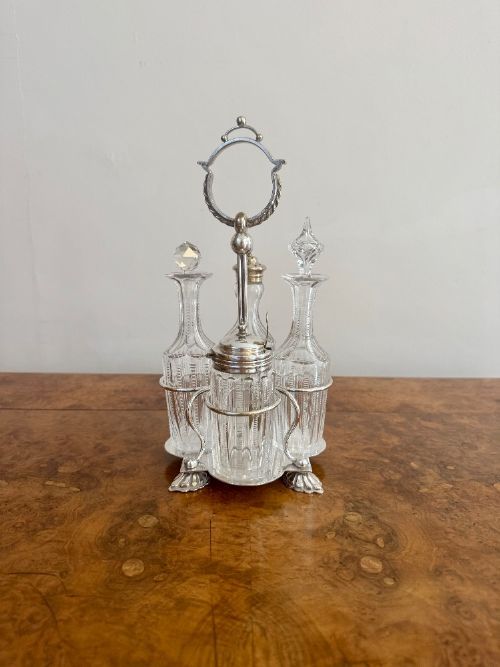
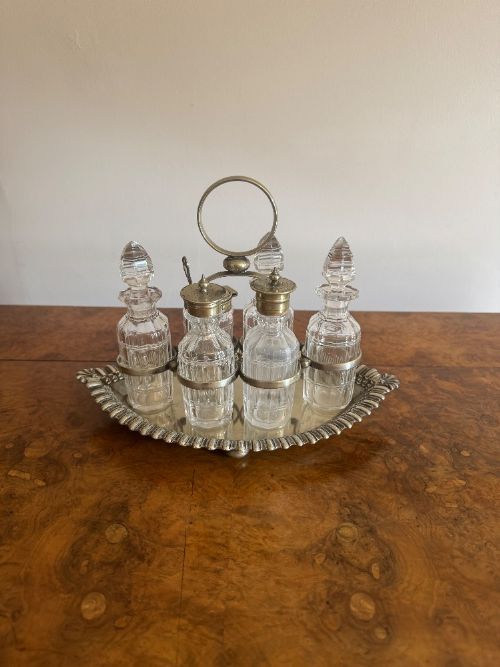


Oil and Vinegar Bottles
Oil and vinegar bottles deliver dining table utility in silver and glass, offering period charm for modern hosts.
Oil and Vinegar Bottles
Oil and vinegar bottles appear primarily within larger cruet sets and stands, serving condiment needs on the dining table. The pieces range from single pairs mounted in silver to multi-bottle stands holding up to eight vessels.
Edwardian silver plated examples dominate the selections, alongside substantial Georgian and Victorian pieces. Buyers frequently encounter silver mounted glass bottles or complete stands holding cut glass vessels.
Origins stretch from the eighteenth century through the Art Deco period, incorporating materials like mahogany, earthenware, and tin glaze. Cruet sets and standalone condiment sets form the majority of the available forms.
How they were made
Glass production relies on heavy lead crystal and cut glass techniques, creating thick walls and faceted bodies that catch the light. Silver mounting involves sterling silver and silver plate applied to rims, collars, and handles.
Stands utilise sterling silver, silver plate, and ebonised mahogany, sometimes incorporating fitted frames to secure the bottles. Tin glaze and earthenware appear on polychrome jugs from the nineteenth century.
Silversmiths shaped the stands using traditional casting and hallmarking methods, while glasscutters wheel-cut geometric and linear patterns into the crystal bottles.
What varies in quality
The weight and depth of the glass cutting separate heavier lead crystal bottles from simpler blown vessels. Crispness in the silver mounts and distinct hallmarking indicate superior workshop origin.
Completeness dictates overall standing, with matched sets retaining their original bottles and castors commanding greater interest. The integration between the stand material, such as ebonised mahogany or heavy silver plate, and the glass containers determines the structural harmony.
Charles Thomas Fox·Walker and Hall·Elkington and Co·Hester Bateman·Wade Wingfield Wilkins·Robert and David Hennell
The Oil and Vinegar Bottles Glossary
- Cruet stand
- A frame or stand designed to hold multiple condiment bottles and casters securely on the dining table. These frames often feature a central carry handle.
- Silver plate
- A base metal coated with a thin layer of silver through electroplating or older manufacturing methods. This technique provided the appearance of solid silver at a lower cost.
- Lead crystal
- Glass containing lead oxide to increase brilliance, weight, and clarity. It allows for deep, sharp hand cutting.
- Caster
- A small perforated jar used for sprinkling sugar, pepper, or dry spices. They frequently accompany oil and vinegar bottles inside large cruet frames.
- Tin glaze
- An opaque white glaze containing tin oxide, used on earthenware before firing. Painters applied polychrome pigments directly onto this absorbent surface.
Oil and Vinegar Bottles: Frequently Asked Questions
How were oil and vinegar bottles used?
Diners placed oil and vinegar bottles on the dining table within cruet stands to season food during meals. Servants or guests poured the contents directly onto salads or plates.
The bottles worked alongside mustard pots, pepper casters, and salt cellars to provide immediate access to essential condiments.
Are original bottles usually included?
Many surviving sets retain their original cut glass or lead crystal bottles, often matching the period of the stand. Replacements occur because glass vessels suffered breakage during centuries of use.
Checking for matching facet patterns and correct neck diameters helps confirm whether the bottles belong to the stand.
How do I date an oil and vinegar set?
Silver hallmarks provide the most precise dating method, indicating the exact year and assay office for sterling silver pieces. Stylistic clues such as Edwardian plating or Art Deco geometric cutting also point to specific decades.
Construction materials, including ebonised mahogany frames or heavy cast silver mounts, align with the design preferences of their respective eras.
How do I care for silver mounted glass?
Wash the glass bottles gently in warm soapy water, avoiding harsh abrasives that might scratch the surface. Polish silver mounts carefully with a soft cloth to preserve the plating or sterling surface.
Keep silver polish away from the glass body and any tin glazed earthenware to prevent staining.