
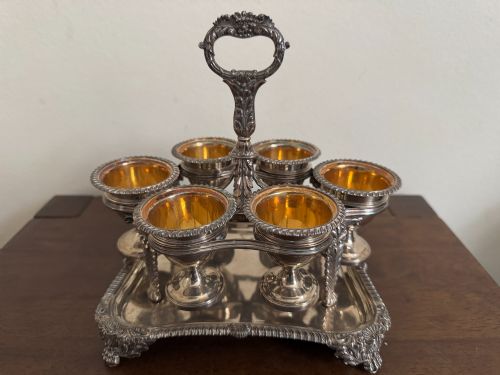


Georgian Cruet Stand
A georgian cruet stand brings the polished silver frames and cut glass bottles of eighteenth and nineteenth century dining tables directly into modern rooms.
Georgian Cruet Stand
A georgian cruet stand forms the centrepiece of dining table condiment service, holding glass bottles or casters within a fitted metal or wooden frame. These pieces range from substantial multi-bottle frames designed for sauces and seasonings to smaller egg cruets and decanter stands.
The versions most commonly met span the late eighteenth and early nineteenth centuries, often categorised under Georgian or George III periods. Makers utilised sterling silver, Sheffield plate, mahogany, and brass to construct these durable tableware items.
Object types include condiment sets, decanter sets, and Warwick cruet sets complete with original bottles. Many examples retain their original hallmarked components, reflecting the formal dining customs of the period.
How they were made
Silversmiths constructed these frames using sterling silver or Sheffield plate, employing techniques such as bright cutting and hallmarking to verify purity and origin. Frames often feature sturdy central carrying handles alongside secure rings or apertures designed to hold glass bottles firmly.
Glassmakers produced cut glass bottles and casters to fit the bespoke dimensions of each stand, frequently pairing them with silver mounts or collars. Cabinetmakers also shaped mahogany and ebonised wood to form timber bottle holders and cruet frames.
Listings feature sterling silver, Sheffield plate, mahogany, and cut glass across eighteenth and nineteenth-century periods.
What varies in quality
The distinction between standard examples and exceptional pieces rests upon the integrity of the fitted bottles and the prominence of the maker. Complete sets retaining matching cut glass bottles and fully legible hallmarks achieve greater historical cohesion.
Execution of the metalwork, whether delicate bright cut engraving on silver frames or substantial cast mounts, determines the visual weight and refinement of the stand. The survival of secondary materials like wood or early gilding further separates ordinary items from high-status examples.
William Burwash·Charles Thomas Fox·Hester Bateman·Viners
The Georgian Cruet Stand Glossary
- Cruet stand
- A fitted frame designed to hold multiple condiment bottles, castors, or cruets upon the dining table. These frames incorporate carrying handles and secure ring mounts.
- Sheffield plate
- A composite material made by fusing a thin sheet of sterling silver to a thicker copper base, common in antique tableware before modern electroplating.
- Bright cut
- An engraving technique utilising faceted cuts to create reflective, geometric patterns across silver surfaces. This decoration appears frequently on late eighteenth-century items.
- Warwick cruet
- A specific form of cruet frame holding multiple silver casters and glass bottles for oil, vinegar, and various condiments. These substantial sets date back to the eighteenth century.
- Caster
- A small cylindrical jar with a perforated lid used for sprinkling sugar or spices over food. Casters form an integral component of many traditional cruet sets.
Georgian Cruet Stand: Frequently Asked Questions
What is a georgian cruet stand used for?
A georgian cruet stand served to organise and present liquid condiments, oils, vinegars, and dry spices during formal dining. Guests and hosts used the table-top frames to easily pass seasonings around the dining table.
Over time, these versatile stands adapted to hold egg cups, decanters, or individual salt and pepper condiments depending on the specific domestic requirements of the household.
How do I identify a georgian period piece?
Identifying a piece from this era involves examining official silver hallmarks stamped directly onto the metal components, which record the assay office, date letter, and maker's mark. Stylistic indicators like bright cut engraving and neoclassical frame designs also point towards the eighteenth or early nineteenth centuries.
Matching the construction methods of the frame and the weight of the cut glass bottles helps confirm the age and authenticity of the set.
Can I use a cruet stand today?
These stands function well as decorative dining table centrepieces or as functional holders for oils, vinegars, and sauce bottles during meals. Their robust metal frames and glass bottles remain practical for modern entertaining.
Careful handling is recommended, particularly when cleaning antique silver plate, cut glass, and historic wooden components like mahogany.
What materials are these stands made from?
The primary materials include sterling silver, silver plate, Sheffield plate, cut glass, mahogany, and brass. Metal frames often support glass bottles equipped with silver mounts or collars.
Some variations incorporate ebonised wood or treen alongside precious metals and glass elements to create distinct tabletop serving vessels.