





Antique Ecclesiastical Style Sculpture
These antique ecclesiastical style sculpture pieces bring centuries of devotional craft into domestic spaces through carved wood and gilt surfaces.
Antique Ecclesiastical Style Sculpture
An antique ecclesiastical style sculpture brings historic religious devotion into a room, typically taking the form of figures, angels, cherubs, or architectural fragments. When exploring antique ecclesiastical style sculpture, you encounter works ranging from pre-sixteenth century stone carvings to nineteenth-century Gothic revival interpretations.
How they were made
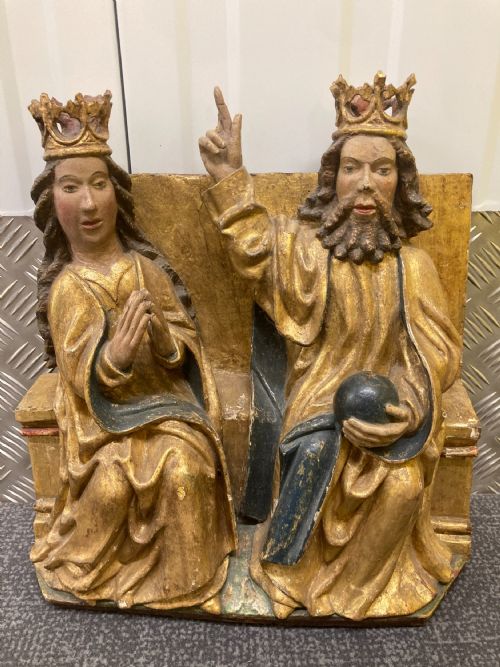
Craftsmen shaped these works primarily from carved wood, utilising timbers such as oak for structural stability and detailed relief work. Surfaces frequently received treatments of polychrome paint, gesso, and gold leaf to impart rich colour and luminosity.
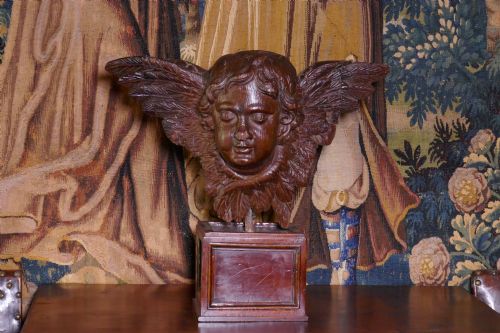
Earlier pieces rely on hand-chiselled detailing in wood or stone, while later nineteenth-century examples often combine carved timber with applied gilt finishes. The application of gold leaf over gesso created the glowing, reflective quality seen on angels and cherubs.
Angels and cherubs in these sculptures occasionally retain an unexpectedly cheeky expression despite their holy duties.
What varies in quality
The depth of carving and the expression on a figure's face distinguish finer examples from simpler workshop output. Subtle anatomical rendering in hands and drapery elevates a piece above standard decorative production.
The survival of original surface treatments, such as polychrome paint or gold leaf, plays a significant role in a piece's integrity. Untouched patination on oak and timber provides visual depth that over-restored surfaces lack.
The Antique Ecclesiastical Style Sculpture Glossary
- Polychrome paint
- Decoration consisting of several colours applied to sculpture, common in religious art to create lifelike figures.
- Gesso
- A plaster-based mixture applied to wood surfaces as a smooth base for gilding and painting.
- Gold leaf
- Gold beaten into extremely thin sheets, used to cover wood or gesso surfaces for a luminous finish.
- Gothic Revival
- An architectural and decorative style popular in the nineteenth century that drew inspiration from medieval forms.
- Lectern
- A raised stand with a sloping front designed to hold books, often carved in wood with decorative motifs.
Antique Ecclesiastical Style Sculpture: Frequently Asked Questions
Where were these sculptures originally displayed?
These sculptures typically occupied positions within churches, chapels, and monastic buildings, serving as focal points for prayer and architectural adornment. Figures of saints and angels adorned altars, rood screens, and walls to inspire devotion among the congregation.
Over time, many of these pieces transitioned from ecclesiastical settings into private collections and domestic interiors, where they function as standalone works of art.
How do I date a wooden religious carving?
Dating relies on stylistic markers, tool marks left by the maker, and the natural ageing of the timber. Examining the preparation layers beneath the paint or gold leaf also reveals clues about the period of manufacture.
Comparing the carving style to documented examples from eras like the French Renaissance or the nineteenth-century Gothic revival helps narrow down the timeframe.
How do I care for antique wood and gilt sculpture?
Keep wooden sculptures away from direct heat sources and dramatic humidity fluctuations to prevent the timber from splitting. Dusting should be done gently with a dry, soft brush to protect fragile surfaces like gold leaf and polychrome paint.
Avoid using liquid cleaners, polishes, or damp cloths on historic painted or gilded finishes, as moisture can lift the gesso and pigment layers.