


Carved Female Statuette
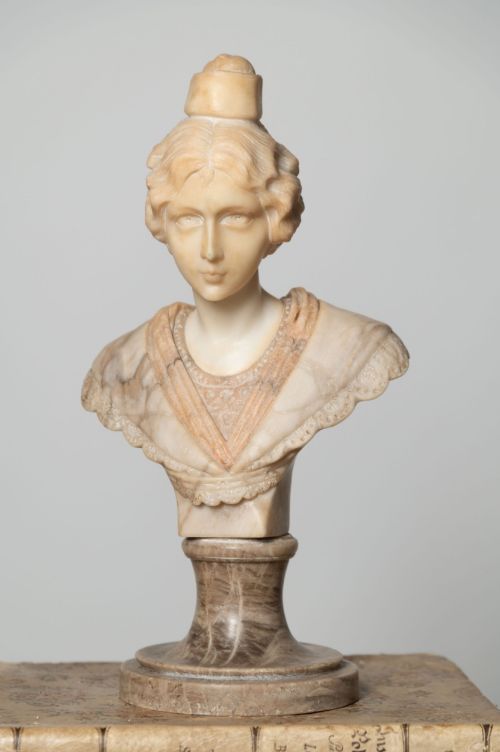
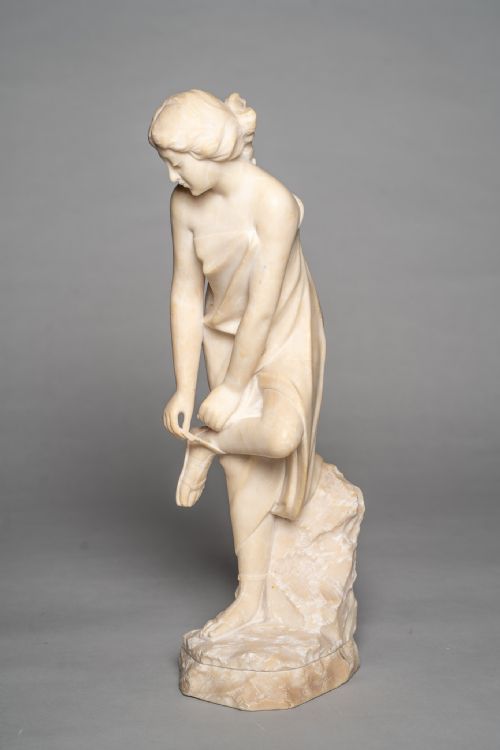
These carved female statuette examples span soft alabaster and rich hardwood, bringing classical form and regional craft straight into a room.
Carved Female Statuette
A carved female statuette captures the human form through classical ideals, allegorical figures, or regional tribal traditions. These pieces range from grand tour souvenirs to detailed nineteenth-century portraits and early twentieth-century modernist works.
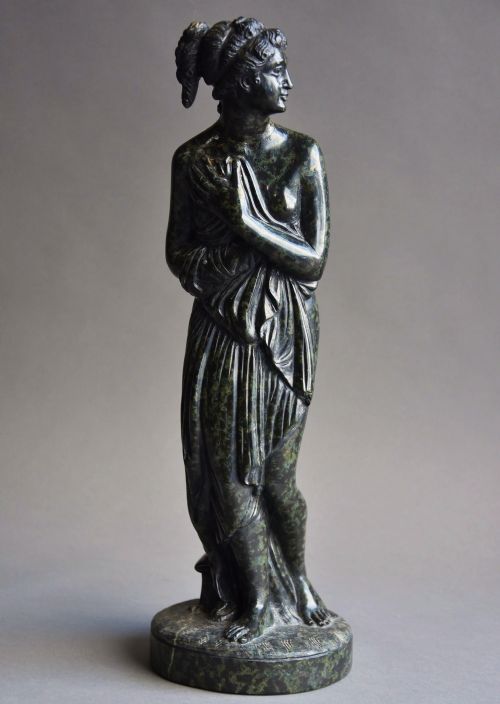
Most examples encountered here embody nineteenth-century revival styles, French classical grace, or neoclassical subjects like Venus. Buyers also find substantial Georgian wooden figures and African hardwood tribal carvings among the selection.
Makers shaped these subjects in stone, marble, serpentine, and various woods, creating figures that function as desktop ornaments or substantial room focal points. The physical presence shifts from polished Italian alabaster to the rustic grain of linden wood.
Materials and carving techniques
Carvers worked primarily in alabaster, marble, and serpentine, utilising the natural veining and translucency of the stone to suggest soft drapery and skin. These mineral materials demanded careful chisel work and abrasive smoothing to achieve a polished finish.
Wooden alternatives rely on hardwoods and linden wood, shaped with gouges to render fine textures like hair and clothing folds. Black Forest and tribal pieces show distinct tool marks that record the direct hand of the carver.
Assessing quality in sculpture
The finish and surface condition dictate the visual impact, as polished stone demands crisp edges and unblemished surfaces free from heavy restoration. Signed works or identifiable studio attributions elevate the piece above anonymous workshop output.
Antonio Canova·A.Gamay·Fritz Kochendorfer
The Carved Female Statuette Glossary
- Alabaster
- A soft, fine-grained stone that carvers prize for its translucent quality, which resembles human skin under light.
- Grand Tour
- A cultural journey undertaken by wealthy Europeans that inspired the creation of small-scale classical art copies.
- Neoclassical
- An artistic movement reviving the styles and proportions of ancient Greece and Rome.
- Serpentine
- A dark green mineral rock often polished and used for decorative figures and architectural details.
- Linden wood
- A pale, close-grained timber favoured by European woodcarvers for its uniform texture and ease of shaping.
Carved Female Statuette: Frequently Asked Questions
How do I clean alabaster?
Dust alabaster gently with a dry, soft cloth, avoiding water entirely because moisture dissolves the stone.
Keep these figures away from direct sunlight and damp areas to preserve the delicate surface polish.
Are these sculptures signed?
Some pieces bear artist signatures or foundry marks carved directly into the base or rear. Many period works remain unsigned, originating from skilled European workshops and studios.
Examine the lower margins carefully under bright raking light to locate maker inscriptions.
What is Grand Tour art?
Grand Tour pieces are small-scale copies of classical antiquities collected by travellers during eighteenth and nineteenth-century European journeys.
These sculptures brought classical antiquity and mythological subjects into private home libraries and studies.
How do I date a marble figure?
Dating relies on stylistic clues, the tool marks left on the unpolished undersides, and the specific type of marble or base used. Nineteenth-century pieces often reflect revival movements like French classical or Victorian neoclassical tastes.
Compare the drapery style and subject matter to established period examples for accurate placement.