




Antique Ecclesiastical Chair
An antique ecclesiastical chair brings centuries of solemn craftsmanship and Gothic architectural form directly into a domestic interior.
Antique Ecclesiastical Chair
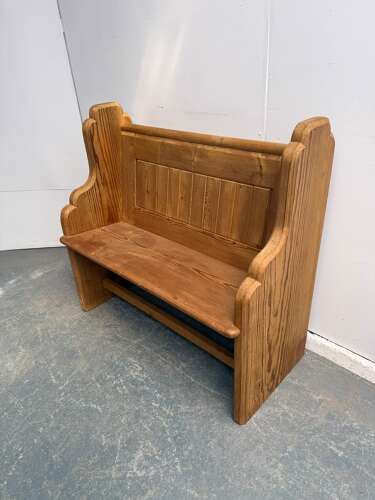
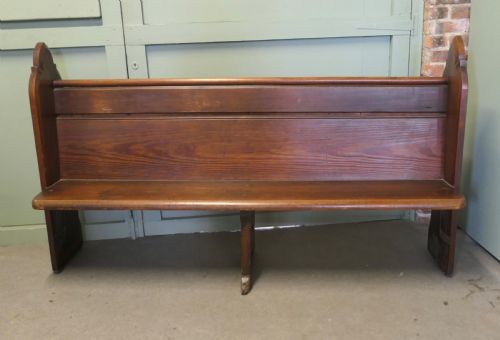
An antique ecclesiastical chair is a seat designed for liturgical use, prayer, or church administration, spanning periods from the pre-reformation era through the Victorian and Edwardian decades. Buyers searching for an antique ecclesiastical chair commonly encounter sturdy oak Glastonbury chairs, pitch pine pews, and walnut or oak prie-dieu prayer seats. These pieces originate from chapels, cathedrals, and rectories, translated into domestic settings for their striking architectural presence.
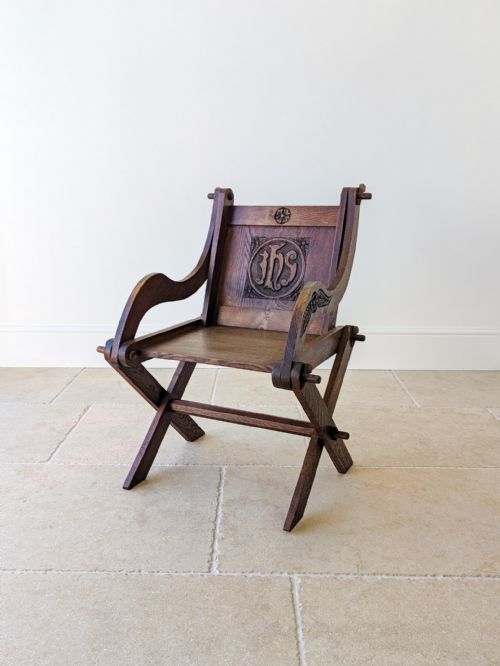
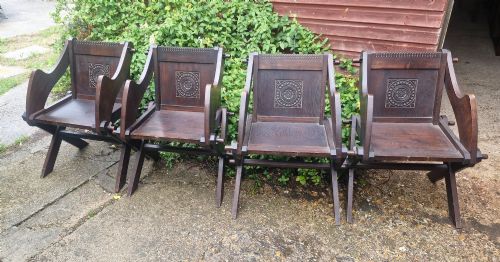
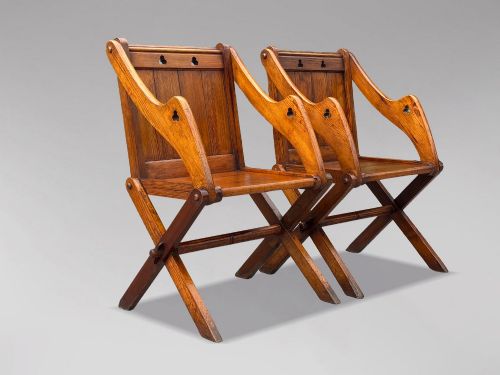
The selections recorded on this page range from modest side chairs to imposing thrones and high-backed chapel chairs marked by institutional provenance. Glastonbury armchairs, distinguished by their folding X-frame design and sloping arms, appear frequently alongside pitch pine benches and carved oak prayer kneelers. Each form reflects the specific devotional or administrative function it originally served within a church or cathedral.
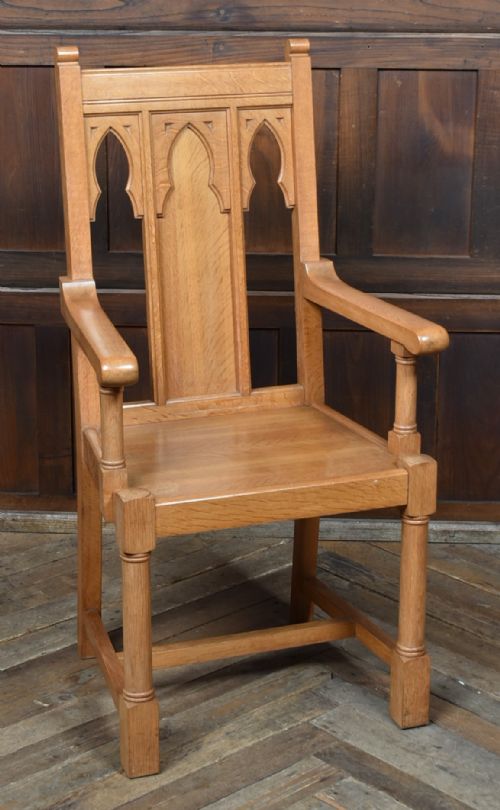
Dating across these items stretches from fifteenth-century pre-reformation examples up to twentieth-century church furnishings, with the Victorian Gothic Revival era providing the largest share of survivals. Whether considering a simple pine church pew or a heavily carved oak chapel throne, buyers find pieces shaped by ecclesiastical necessity and revivalist design. The materials and structural proportions remain tied to their original religious architecture.
What varies in quality
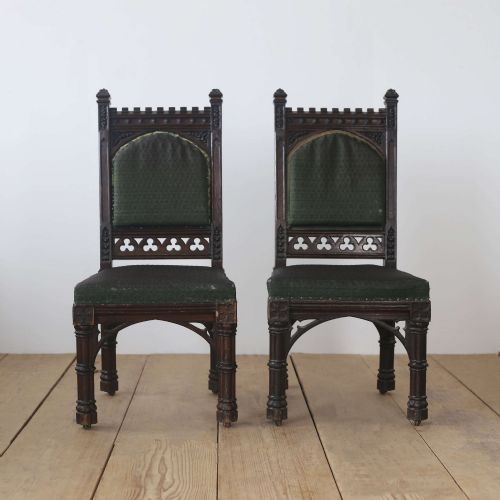
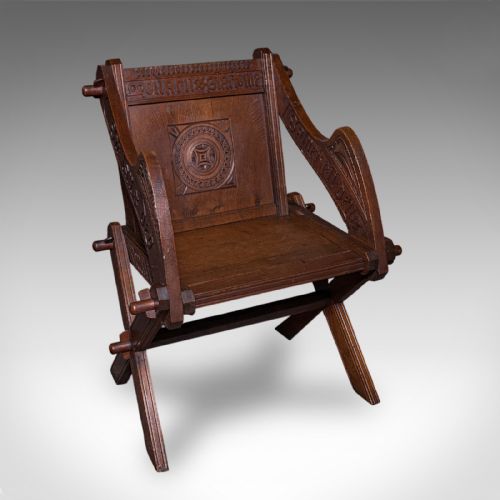
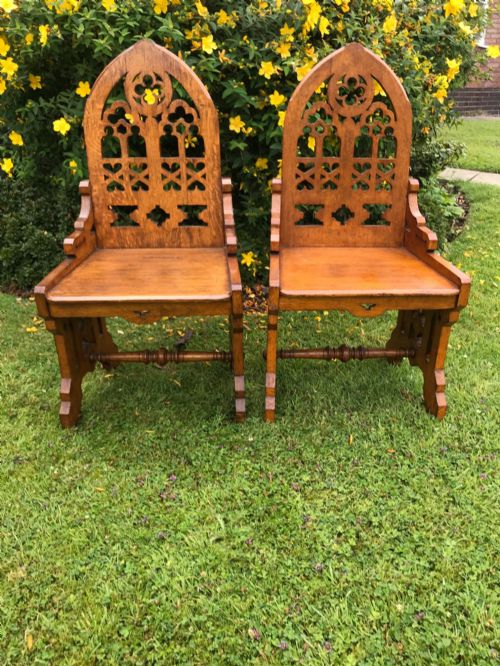
The distinction between ordinary utility church seating and exceptional ecclesiastical forms rests upon the depth of the timber carving and the architectural ambition of the design. Master carvers executed complex trefoil tracery and high relief work that elevates a simple oak armchair into a throne of notable sculptural weight. Provenance also separates pieces, as those bearing direct marks from major cathedrals or specific historical rectories carry greater documentary interest.
Material selection and structural integrity dictate the grade of each piece, with dense English or Scottish oak commanding more presence than utilitarian pine equivalents. The survival of original surface treatments, whether early wax finishes or historic painted schemes, preserves the authentic character of the item. Proportion and balance within Gothic revival interpretations further distinguish ambitious workshop commissions from standard commercial production.
Antique Ecclesiastical Chair Retail Price Guide 2026
Typical asking prices for ecclesiastical chair among the pieces listed under this phrase on Sellingantiques today, from the lower quarter to the upper quarter. They describe what is for sale here now, not the wider market.
One exceptional armchair bears a direct metal mark from St Paul's Cathedral, proving that some seats traded the vastness of London stone for a quiet corner.
The Antique Ecclesiastical Chair Glossary
- Glastonbury Chair
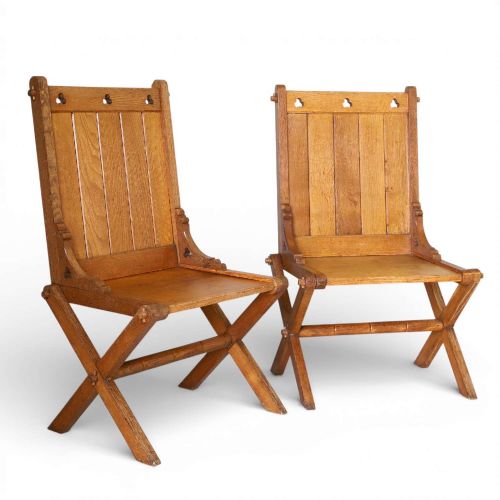
- A traditional ecclesiastical armchair featuring a low back, sloping arms, and an intersecting X-frame construction that permits easy dismantling. This form draws inspiration from an ancient chair preserved at Glastonbury Abbey.
- Prie-Dieu
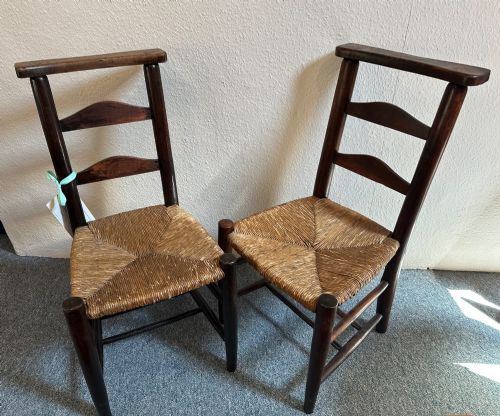
- A specialised devotional chair equipped with a narrow shelf or ledge above the seat for resting elbows during prayer, often paired with a lower kneeling platform. These chairs appear in walnut, oak, and rosewood with period upholstery.
- Trefoil
- A three-lobed decorative ornament resembling a clover leaf, frequently pierced or carved into the backs of Gothic revival church chairs. It mirrors the stone tracery found in medieval ecclesiastical architecture.
- Pitch Pine
- A durable resinous softwood utilised extensively in Victorian church pews and ecclesiastical furniture for its strong grain pattern and resilience. It provides a robust alternative to hardwood in large institutional seating.
- Gothic Revival
- An architectural and design movement spanning the nineteenth century that revived medieval forms, pointed arches, and heavy timber framing in church and domestic furnishings.
Antique Ecclesiastical Chair: Frequently Asked Questions
What is a Glastonbury chair?
A Glastonbury chair is a distinctive wooden armchair characterised by an interlocking X-frame base, sloping panel arms, and a solid plank seat. It is closely associated with ecclesiastical furniture and historical monastic design.
Most examples found today date to the Victorian Gothic Revival period, constructed from solid English or Welsh oak and pitch pine.
How do I use a prie-dieu chair?
A prie-dieu chair is designed for private devotion, featuring a high narrow back and an upper shelf or ledge for resting arms or prayer books. They were traditionally placed in bedrooms or private chapels for kneeling prayer.
Their slender proportions make them versatile accent seats that fit well into hallways or corners without dominating a room.
What wood is most common?
Oak is the predominant timber found in these ecclesiastical pieces, valued for its strength, durability, and traditional association with church architecture. Pitch pine also appears frequently, particularly in larger church pews and institutional seating.
Walnut, rosewood, and standard pine are encountered less often, usually reserved for specialised prayer chairs or high-status throne seats.