
Antique Earthenware Vase
An antique earthenware vase brings the tactile weight of historical ceramic traditions into a room, offering diverse glazes and forms from European and Japanese makers.
Antique Earthenware Vase
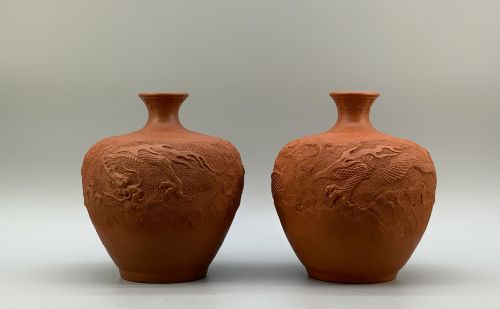
When you search for an antique earthenware vase, you encounter a wide spectrum of porous, fired clay vessels spanning centuries of global ceramic production. These pieces range from utilitarian storage forms and spill vases to highly decorative cabinet pieces produced in European potteries and Japanese workshops.
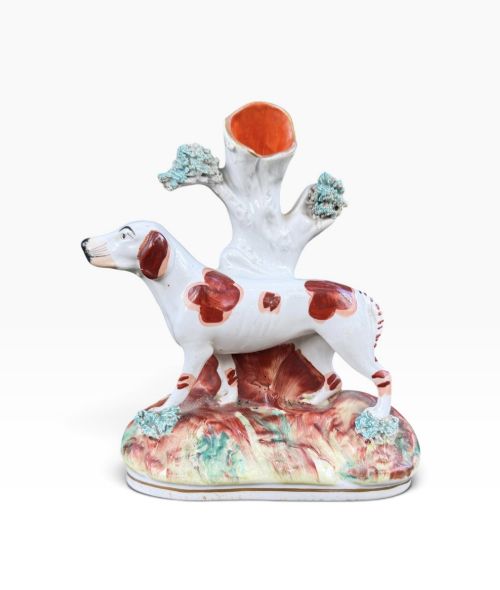
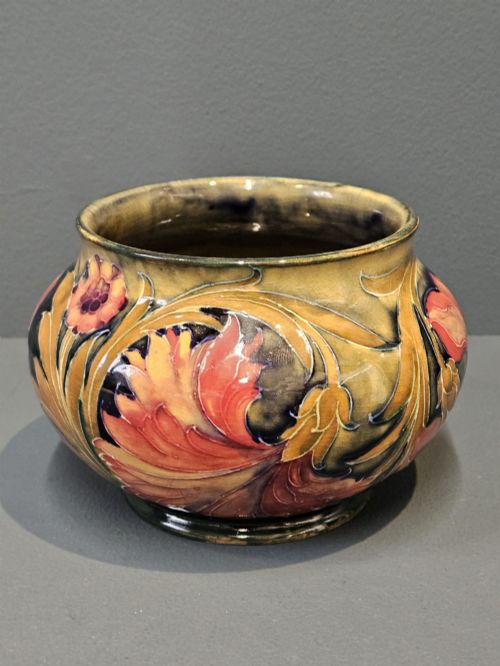
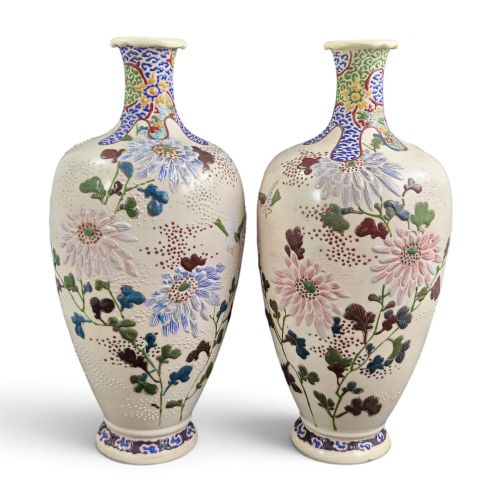
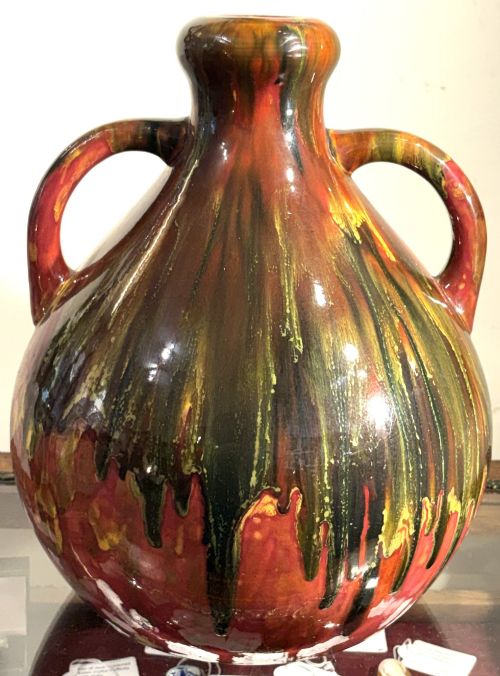
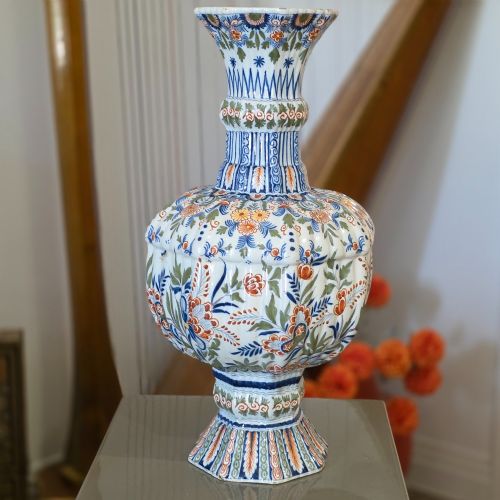
You are most likely to meet 19th-century and early 20th-century examples on this page, including Japanese Satsuma wares, English Staffordshire pottery, Dutch delftware, and French faience. The selection covers diverse styles such as Art Nouveau, Arts and Crafts, and Renaissance Revival, reflecting both traditional craftsmanship and industrial evolution.
Materials and production techniques
The objects listed combine porous earthenware bodies with various surface treatments such as tin glaze, enamel, and gold leaf. Potters shaped the clay by hand or on the wheel before applying specialised opaque or translucent glazes to seal the surface and provide a canvas for painted decoration.
Many items underwent multiple firings, particularly when incorporating intricate overglaze enamels or metallic highlights. Workshops utilised distinct regional recipes for their clay bodies and glazes, resulting in the characteristic weight, texture, and crackle seen across different periods.
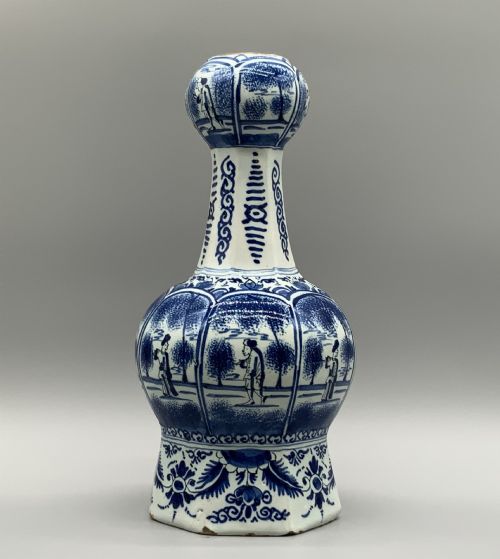
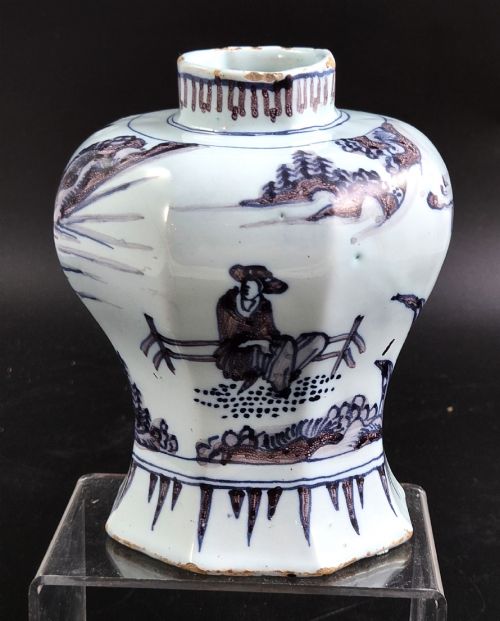
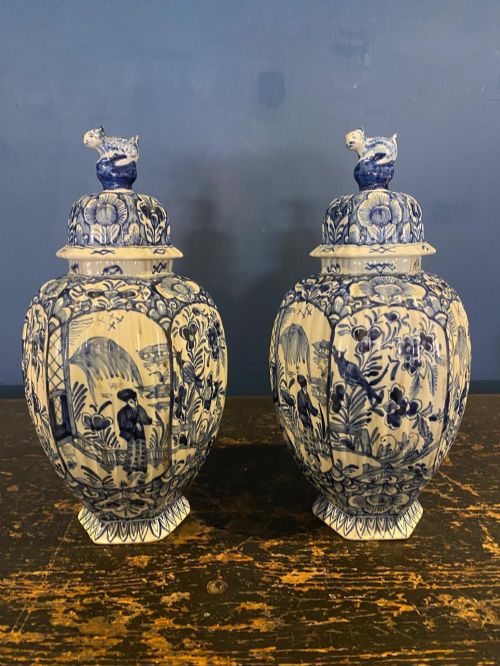
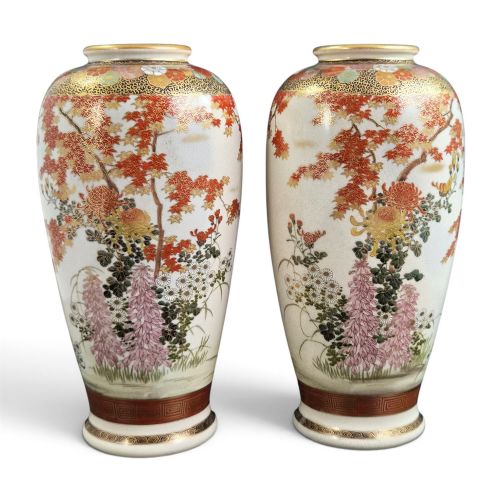
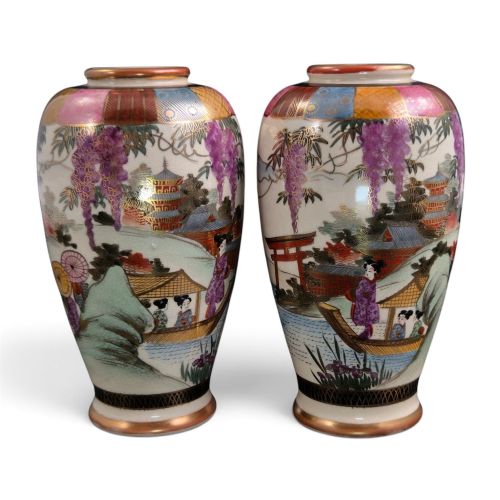
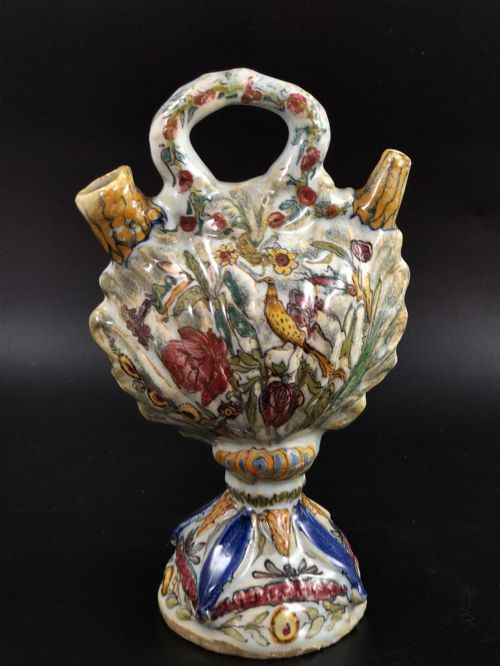
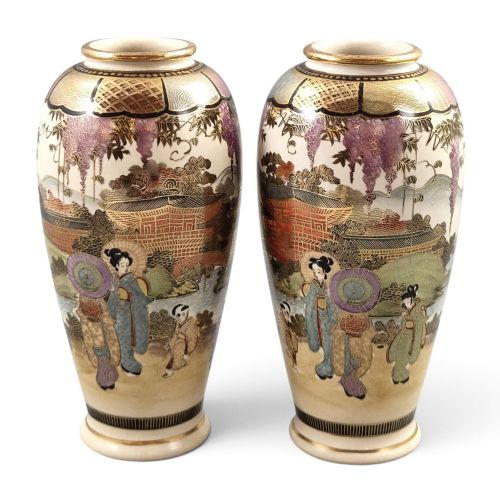
Listings feature 18th-century Dutch delftware alongside 19th-century French faience and Japanese Satsuma earthenware.
Distinctions in quality and execution
Quality in these ceramics rests upon the precision of the form, the complexity of the painted or modelled decoration, and the stability of the glaze. Finer pieces display confident brushwork, well-defined moulded details, and harmonious palettes without distracting firing blemishes.
The reputation of the pottery or the specific hand of an artist elevates a piece above standard commercial output. Superior examples maintain crisp surface detail and intact gilding or enamelwork despite the natural fragility of the porous ceramic body over time.
Maruni Kobe·Shozan·Cantagalli·Moorcroft·Fourmaintraux Courquin·Sceaux·Inoue Ryosai·Doulton Lambeth·Lauder Pottery·Reissner Stellmacher and Kessel
The Antique Earthenware Vase Glossary
- Earthenware
- Porous pottery fired at lower temperatures than stoneware or porcelain, requiring a glaze to hold liquids.
- Majolica
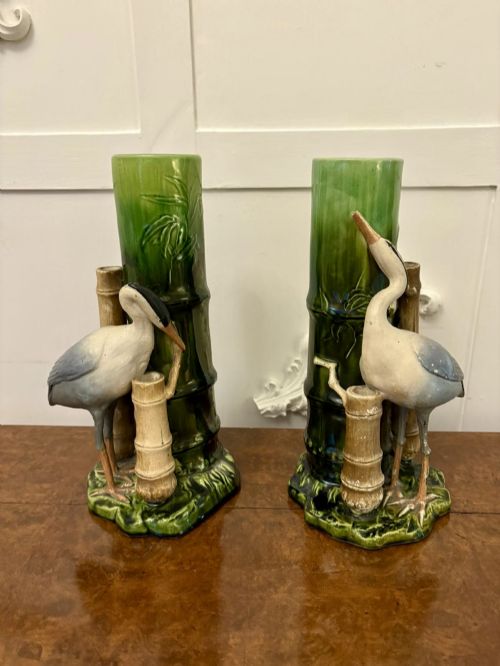
- Tin-glazed earthenware decorated with opaque metallic oxide colours, widely produced in Italy and later revived in the nineteenth century.
- Faience
- European tin-glazed earthenware, particularly associated with French and Dutch production centres.
- Satsuma
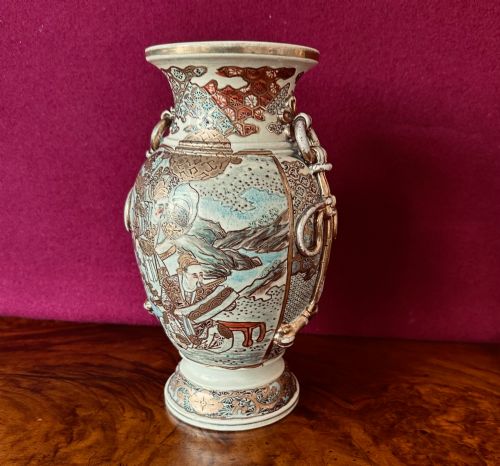
- Japanese earthenware pottery featuring a ivory-coloured, crackled glaze decorated with intricate enamel and gilt motifs.
- Spill vase
- A small hollow ceramic container designed to hold wooden spills used for lighting candles and fires.
- Moriage
- A decorative Japanese ceramic technique where slip is piped onto the surface to create raised, textured patterns.
Antique Earthenware Vase: Frequently Asked Questions
How do I care for an antique earthenware vase?
Keep these porous vessels away from direct water contact and damp environments to protect the clay body and historic glaze.
Dust gently with a dry, soft cloth and avoid chemical cleaners that can damage delicate surface enamels and gilding.
Were these vases used for flowers?
Many examples served purely as decorative cabinet pieces, while others accommodated dried botanicals or functional household tasks.
Because traditional earthenware is porous, historical owners often placed glass inserts inside if they held fresh water.
What is the difference between faience and majolica?
Faience generally refers to tin-glazed earthenware made in France, Germany, and England, following historical tin-glazing techniques.
Majolica originates in Italian traditions, though nineteenth-century makers used the term for brightly coloured lead-glazed earthenware as well.
How do I identify Satsuma pottery?
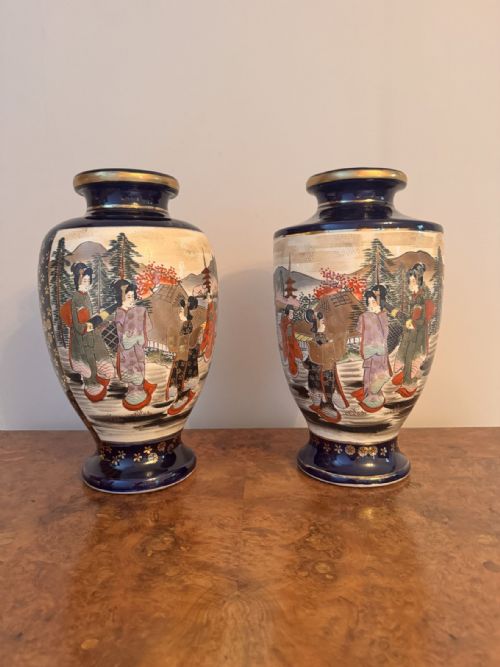
Satsuma wares are distinguished by their characteristic fine crackle glaze over a warm, buff-coloured earthenware body.
They frequently feature elaborate hand-painted scenes embellished with raised enamels and rich gold leaf.