




Antique Dutch Dresser
An antique dutch dresser brings centuries of continental craftsmanship into the home, offering substantial storage and rich timber patination.
Antique Dutch Dresser
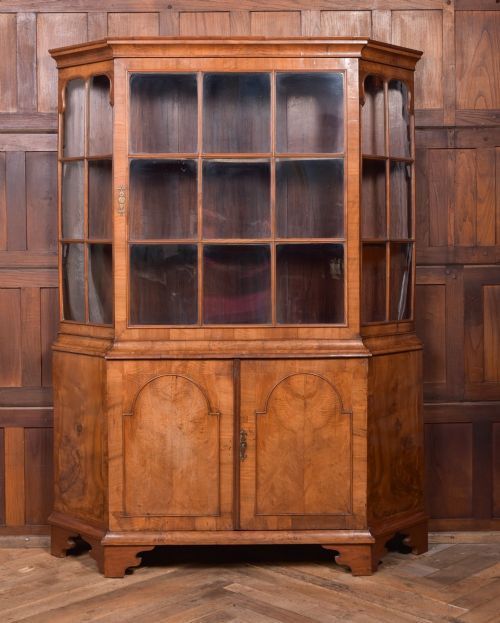
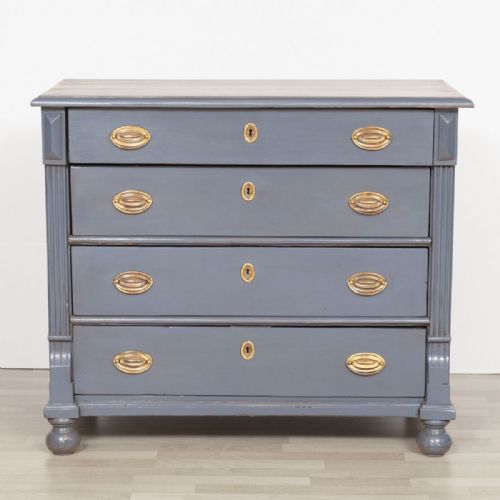
When searching for an antique dutch dresser, collectors encounter robust oak dresser bases alongside elaborate display cabinets and commodes from the seventeenth to the nineteenth centuries. These pieces reflect the domestic ambitions of historical continental households, designed for both storage and display.
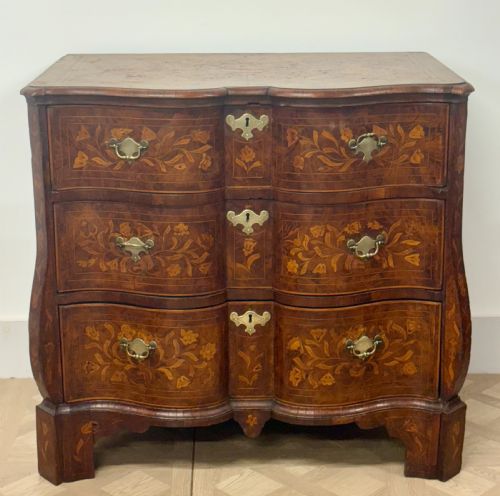
The selection ranges from early oak forms to later mahogany and walnut examples decorated with intricate floral marquetry. Regional variations encompass baroque, rococo, and neoclassical design idioms that dictate the silhouette of the piece.
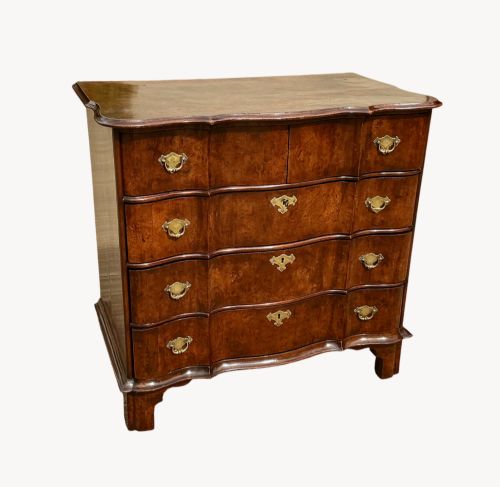
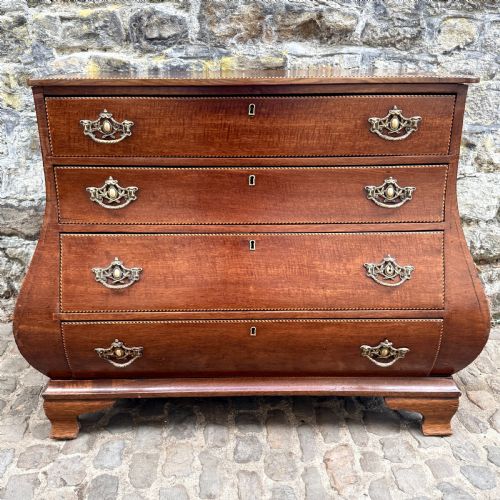
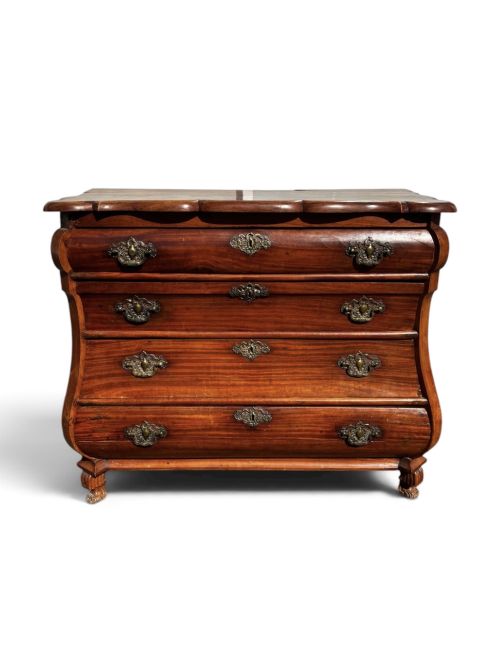
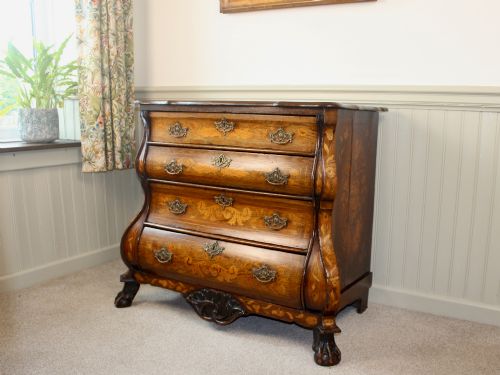
Buyers frequently find pieces exhibiting serpentine and bombe facades, which require advanced carpentry to achieve their characteristic curved profiles. These forms dominate the current inventory alongside straightforward oak and fruitwood iterations.
How they were made
Cabinetmakers utilised solid timbers including oak, walnut, and mahogany, often applying burr walnut and fruitwood veneers to large flat surfaces. Marquetry panels were constructed by carefully fitting contrasting woods like satinwood into floral and pictorial motifs.
Structural elements relied on traditional joinery, housing heavy drawers within robust frames and mounting doors on sturdy brass hinges. Bombe and serpentine shapes were formed through painstaking carving and shaping of the primary wood rather than simple steam bending.
What varies in quality
Quality rests primarily in the crispness of the marquetry inlay and the depth of figure within the burr walnut or mahogany veneers. Superior examples maintain balanced proportions across curved serpentine or bombe fronts without distortion.
The integrity of the timber patination and the survival of original brass hardware elevate a piece above standard utility items. Expert execution of complex joinery on curved surfaces distinguishes master workshop output from simpler regional production.
The Antique Dutch Dresser Glossary
- Bombe
- A bulging, outward-curving profile seen on the front and sides of eighteenth-century chests and commodes. This undulating form demands exceptional skill from the cabinetmaker.
- Marquetry
- Decorative veneer work formed by fitting pieces of various coloured woods into a master design. Floral and avian motifs are typical of continental examples.
- Serpentine
- A furniture front or edge shaped with a central convex curve flanked by two concave curves. It creates a flowing, rhythmic outline across the drawers.
- Commode
- A low chest of drawers, often highly decorative, originating from French and continental traditions. These pieces frequently feature shaped fronts and elaborate veneer work.
- Vitrine
- A glass-fronted display cabinet intended for the exhibition of porcelain and precious objects. They showcase fine timber framing around large glazed panels.
Antique Dutch Dresser: Frequently Asked Questions
How do I date an antique dutch dresser?
Dating relies on stylistic shifts from seventeenth-century oak simplicity through eighteenth-century baroque curves to nineteenth-century neoclassical restraint. Secondary woods and construction methods inside the drawers offer further clues.
Changes in hardware styles and veneer choices also help narrow the decade of manufacture. Comparing the piece against documented examples from the same region confirms its era.
Are these pieces suitable for modern homes?
These items provide deep drawer space and sturdy display surfaces that function well in contemporary hallways, dining rooms, and living spaces. Their rich wood tones add warmth to minimalist interiors.
Care should be taken to place them away from direct heat sources to protect historical veneers. Routine dusting with a dry cloth maintains the timber finish.
What is the difference between a commode and a chest of drawers?
A commode typically refers to a lower, more decorative continental chest of drawers featuring shaped fronts and prominent legs. Standard chests of drawers often present a taller, more utilitarian profile.
Continental commodes frequently incorporate marquetry or fine veneers intended for principal reception rooms. Tall chests prioritize storage capacity over decorative flourishes.
How should I care for burr walnut veneer?
Burr walnut requires stable indoor humidity levels to prevent the decorative grain patterns from lifting or splitting. Avoid harsh chemical polishes in favour of traditional beeswax applied sparingly.
Gentle buffing brings out the natural lustre of the timber without damaging the aged surface. Direct sunlight should be avoided to prevent fading of the delicate veneer.