








Antique Dutch Bureau Chest
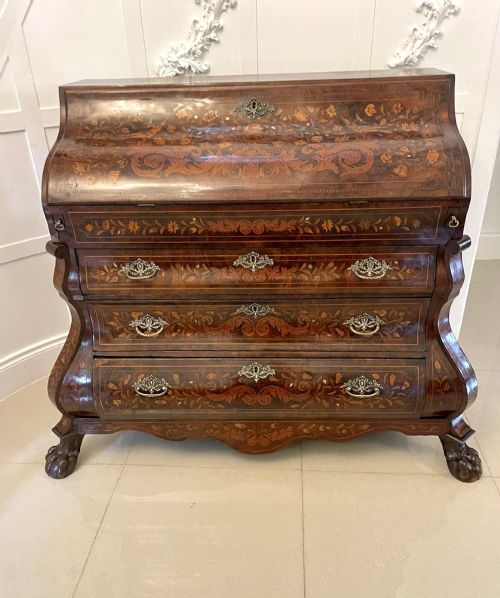
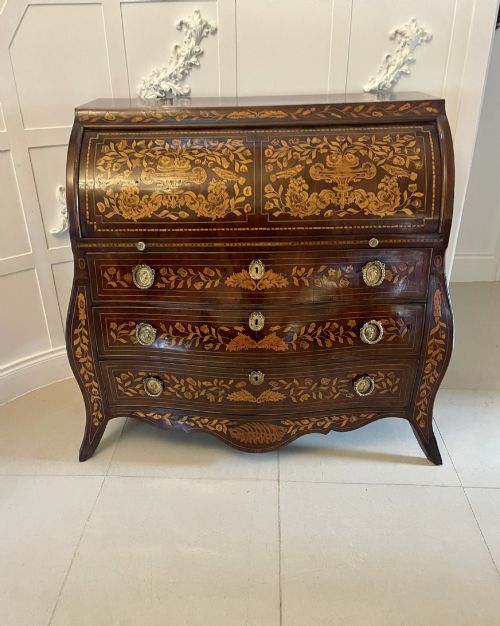
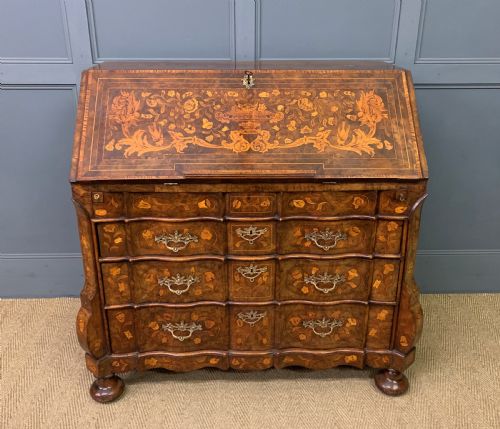
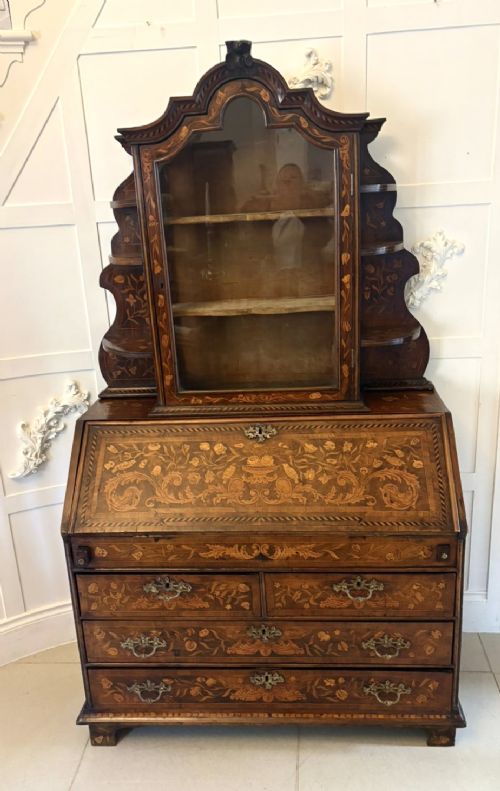
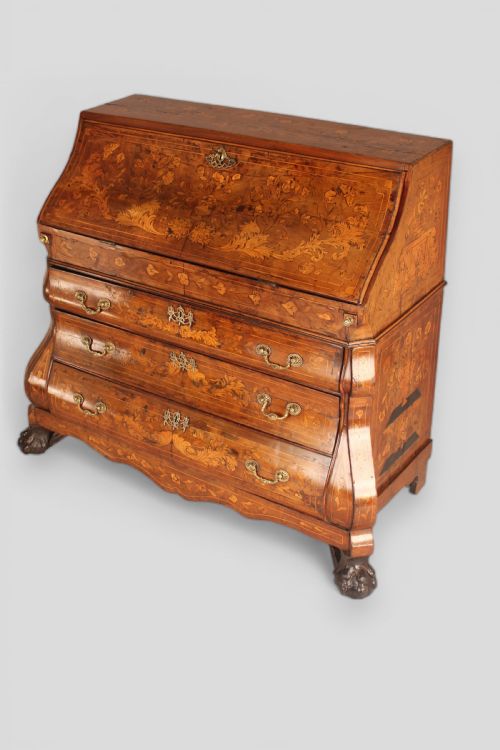
An antique dutch bureau chest combines generous storage with a fitted writing slope, often shaped with characteristic bombe curves.
Antique Dutch Bureau Chest
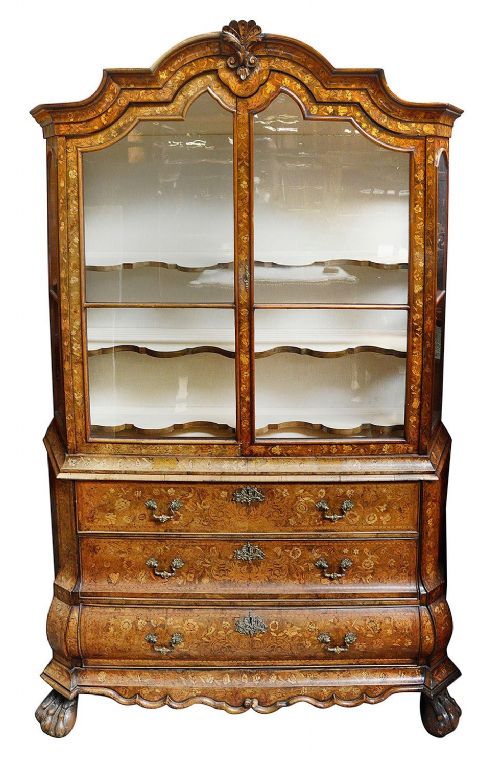
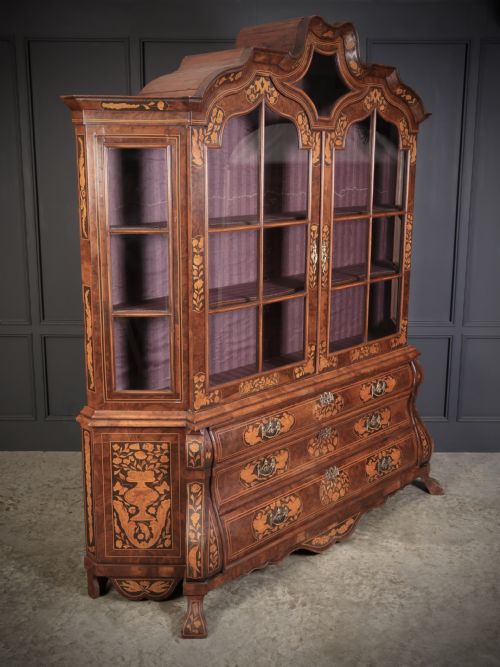
An antique dutch bureau chest offers a practical writing surface alongside deep drawers for household storage. The selection here spans writing desks, bureau bookcases, and chests of drawers from the eighteenth century onwards.
Buyers most frequently encounter examples finished in floral marquetry or constructed from burr walnut and mahogany. The forms range from straight-fronted library pieces to pronounced bombe silhouettes.
Origins trace directly to continental workshops working within Dutch Baroque and Rococo traditions. These cabinets combine structural timber carcasses with decorative veneering techniques.
What varies in quality
The crispness and complexity of the floral marquetry inlay separate standard workshop output from finer examples. More accomplished pieces display intricate shading within the fruitwood leaves and petals rather than flat geometric patterns.
Structural execution also determines standard, particularly the successful shaping of the bombe curve and the seamless integration of secondary timbers like oak. The smoothness of the internal writing compartments and pigeonholes reflects the skill of the original joiner.
Many bureau chests hide tiny secret compartments behind movable pigeonhole dividers for stashing love letters.
The Antique Dutch Bureau Chest Glossary
- Bombe
- A swelling or bulging contour applied to the front and sides of furniture carcasses. This curved silhouette is typical of eighteenth-century Dutch cabinetmaking.
- Marquetry
- Decorative veneer work forming pictures or patterns from thin pieces of wood. Floral motifs in fruitwood are especially common on continental desks.
- Bureau
- A sloping desk used for writing, typically enclosing small drawers and pigeonholes. When combined with a bookcase above, it forms a larger cabinet piece.
- Vitrine
- A glass-fronted display cabinet intended for porcelain and curiosities. These often match the timber and inlay of accompanying bureau bases.
Antique Dutch Bureau Chest: Frequently Asked Questions
How do I use a bureau desk daily?
Lower the fall-front flap to reveal the internal writing surface and stationary compartments.
Store papers inside the fitted interior before closing the slope to keep the surface tidy.
What woods were used in these?
Walnut, mahogany, and oak form the primary structural timbers for these cabinets.
Fruitwood veneers provide the contrasting tones needed for floral marquetry decoration.
How do I identify bombe shapes?
Look at the profile of the drawer fronts and side panels for an outward swelling curve.
This sculptural form requires curved framing timbers rather than flat boards.
Where did these cabinets originate?
Workshop production centred in the Netherlands during the eighteenth and nineteenth centuries.
Styles followed continental Baroque and Rococo movements adapted by local joiners.