




Antique Dumbwaiter Shelf
These antique dumbwaiter shelf designs offer tiered wooden display and serving surfaces shaped by nineteenth-century dining rooms.
Antique Dumbwaiter Shelf
An antique dumbwaiter shelf provides multiple tiers of shelving for serving, displaying or storing items in dining and living spaces. The examples on this page span the Georgian, Regency and Victorian periods, taking forms such as three-tier buffets, folding etageres and tall multi-tiered stands.
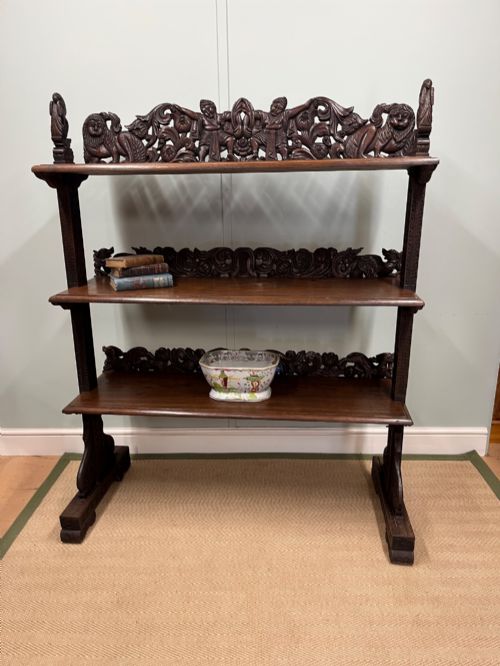
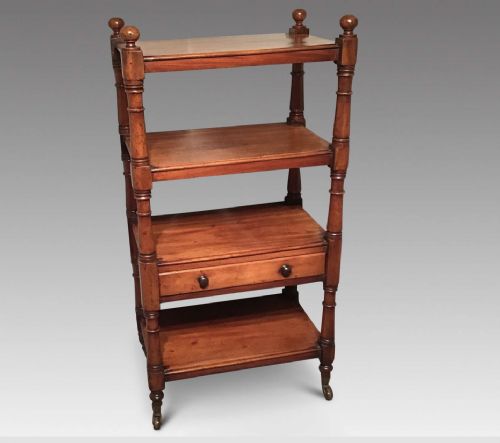
Most pieces you meet here are mahogany three-tier buffets from the nineteenth century, often fitted with original castors for mobility. Alongside these standard serving tables, you find walnut, oak and teak variations, plus specialist formats like campaign washstands and Anglo-Indian carved padauk furniture.
Makers and designers of these tiered stands constructed them to serve practical functions during meals before evolving into general display furniture. Their multi-level structure allows them to act simultaneously as book shelves, food trolleys and serving tables.
What varies in quality
The refinement of the timber and the crispness of any carved detailing set individual tier supports apart. Better examples display carefully selected wood grains and integrated brass hardware that functions smoothly.
Structural complexity dictates the tier count and mechanical capability, such as fully adjustable shelves or folding mechanisms. Pieces featuring unusual formats or exotic hardwoods like Burmese padauk represent higher tiers of regional craftsmanship.
Periods represented span from George III through Regency and Victorian eras, up to eighteen-eighty.
The Antique Dumbwaiter Shelf Glossary
- Dumb waiter
- A multi-tiered piece of furniture designed to hold food, tableware or books without requiring servant assistance during meals.
- Etagere
- A set of open shelves or tiered stands used for displaying ornaments, books or serving items.
- Buffet
- A sideboard or tiered serving table utilised for holding dishes and serving food in dining rooms.
- Campaign
- Portable furniture built with brass mountings and folding elements to facilitate transport during military travel.
- Padauk
- A dense tropical hardwood known for its deep colour and durability, utilised in carved nineteenth-century furniture.
Antique Dumbwaiter Shelf: Frequently Asked Questions
What is an antique dumbwaiter shelf used for?
These tiered structures primarily serve as multi-level display tables and serving surfaces for dining rooms or libraries. They hold books, decorative objects and serving dishes across their horizontal levels.
Historically, they aided in service during meals by holding extra plates and food near the dining table. Today, people use them as versatile shelving units in living spaces.
How do I identify a Victorian dumbwaiter?
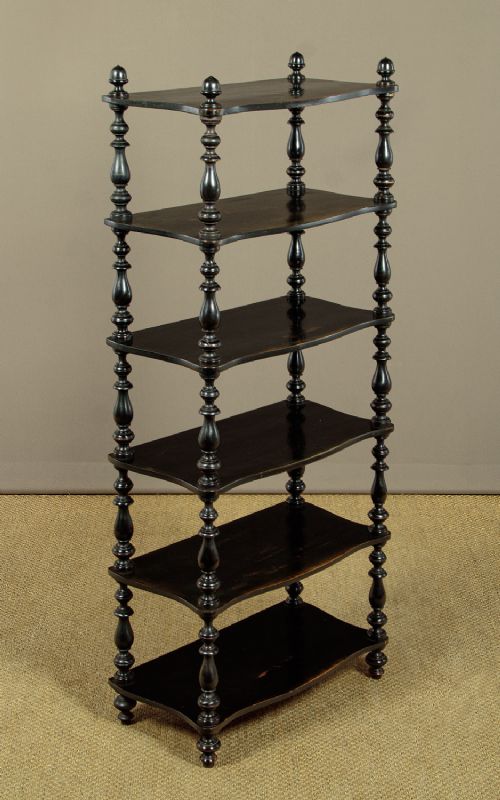
Victorian examples typically date from the mid to late nineteenth century and frequently utilise mahogany, walnut or oak. They often feature three tiers supported by turned columns and sit on original castors.
Many incorporate functional elements such as adjustable shelves or campaign brass mountings. Their proportions reflect nineteenth-century dining room requirements and interior tastes.
What is the difference between an etagere and a dumbwaiter?
An etagere is primarily a display stand with open tiers designed for ornaments and small decorative objects. They often feature unusual formats or folding shelves.
A dumbwaiter is traditionally built heavier to support food, tableware and books during dining service. Over time, the terms overlap as makers produced multi-tiered stands for general domestic utility.
Are these shelves adjustable?
Certain Victorian walnut buffets include fully adjustable shelf mechanisms to alter the vertical space between tiers. This mechanical feature allowed users to accommodate taller items on specific levels.
Most traditional three-tier pieces, however, feature fixed upright supports holding each shelf in a permanent position. Examining the vertical columns reveals whether the tiers are stationary or mobile.