


Three Tier Carved Server
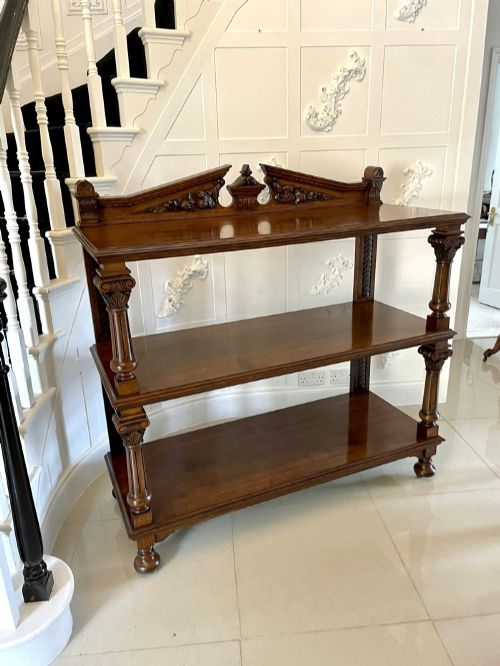
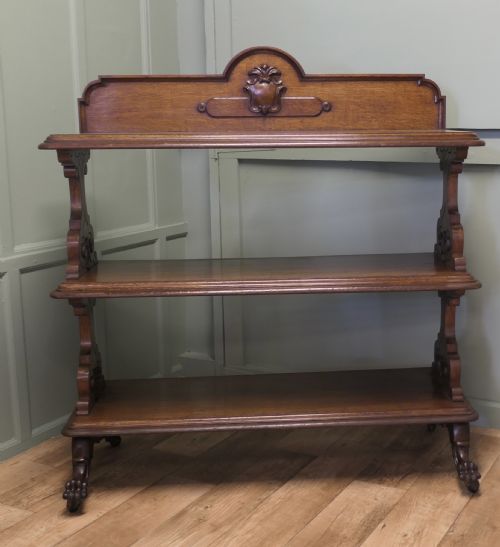
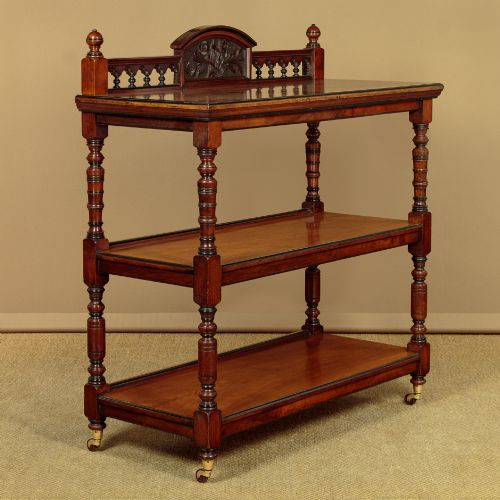
A three tier carved server is a tiered piece of dining furniture built for display and service, offering graduated shelves in rich timbers.
Three Tier Carved Server
A three tier carved server brings graduated levels of timber surface into a dining room or parlour, designed originally for holding dishes or displaying decorative objects. When you search for this phrase, you encounter tiered items that cross between dumb waiters, buffets, and etageres from the nineteenth century.
The pieces on this page span the Regency, William IV, and Victorian eras, alongside Edwardian examples and Aesthetic Movement designs. You will find them constructed primarily in mahogany, oak, and walnut, frequently featuring carved ornament along the edges and uprights.
Forms vary from revolving dumb waiters with drop leaves to fixed three tier stands and heavy sideboards with top shelves. Many incorporate functional elements such as adjustable shelves or rise and fall mechanisms alongside traditional tiered trays.
Materials and construction
Cabinet makers utilised dense hardwoods including mahogany, pollard oak, burr walnut, padauk wood, and standard oak to bear the weight of multiple tiers. These timbers were selected for their pronounced grain patterns and stability.
Carving was executed by hand directly into the solid wood frames, edges, and pillar supports, ranging from subtle moulding to profuse foliate decoration. Brass fittings often secure the tiers or operate mechanical adjustments on rising variants.
Some nineteenth century diners relied on a rising tier so the port bottle could literally elevate itself out of the table talk.
Assessing quality in tiered servers
Quality rests upon the selection of timber veneers and solid stock, where figured grain such as fiddleback mahogany or burr walnut elevates the visual weight of the piece. The depth and crispness of the hand carving distinguish standard production from superior workshops.
Structural integrity depends on the rigidity of the upright supports and the smooth operation of mechanical elements like rise and fall shafts or fully adjustable shelves. Finer examples maintain stability across all three tiers without wobble in the joints.
Maple & Co
The Three Tier Carved Server Glossary
- Dumbwaiter
- A multi-tiered piece of furniture used for serving food or displaying items without the aid of servants. These movable stands feature two or three graduated shelves supported on a central pillar or corner columns.
- Etagere
- A piece of furniture consisting of a set of open shelves for displaying small objects or ornaments. The form shares similarities with tiered servers but prioritises display over heavy service.
- Pollard oak
- Oak timber taken from a tree that has been pollarded, producing a dense and highly figured grain pattern with clustered knots. Cabinet makers prized this wood for decorative veneer work on Victorian case pieces.
- Padauk wood
- A heavy tropical hardwood known for its deep reddish-orange colour that darkens with age. It accepts fine carving work and appears on mid-nineteenth century imported pieces.
- Rise and fall
- A mechanical mechanism allowing individual tiers to be adjusted in height via a central screw or ratchet column. This engineering allowed the server to adapt to different heights of bottles and dishes.
Three Tier Carved Server: Frequently Asked Questions
What is a three tier carved server used for?
These tiered pieces served historically as auxiliary surfaces in dining rooms for holding extra dishes, silver, and decanters during meals. Today they function equally well as display stands for collections or as side tables in living spaces.
Their multiple levels provide substantial surface area without demanding a large floor footprint, making them practical for modern rooms.
How do I date a nineteenth century tiered server?
Dating relies upon the timber choice, carving style, and structural hardware. Regency and William IV pieces often display clean classical lines in figured mahogany, while Victorian and Aesthetic Movement examples show heavier proportions and profuse naturalistic carving.
Secondary woods inside drawers or behind panels, where present, help confirm the period of manufacture.
Are these servers sturdy enough for daily use?
Nineteenth-century tiered servers were built from dense hardwoods like oak, mahogany, and walnut to support heavy ceramic and silver service. Properly maintained joints and tight pillar supports ensure they remain robust for holding books, lamps, or tableware.
Care should be taken when moving adjustable or rise and fall models to avoid straining the central mechanism.