




Victorian Mahogany Dinner Trolley
These Victorian mahogany dinner trolley pieces are tiered serving stands and dumb waiters designed for heavy dining room use.
Victorian Mahogany Dinner Trolley
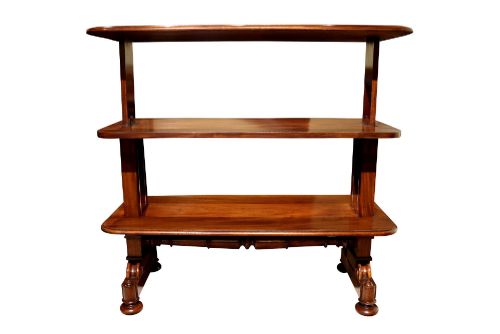
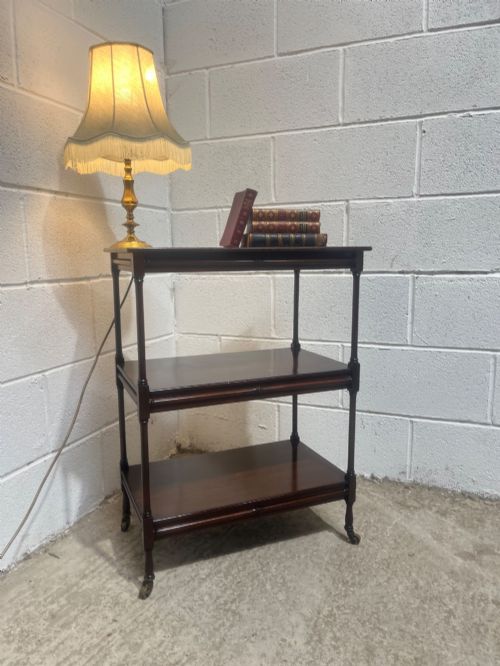
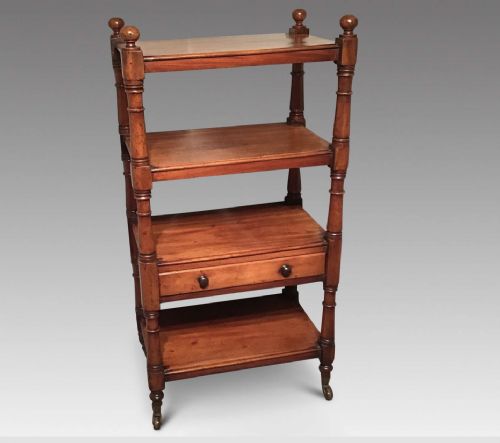
A victorian mahogany dinner trolley is a functional serving piece designed to hold dishes and utensils during large meals. The pieces on this page appear predominantly as three-tier buffets, dumb waiters, and tiered stands originating from the nineteenth century.
Most examples take the form of three shelves supported by turned pillars, occasionally featuring lower cabinets or rising mechanisms. William IV and Victorian periods dominate the design styles found in these listings.
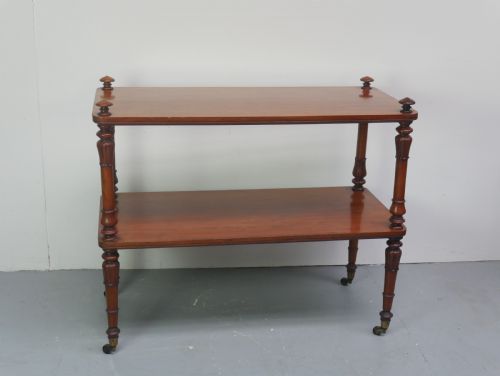
Makers and workshops of the era constructed these items to be mobile, fitting them with castors to ease movement around the dining room. They function equally well today as side tables or display stands in domestic interiors.
How they were made
Cabinet makers utilised dense mahogany for the primary structure, shaping shelves, pillars, and cabinets with precision. The timber displays rich grain patterns that define the aesthetic of each piece.
Metal fittings such as brass castors provide structural support and mobility to the tiered stands. Ceramic elements also appear alongside the wood and brass components in these nineteenth-century builds.
What varies in quality
Construction methods and timber selection determine the standing of an individual piece. Heavier gauge mahogany and finer turning on the supporting pillars distinguish superior examples from simpler utilitarian models.
The presence of original hardware, including brass castors and specialised rise-and-fall mechanisms, elevates the integrity of the item. Cabinet additions and elaborate tier configurations also indicate a higher grade of manufacture.
Maple & Co
The Victorian Mahogany Dinner Trolley Glossary
- Dumb Waiter
- A tiered serving stand designed to hold food and tableware without the need for a human servant. These pieces typically feature multiple shelves mounted on a central column or corner pillars.
- Buffet
- A sideboard or serving table used for holding dishes during meals. In nineteenth-century examples, this often incorporates multiple tiers and occasionally a lower enclosed cabinet.
- Castor
- A small wheel mounted on a swivel attached to the base of the trolley. Original brass versions allow the heavy mahogany furniture to move smoothly across floor coverings.
- Rise and fall
- A mechanical feature allowing the tiers of the buffet to adjust in height. This sophisticated addition is associated with earlier nineteenth-century workshops.
- Tiered stand
- Furniture composed of several open shelves arranged vertically. They maximise vertical storage space in dining rooms.
Victorian Mahogany Dinner Trolley: Frequently Asked Questions
What is a Victorian mahogany dinner trolley?
A Victorian mahogany dinner trolley is a multi-tiered serving piece used in nineteenth-century dining rooms to hold food, plates, and cutlery. These items typically feature three shelves and roll on castors.
They bridge the gap between heavy sideboards and mobile serving trays. Today, they serve as practical display furniture.
How were these trolleys used originally?
Dining rooms utilised these stands to keep extra dishes and serving utensils close to the table without cluttering the main dining surface. Servants could wheel the stand quietly between guests.
The inclusion of multiple tiers allowed for the organisation of different courses and tableware. Their mobility was central to their function during large Victorian meals.
How do I care for mahogany furniture?
Mahogany requires basic maintenance to keep the timber stable and the finish rich. Keep the wood away from direct heat sources and strong sunlight to prevent drying and fading.
Applying a traditional wax polish periodically helps maintain the lustre of the grain. Avoid placing damp items directly onto the unsealed wood surfaces.
How can I tell a William IV piece from a Victorian one?
William IV furniture, dating from the early nineteenth century, often displays bolder proportions and heavy architectural turnings. Rise and fall mechanisms frequently appear in this earlier window.
Victorian pieces spanning the mid to late nineteenth century often lean towards lighter three-tier configurations with castors. Both periods share a reliance on solid mahogany construction.