



Antique Duet Lectern
An antique duet lectern holds two scores side by side, bringing practical harmony and rich timber into a room.
Antique Duet Lectern
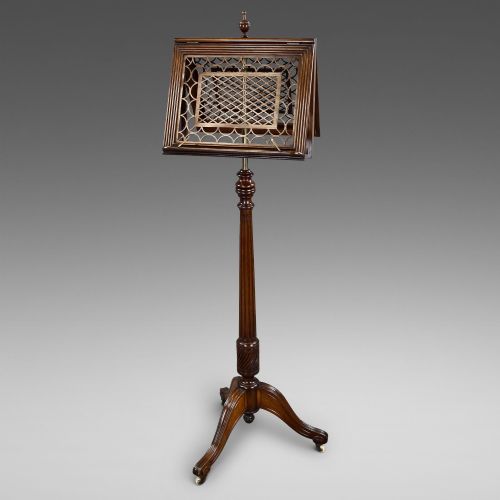
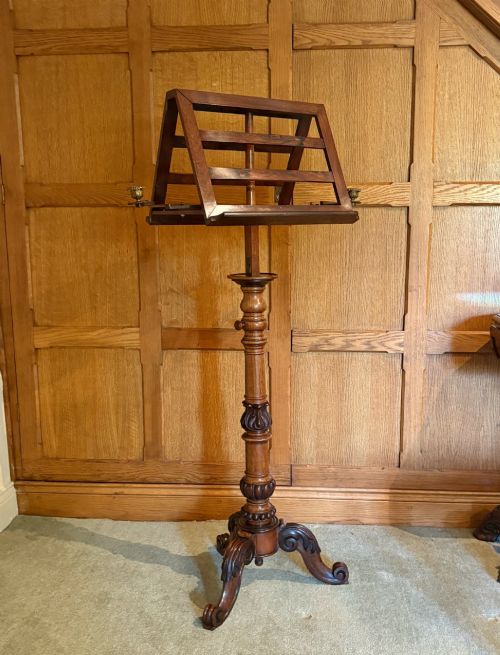
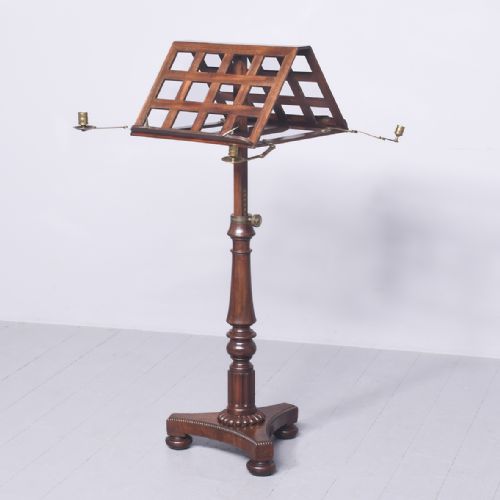
An antique duet lectern is a dual music stand designed to support two open books or folios simultaneously, appearing in forms from the Georgian period through the Victorian era. These stands serve musicians and readers who require space for paired scores or reference texts.
The versions most frequently met on this page are mahogany or walnut music stands, spanning George IV, William IV, Regency, and later nineteenth-century styles. Mahogany and burr walnut dominate the selection, often featuring adjustable heights or fretted details.
How they were made
Cabinet makers utilised dense hardwoods such as mahogany, rosewood, burr walnut, and oak to construct these stands, frequently employing rich veneers and subtle inlay work. Brass components appear in adjustable mechanisms and fittings, providing both structural movement and metallic contrast.
Joinery and turning techniques shaped the central pedestals, branching supports, and reading desks, while fretting created openwork patterns on the book ledges. Timber selection prioritized deep grain figures, particularly in the walnut and mahogany examples.
Some nineteenth-century makers evidently believed that two music sheets deserved twice the timber and a brass screw for good measure.
What varies in quality
The distinction between standard and superior pieces rests on the choice of timber figure, such as highly figured burr walnut or select mahogany, paired with refined inlay and cabinetwork. Unusual proportions or clever mechanical adjustments elevate a stand above basic workshop production.
Finishing touches like delicate fretwork and robust brass mechanisms indicate higher workmanship, whereas simpler country oak versions rely on sturdy utility rather than decorative display.
GILLOWS
The Antique Duet Lectern Glossary
- Duet stand
- A music stand or lectern designed with twin desks to accommodate two players or readers at once. These objects often feature adjustable stems for height control.
- Fretted
- Woodwork pierced or cut with decorative open patterns, commonly seen along the book rests of nineteenth-century stands. This technique lightens the visual weight of the desk.
- Folio
- A large volume or sheet collection placed upon a reading surface. Some stands double as folio holders for large music manuscripts.
- George IV
- A British design period spanning the early nineteenth century, noted for classical revival motifs and rich mahogany or rosewood surfaces. Pieces from this era show fine cabinetmaking.
Antique Duet Lectern: Frequently Asked Questions
What is an antique duet lectern used for?
An antique duet lectern serves to hold two open books, folios, or music scores side by side for shared reading or performance. The dual ledges allow musicians to follow paired parts together.
Beyond musical use, these stands function as book displays or lecterns in studies and libraries, keeping heavy volumes upright and accessible.
How do I adjust an antique duet lectern?
Adjustment mechanisms vary by piece, often relying on a brass screw key or sliding stem within the central pedestal to raise or lower the reading desks. Some models permit angle tilting for comfortable reading.
Careful handling of the timber and brass fittings ensures the adjustment mechanism operates smoothly without straining the central column.
Which woods are common in antique duet lecterns?
Mahogany and walnut form the majority of these stands, alongside rosewood, burr walnut, and oak. Cabinet makers selected these dense hardwoods for their strength and rich grain.
Inlays of lighter woods and brass accents occasionally complement the primary dark timbers, especially in nineteenth-century examples.
How do I tell Regency from Victorian lecterns?
Regency and George IV pieces generally display restrained classical lines, heavier pedestals, and rich mahogany or rosewood surfaces. They reflect earlier nineteenth-century aesthetic preferences.
Victorian and later nineteenth-century examples often introduce burr walnut veneers, inlaid decoration, or fretted galleries, showing greater variety in decorative detailing.