



Antique Drinks Decanter
An antique drinks decanter holds spirits securely while adding substance and polish to a sideboard or table.
Antique Drinks Decanter
When you search for an antique drinks decanter, you encounter vessels designed to hold wine and spirits for formal dining and drawing room hospitality. The selection spans single glass bottles to elaborate tantalus sets and fitted boxes.
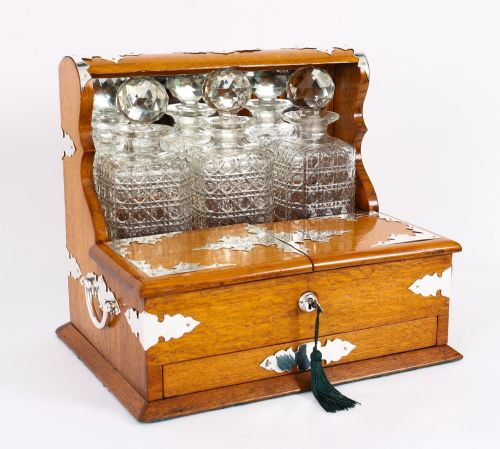
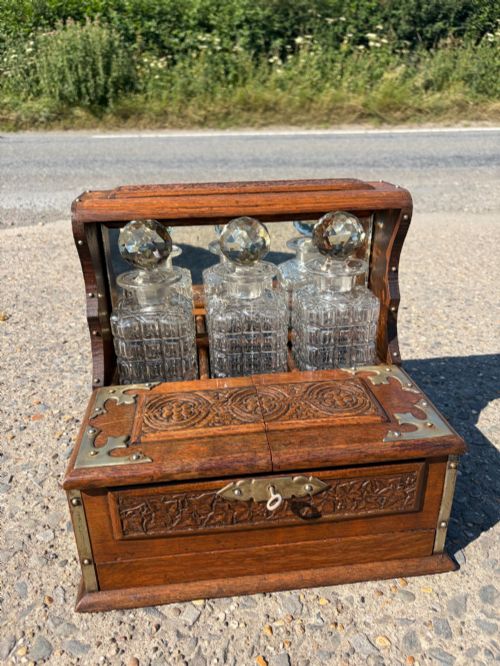
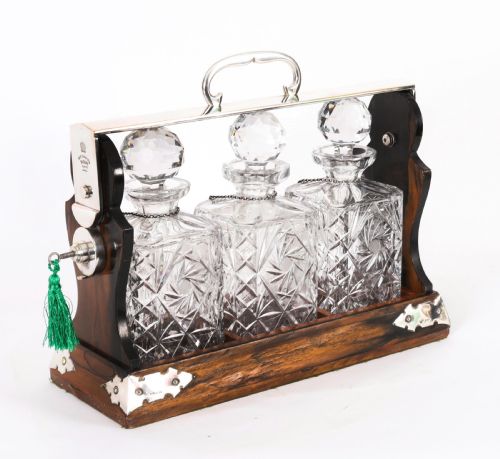
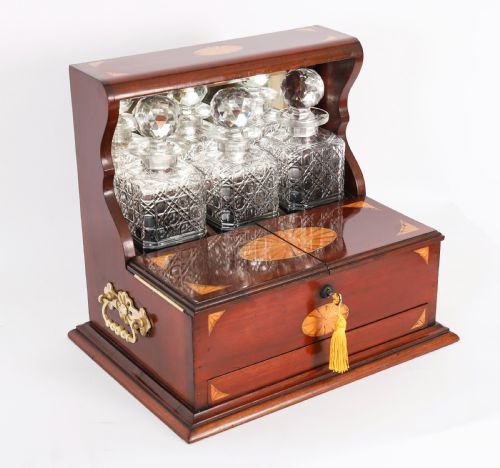
Most pieces on this page originate from the Victorian and Edwardian periods, frequently taking the form of cut crystal bottles housed in oak or mahogany locking frames. These housings often incorporate games compendiums or storage compartments for glasses.
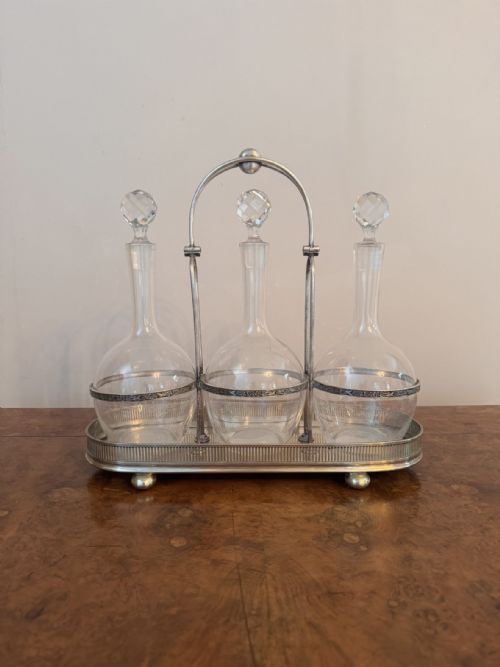
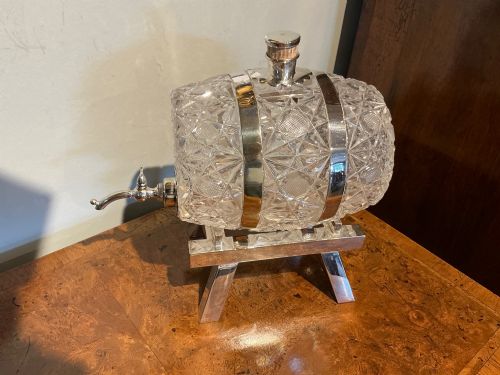
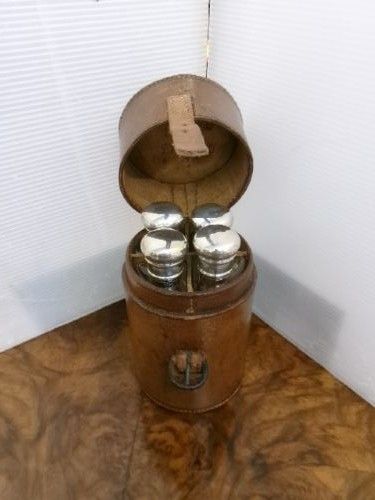
Earlier examples include Georgian mahogany cellarettes and decanter boxes designed for floor placement or tabletop use. Later Edwardian iterations favour silver-plated stands and frosted glass barrels.
Materials and Construction
Makers utilised heavy timbers such as oak, walnut, mahogany and rosewood to construct the protective frames, boxes and tantalus mounts. These woods were often inlaid with satinwood or fitted with robust brass mounts and handles.
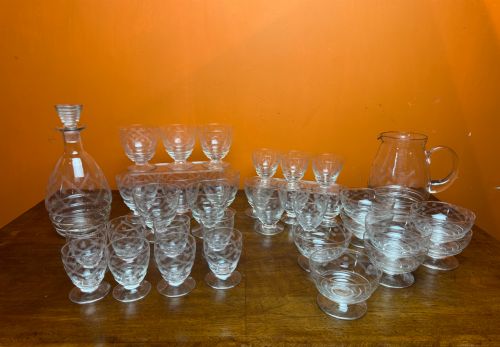
Vessels themselves were formed from cut glass or heavy lead crystal, frequently featuring deep wheel-cut facets and engraved decoration. Metal components relied on silver plate or sterling silver mounts, often bearing Birmingham or London hallmarks.
The selection here spans from George III mahogany cases to Edwardian silver-plated trays.
Judging Quality
Excellence in these items rests on the precision of the cabinetwork and the weight of the crystal. Superior examples feature tight joinery in pollard oak or coromandel, paired with crisp, deep-cut glass that catches the light cleanly.
The sophistication of the locking mechanism and the quality of the silver plating dictate the standing of a piece. Finer items retain functioning keys, substantial brass handles and fully integrated games equipment without loose veneers.
Betjemann·Hukin and Heath·Webb Corbett
The Antique Drinks Decanter Glossary
- Tantalus
- A locking wooden frame that secures decanters by their stoppers to prevent unauthorised pouring while displaying the contents. The mechanism requires a key to release the bottles.
- Cellarette
- A large fitted cabinet or box designed to hold multiple wine bottles and spirits securely. These units date primarily to the Georgian and early Victorian eras.
- Decanter Label
- A small tag suspended from a chain around the neck of a bottle to identify the contents. They are frequently fashioned from silver or silver plate.
- Wine Coaster
- A small circular tray with a raised gallery, often fitted with a wooden base and green baize underneath. They protected mahogany dining tables from condensation rings.
- Games Compendium
- A fitted box containing boards and pieces for pastimes such as whist, chess or backgammon. They are frequently integrated into the base of late Victorian tantalus units.
Antique Drinks Decanter: Frequently Asked Questions
How does a tantalus lock work?
A metal bar runs across the glass stoppers of the decanters, held in place by an upright locking standard at the side. Turning a key in the integrated lock releases the bar so the bottles can be lifted free.
When the bar is locked back down, the stoppers cannot be removed, which prevents the decanters from being tilted or emptied.
Where were decanter boxes kept?
Decanter boxes and cellarettes sat in dining rooms, libraries and drawing rooms during the eighteenth and nineteenth centuries. They provided secure storage for wine and spirits away from the household staff.
Smaller boxes rested on sideboards or tables, while larger cellarettes stood directly on the floor near the dining table.
How do I date an oak tantalus?
The transition from plain oak to pollard oak, satinwood inlay and games compendiums helps narrow the decade. Most fitted tantalus units date from the late Victorian and Edwardian eras between 1880 and 1910.
Hardware details, such as silver hallmarks and cast brass handles, offer precise year markers when stamps are present.