





Antique Dragon Side Table
An antique dragon side table brings carved mythological detail and rich timber into a room, offering both a surface and a conversation piece.
Antique Dragon Side Table
An antique dragon side table is a low or occasional surface shaped by craftsmen working in various Asian export and British colonial traditions. These pieces combine utilitarian table forms with intricate animal and mythical carvings.
The aesthetic bridges several distinct movements including Chinese Qing Dynasty export work, Anglo-Burmese furniture, and Victorian Chinoiserie. Each origin brings specific carving depths and structural silhouettes to the surface.
Materials and construction methods
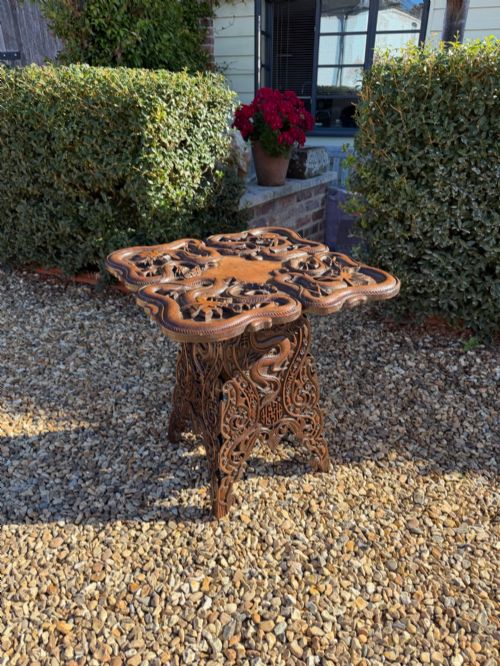
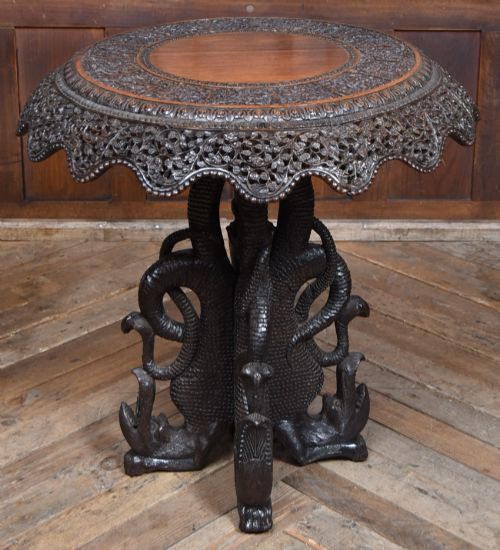
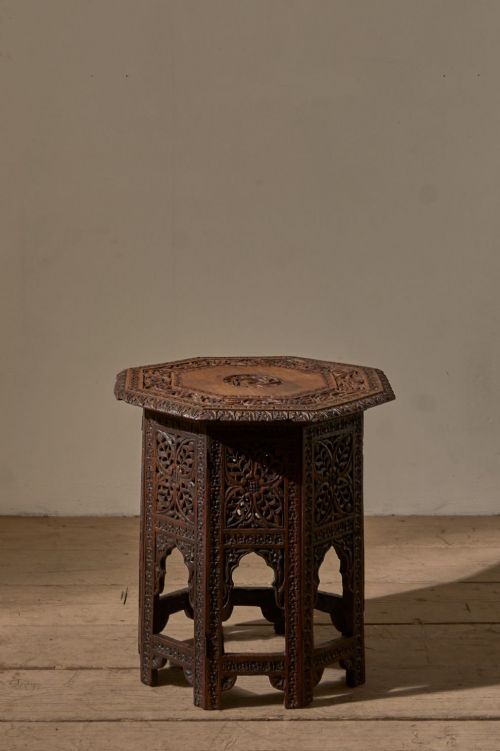
Carvers worked with heavy hardwoods such as rosewood, padauk, and teak, which allowed for deep, undercut relief work without splintering. These timbers were often ebonised or polished to a dark, lustrous finish.
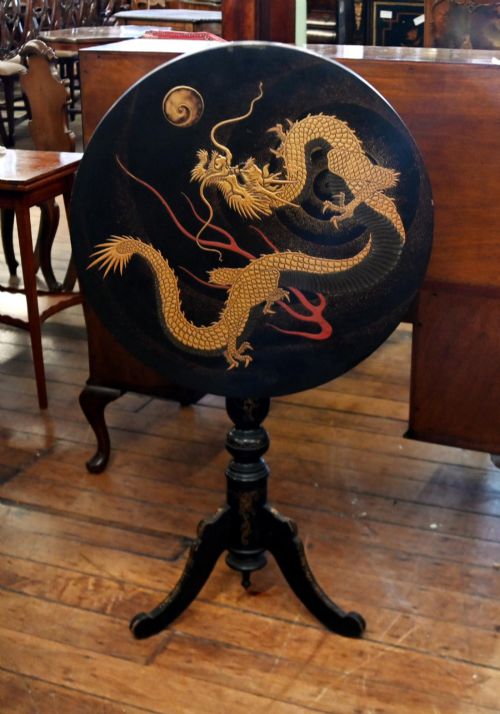
Some tables incorporate inset slabs of rouge marble or panels of black lacquer into the wooden frame, contrasting the cold stone against warm grain. Joinery relied on traditional mortise and tenon techniques to support heavy carved aprons.
Antique Dragon Side Table Retail Price Guide 2026
Typical asking prices for dragon side table among the pieces listed under this phrase on Sellingantiques today, from the lower quarter to the upper quarter. They describe what is for sale here now, not the wider market.
Materials documented across the inventory include marble, lacquer, fabric, and various dense hardwoods such as teak and rosewood.
Assessing quality and craftsmanship
Timber selection and stability dictate longevity, with finer tables maintaining rigid joints and well-seasoned wood that resists seasonal warping. The integration of secondary materials, such as fitted marble tops, requires precise stone-cutting that sits flush with the surrounding hardwood rim.
The Antique Dragon Side Table Glossary
- Chinoiserie
- European imitation and adaptation of Chinese artistic traditions, popular during the Victorian era. This style often applied black lacquer and gilt decoration to western furniture forms.
- Padauk
- A heavy, durable tropical hardwood with a reddish hue used extensively in Anglo-Indian furniture. It accepts fine carving and deep polishing.
- Qing Dynasty
- The final imperial dynasty of China, spanning from sixteen-forty-four to nineteen-twelve. Pieces from this period often feature robust dragon motifs and dense carved hardwood.
- Nest of tables
- A set of graduated tables designed to slide underneath one another for compact storage. They appear frequently in nineteenth-century Oriental export furniture.
- Tilt-top
- A table mechanism featuring a hinged top that pivots to a vertical position when not in use. This design allowed furniture to be stored flat against a wall.
Antique Dragon Side Table: Frequently Asked Questions
What woods were used for these tables?
Makers relied heavily on dense tropical timbers including rosewood, teak, and padauk. These heavy woods provided the structural strength needed to support deep, three-dimensional carvings.
Lacquer and ebonised finishes also appear frequently, particularly on pieces produced for the European export market during the nineteenth century.
How do I care for marble-topped tables?
Marble inserts require gentle cleaning with a damp cloth and mild soap to protect the polished surface from staining. Avoid acidic liquids that can etch the stone over time.
Keep the surrounding hardwood nourished with appropriate wax to maintain the contrast between the timber frame and the cool stone.
How do I distinguish between periods?
Nineteenth-century examples generally exhibit heavier timber weights and hand-carved details that reflect traditional regional techniques. Later pieces from the early twentieth century often show shifts in proportion and standardised joinery.
Examining the underside and interior joints helps reveal the age of the construction and the tools used by the maker.