




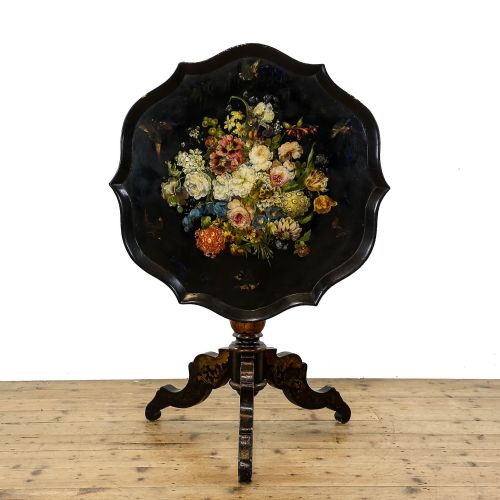
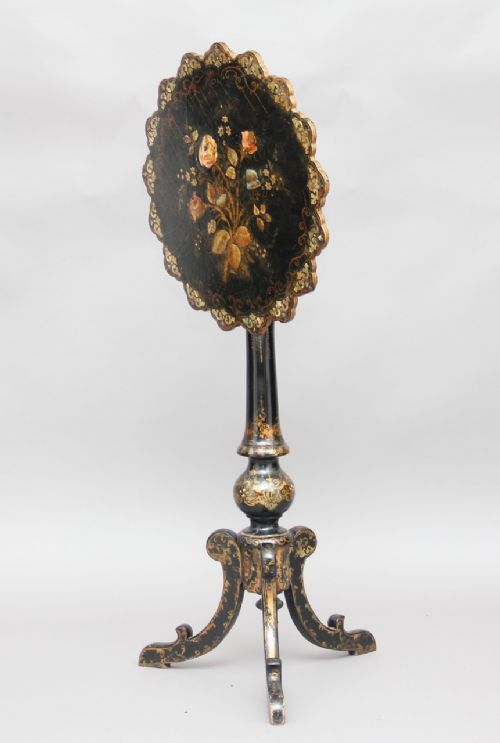
Black Lacquered Tilt Top Table
A black lacquered tilt top table brings dark, reflective surfaces and hand-painted detail into a room, offering practical folding tops and striking Chinoiserie decoration.
Black Lacquered Tilt Top Table
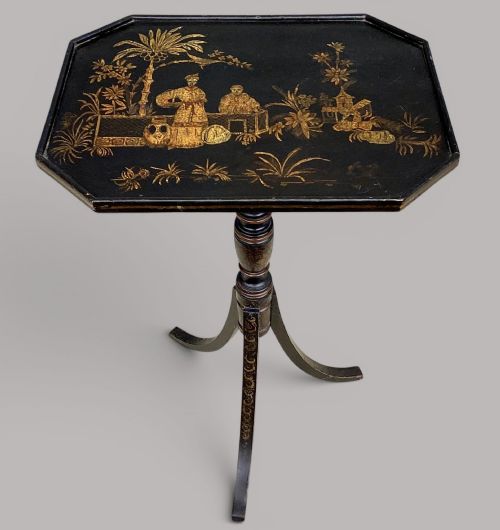
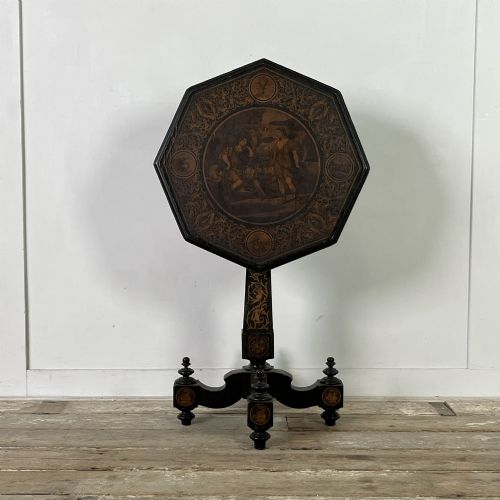
When you search for a black lacquered tilt top table, you find a range of occasional, side, and wine tables designed with hinged tops that tip vertically when not in use. These pieces span periods from the Georgian and Regency eras through the Victorian and Edwardian periods, reflecting changing tastes in dark, decorative furniture.
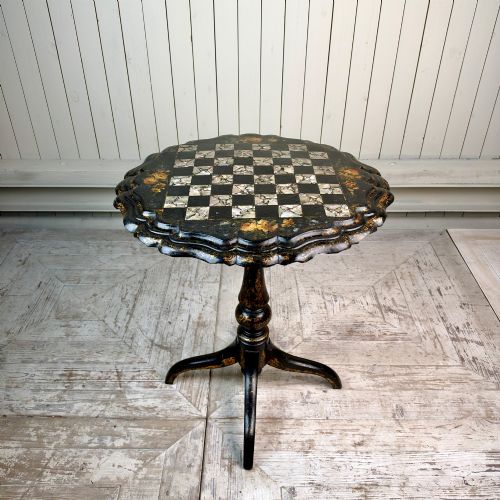
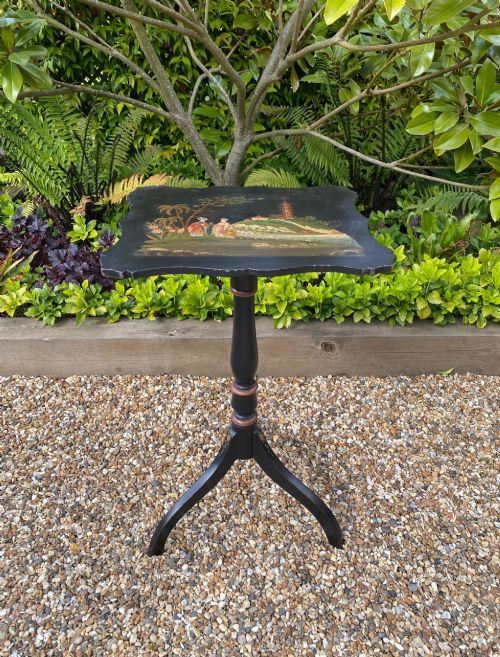
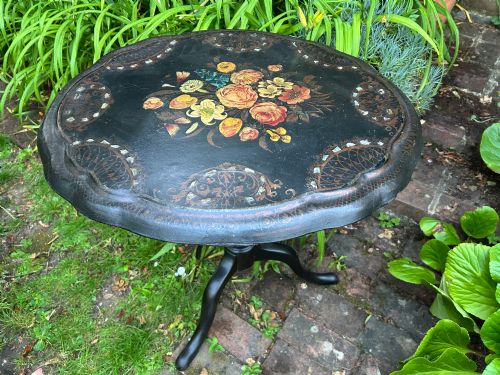
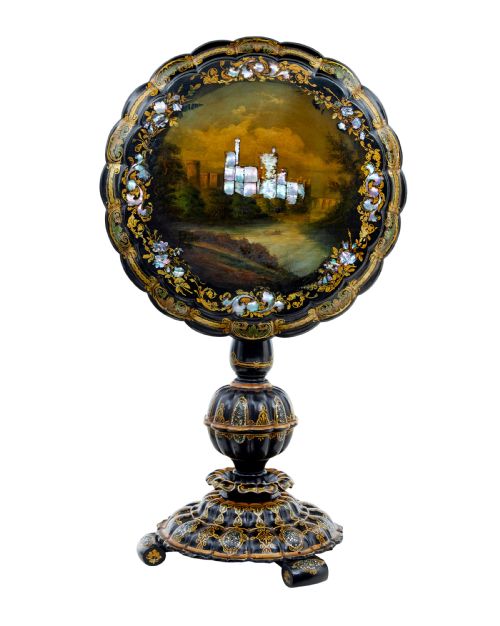
The versions you are most likely to meet on this page include Victorian papier-mâché and wood examples, often decorated with Chinoiserie motifs or intricate ink work. Tripod bases support these tops, providing a stable footing while maintaining a slender silhouette in a room.
How they were made
Maker construction relies on timber, papier-mâché, and specialised paint layers built up to create a dark, glossy surface. Artisans applied lacquer, paint, and gold leaf or parcel gilt to achieve the reflective black finishes characteristic of these tables.
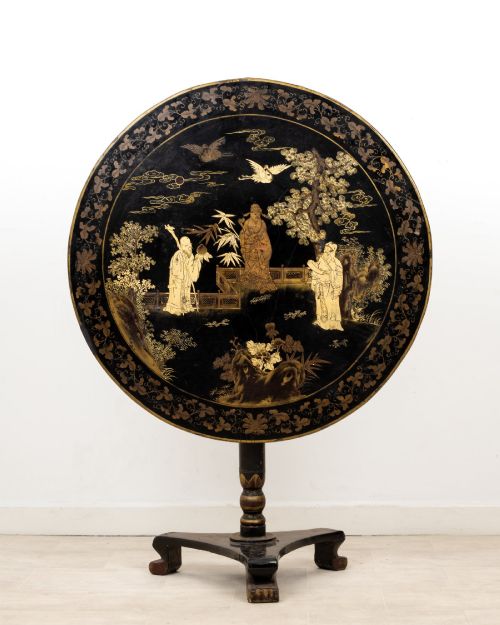
Detailing often incorporates mother of pearl inlay and hand-painted Oriental scenes, particularly on Victorian papier-mâché substrates and earlier wooden frames. Japanning techniques were also utilised to emulate Asian lacquerware using European methods of layered varnishing and drying.
Black Lacquered Tilt Top Table Retail Price Guide 2026
Typical asking prices for black lacquered tilt top table among the pieces listed under this phrase on Sellingantiques today, from the lower quarter to the upper quarter. They describe what is for sale here now, not the wider market.
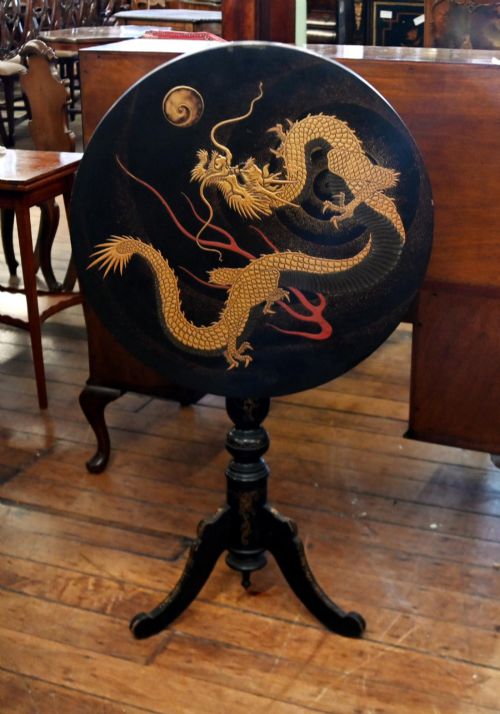
Dragons painted on these tables often peer out from dark lacquer, keeping a quiet, scaly watch over your afternoon tea.
What varies in quality
The distinction between standard and superior examples lies in the crispness of the hand-painted detailing and the depth of the lacquer finish. Finer pieces display meticulous ink work, precise parcel gilding, and well-integrated mother of pearl inlay that remains secure within the surface.
Structural integrity in the tilting mechanism and the turning of the tripod base also separates simpler production from masterwork execution. Tables that retain their original surfaces without heavy overpainting command greater attention from those who study period finishes.
The Black Lacquered Tilt Top Table Glossary
- Tilt top table
- A table with a hinged top that rotates to a vertical position, allowing it to be stored flat against a wall when not in use.
- Chinoiserie
- European interpretations of Chinese and East Asian artistic traditions, frequently featuring pagodas, figures, and landscapes in gold and colour on dark grounds.
- Japanning
- A European imitation of East Asian lacquerwork produced by applying layers of varnish and heat-curing them before decoration.
- Papier-mâché
- A composite material made from paper pulp or reinforced paper sheets mixed with adhesive, pressed into moulds, and dried to form rigid table tops.
- Parcel gilt
- A decorative technique where selected areas of an object are partially gilded with gold leaf, highlighting carved details or painted borders.
Black Lacquered Tilt Top Table: Frequently Asked Questions
How do I use a tilt top table?
These tables function as standard occasional surfaces for drinks or books when the top is locked flat.
Release the catch underneath to pivot the surface vertically, allowing the table to stand compactly against a wall.
Are these tables sturdy?
Tripod bases provide three points of contact that sit firmly on uneven floors without wobbling.
The tilting mechanism uses a traditional catch or block to keep the top stable when lowered.
How do I clean black lacquer?
Dust the surface gently with a soft, dry cloth to prevent micro-scratches on the glossy finish.
Avoid chemical polishes and moisture, which can damage aged lacquer and delicate hand-painted details.
How do I date a black lacquered table?
Examine the core material, such as shifting from heavy wooden tripod frames to moulded papier-mâché in the Victorian era.
Stylistic cues in the Chinoiserie painting and the construction of the tilting mechanism also indicate the period.