




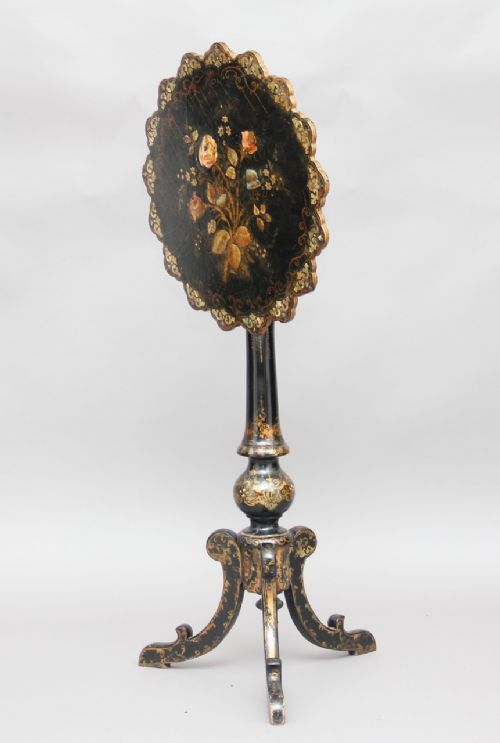
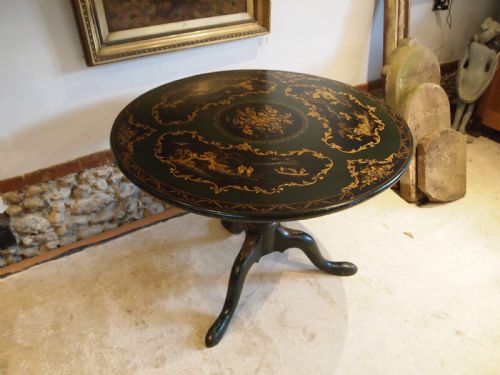
Gilt Lacquer Tripod Table
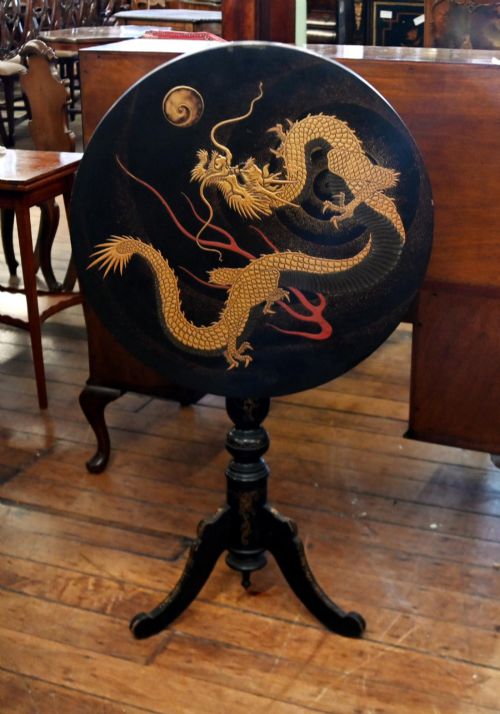
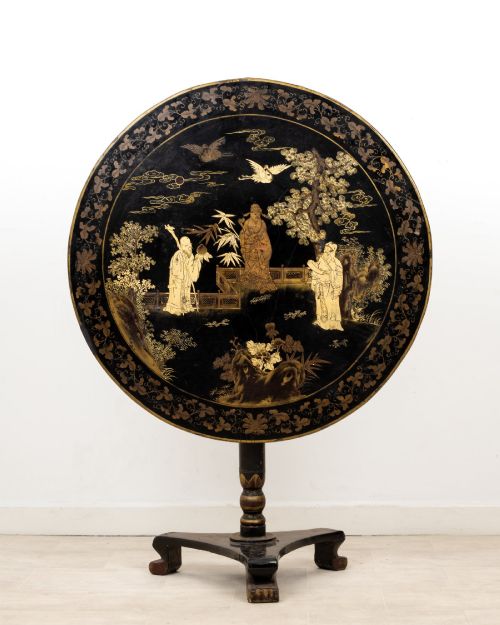
A gilt lacquer tripod table brings hand-painted Chinoiserie scenes and rich black or dark finishes into a room on a neat three-legged base.
Gilt Lacquer Tripod Table
When you search for a gilt lacquer tripod table, you are looking at small occasional, side, and wine tables supported by tripartite bases, often featuring tilt-top mechanisms. These pieces serve as decorative surfaces for rooms, combining functional tables with elaborate orientalist decoration.
The versions you are most likely to meet on this page span the Georgian, Regency, and Victorian periods, along with later revival pieces up to nineteen hundred. Styles range from strict Regency design to Victorian Chinoiserie and Queen Anne revival forms.
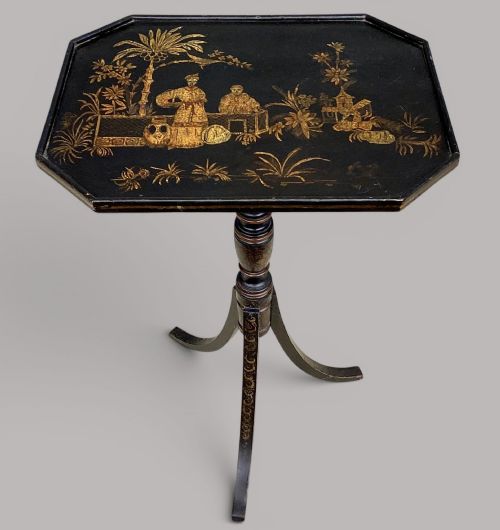
Common formats include tilt-top occasional tables, wine tables, and painted tray tables, as well as occasional plant stands and torchieres. Their surfaces typically display black lacquer decorated with hand painting and gold leaf.
How they were made
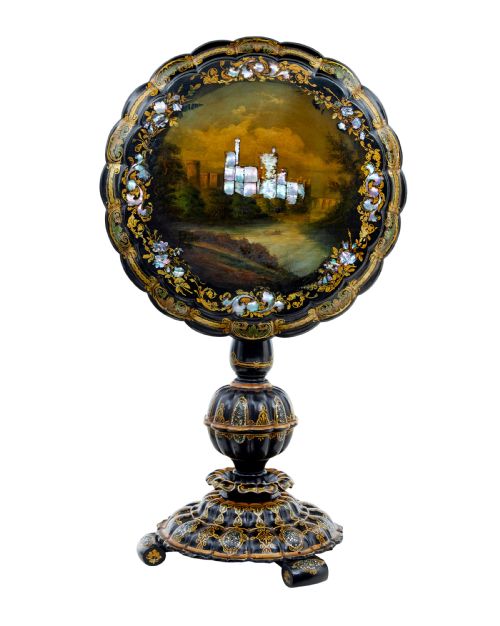
Construction relies on wood, lacquered timber, and occasionally papier-mache, formed into circular or tray tops mounted on three-legged supports. Artisans applied layers of lacquer to create deep dark grounds before building up the design.
Decoration involves hand painting, gold leaf, and parcel gilt work to render intricate Chinoiserie motifs, figures, and landscapes. Mother-of-pearl inlay also appears on selected papier-mache and painted surfaces to catch the light.
Gilt Lacquer Tripod Table Retail Price Guide 2026
Typical asking prices for gilt lacquer tripod table among the pieces listed under this phrase on Sellingantiques today, from the lower quarter to the upper quarter. They describe what is for sale here now, not the wider market.
Some tables tilt completely vertical so they can hug the parlour wall like polite, painted guests waiting for tea.
What varies in quality
The finesse of the hand painting and the application of gold leaf dictate the visual success of the surface. Crisp detailing in the Chinoiserie scenes and subtle tonal work separate finer studio execution from simpler production.
The integrity of the tripartite base and the mechanical precision of the tilt-top mechanism matter greatly for everyday utility. Well-balanced proportions between the top and the three-legged support ensure the table stands firmly without awkwardness.
The Gilt Lacquer Tripod Table Glossary
- Chinoiserie
- European artistic style reflecting Chinese and East Asian motifs. It gained popularity across Georgian and Victorian decorative arts.
- Tripod base
- A three-legged support structure beneath a central pillar. This format provides stability on uneven floors while keeping floor clearance.
- Tilt-top mechanism
- A hinge arrangement allowing the table surface to fold vertical when not in use. This saved space in historic interiors.
- Parcel gilt
- Partial application of gold leaf or gilt finish to highlights, carved details, or borders. It contrasts sharply against dark lacquer grounds.
- Papier-mache
- A composite material made from paper pulp or layers of paper bound with adhesive, then pressed and dried. It offered a smooth, stable base for fine lacquer and inlay.
Gilt Lacquer Tripod Table: Frequently Asked Questions
What is a gilt lacquer tripod table?
A gilt lacquer tripod table is a small occasional or wine table supported by three legs, finished with dark lacquer and gold details. These tables function as movable display surfaces.
Most examples incorporate painted Chinoiserie decoration depicting figures, landscapes, or floral motifs on black or dark grounds.
Where were these tables used?
Historically, these tables sat in parlours, drawing rooms, and private chambers for serving tea, holding books, or displaying decorative objects. Their portable nature allowed servants to move them easily.
In modern rooms, they work well beside seating areas or as freestanding accent pieces in hallways.
How do I tell a Georgian table from a Victorian one?
Georgian and Regency pieces often show lighter timber framing and restrained neoclassical or early Chinoiserie proportions. Work from this era reflects strict period joinery techniques.
Victorian and later revival pieces tend to feature denser painted surfaces, papier-mache options, and bolder contrasts, reflecting changing nineteenth-century tastes.
How do I care for a lacquer surface?
Keep lacquer away from direct sunlight and excessive moisture to prevent warping or fading of the delicate paint layers. Dust gently with a dry, soft cloth.
Avoid using modern chemical polishes or abrasive cleaners, which can permanently damage the gold leaf and varnish.