


Antique Dragon Dish
An antique dragon dish brings the ancient motif of imperial power and myth directly to the table in porcelain, cloisonné enamel, and silver.
Antique Dragon Dish
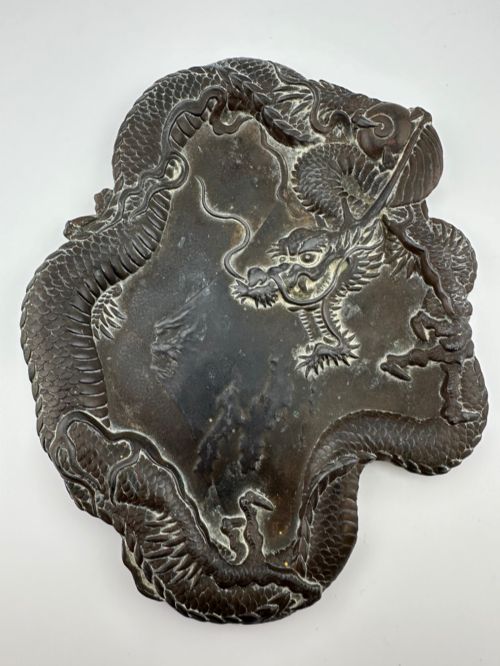
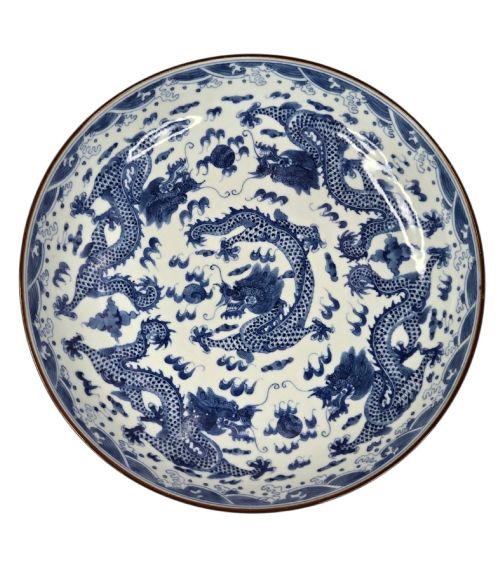
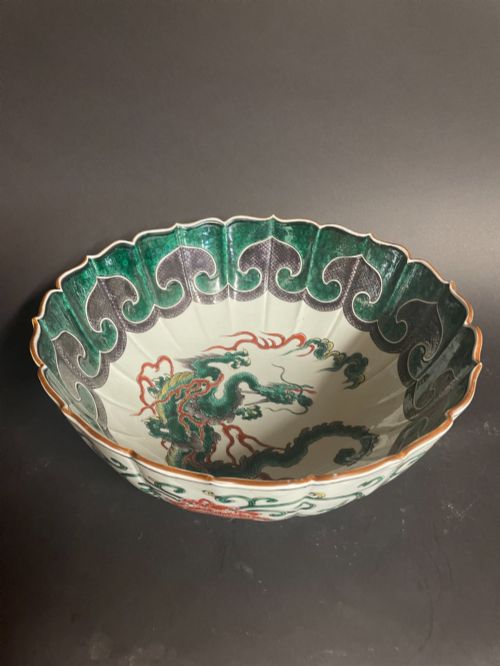
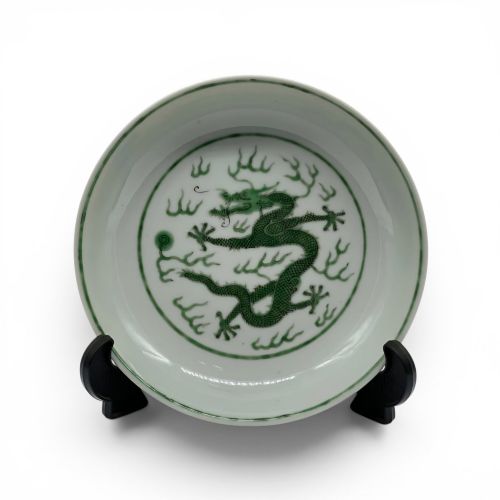
When searching for an antique dragon dish, buyers encounter a wide spectrum of forms spanning Chinese imperial porcelains, Japanese Meiji period cloisonné chargers, and English bone china services. The pieces take the shape of decorative bowls, plates, trays, and export boxes produced across the nineteenth and early twentieth centuries. The most common survivals on the market include Japanese cloisonné enamel chargers featuring coiled reptilian motifs and English porcelain plates painted with traditional oriental patterns.
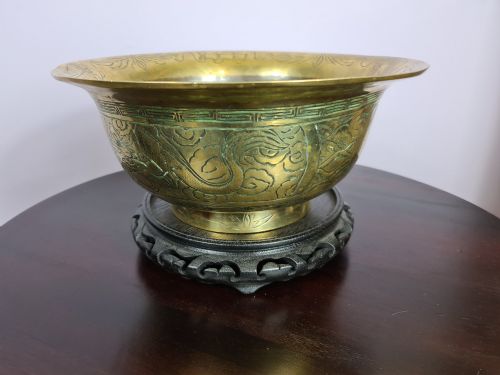
Originating from diverse workshops across Qing Dynasty China, Meiji Japan, and Georgian or Edwardian England, these items served primarily as display pieces or formal tableware. The dragon motif itself shifts significantly between cultures, appearing as a five-clawed imperial beast on oriental porcelains or as stylised compartments on English factory wares. Buyers find everything from heavy brass bowls to delicate lustre glaze earthenware depending on the specific manufacturing centre.
How they were made
Porcelain items relied on high-fired ceramic bodies decorated under or over the glaze using cobalt blue, polychrome enamels, or lustre glazes containing metallic oxides. English factories such as Worcester and Wedgwood applied hand-painted or transferred motifs, sometimes heightened with gold leaf or gilt detailing.
Metal and enamel pieces utilised copper, brass, or silver bases worked with the cloisonné technique, where thin wire compartments were soldered to the surface and filled with coloured vitreous pastes before firing and polishing. Chinese and Japanese metalworkers also employed mixed-metal inlay and repoussé hammering to give the dragon motifs three-dimensional depth.
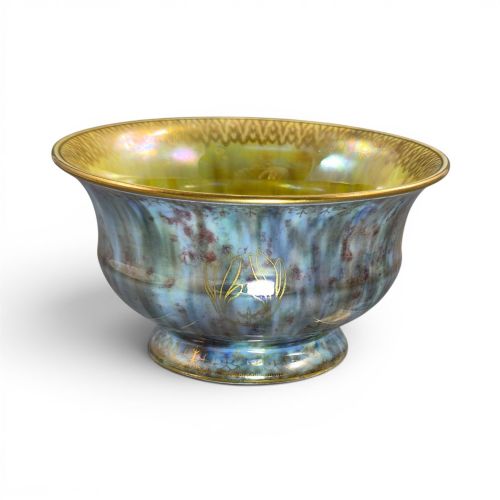
Wedgwood lustre bowls by Daisy Makeig-Jones appear alongside Chamberlain Worcester plates and Meissen porcelain boxes.
What varies in quality
The standard of execution in an antique dragon dish rests on the crispness of the chasing, the precision of the enamel work, and the fidelity of the hand-painted details. Finer pieces demonstrate absolute control in the rendering of scales and claws, whereas lesser examples show muddied glazes or uneven wire placement in cloisonné sections.
Maker attribution also dictates standing, with documented works from celebrated factories or named designers commanding greater attention than unsigned provincial output. The depth of the modelling, the richness of the gilding, and the complexity of the dragon design separate standard decorative wares from museum-grade examples.
Daisy Makeig-Jones·Wang Hing and Company·C.J. Mason·Chamberlain Worcester
The Antique Dragon Dish Glossary
- Cloisonné enamel
- A metalwork technique where thin wire partitions are attached to a base to create cells filled with enamel paste and fired.
- Five-clawed dragon
- An imperial symbol in Chinese art traditionally reserved for the emperor and high-ranking nobility.
- Fairyland Lustre
- A distinctive line of earthenware developed by Daisy Makeig-Jones featuring fantastical transfer-printed and enamelled mythical scenes.
- Imari
- A style of Japanese export porcelain decorated in underglaze blue and contrasting iron red, gold, and other colours.
Antique Dragon Dish: Frequently Asked Questions
What does a five-clawed dragon mean?
In Chinese imperial tradition, the five-clawed dragon symbolised the emperor and supreme authority. Objects bearing this specific motif were strictly regulated during dynastic periods.
On export wares and later pieces, the rule relaxed, allowing wider adoption of the powerful mythical beast across various decorative arts.
How do I care for cloisonné enamel?
Cloisonné enamel requires gentle handling and should be dusted with a soft, dry cloth. Avoid harsh chemical cleaners or abrasive pads that can scratch the polished glass surface.
Keep metal and enamel pieces away from direct sunlight and damp environments to protect the integrity of the base copper and wire work.
How do I distinguish Japanese from Chinese pieces?
Japanese items from the Meiji period often display hyper-detailed cloisonné wirework or dynamic naturalism influenced by western contact. Chinese pieces frequently adhere strictly to imperial iconographic traditions, such as five-clawed dragons chasing the flaming pearl.
Markings, base materials, and the specific palette of the enamels also offer clear clues to the regional origin of manufacture.
Were these dishes meant for daily use?
Many porcelain plates and bowls served formal dining functions in both European and Asian households. Silver boxes and heavy chargers were primarily intended as desk accessories or decorative display pieces.
Given their age and delicate enamel or gilt surfaces, modern owners generally choose to exhibit them rather than use them for dining.