



Antique Double Inkstand
An antique double inkstand brings dual glass reservoirs and solid metal mountings together for the serious writer.
Antique Double Inkstand
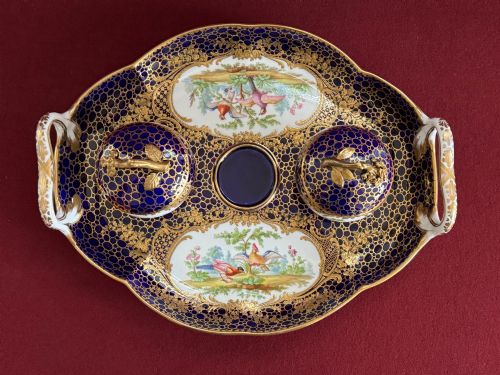
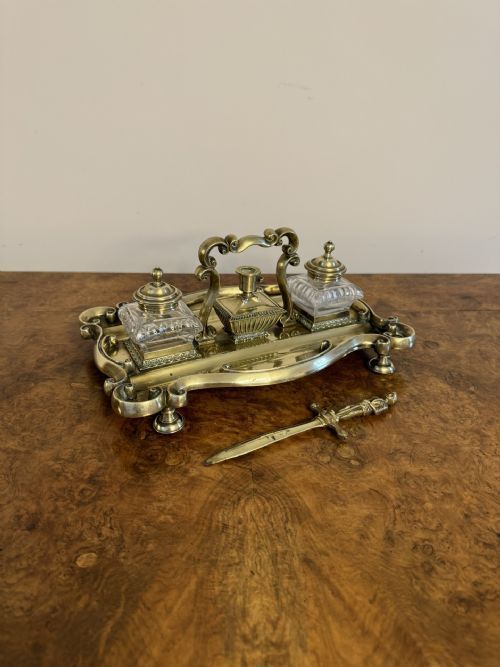
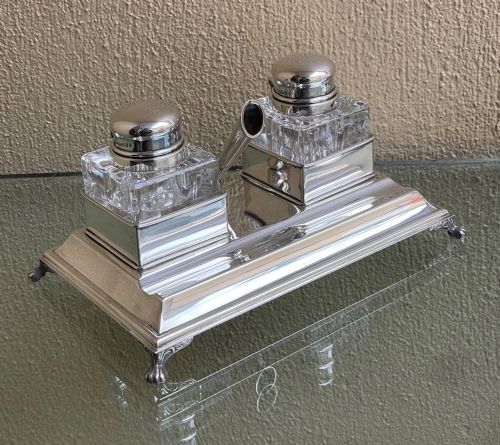
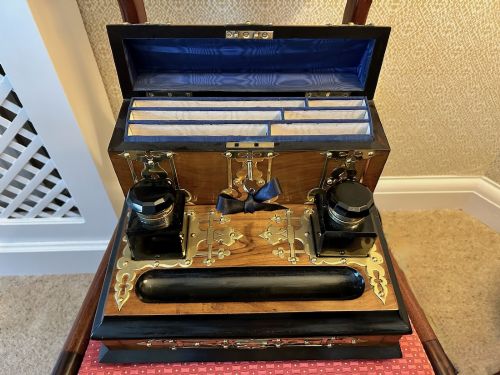
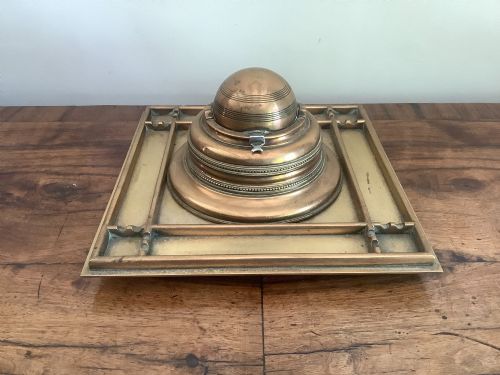
An antique double inkstand provides a dedicated desk platform fitted with two distinct inkwells for varied writing fluids. These desk furnishings range from heavy Victorian brass trays to elaborate French ormolu and marble bases designed for formal correspondence.
The most common examples encountered on this page date from the nineteenth century, utilising walnut, oak, or mahogany fitted with cut glass bottles and hinged metal lids. Many incorporate pen rests, stamp compartments, or tapersticks directly into the base.
Makers often styled these stands in prevailing periods like the Edwardian era, Art Nouveau, or French Empire, resulting in pieces that served both a functional role and a decorative display function in the study.
Materials and construction
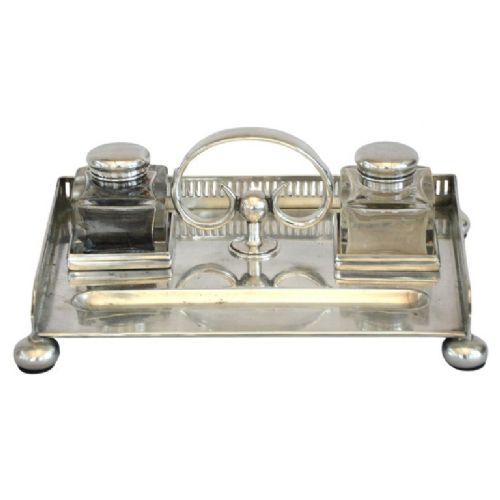
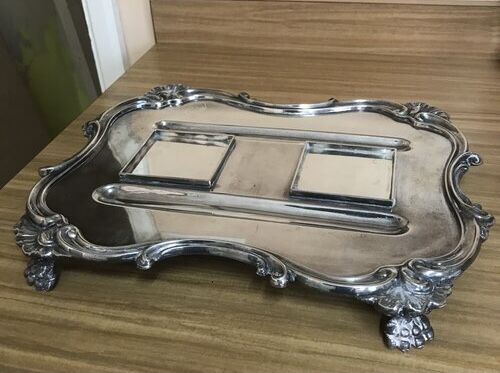
Metalwork forms the backbone of these pieces, employing cast brass, silver plate, or solid sterling silver alongside gilt ormolu and bronze. Workshops shaped these metals through casting, chasing, and plating to create ornate trays and hinged inkwell collars.
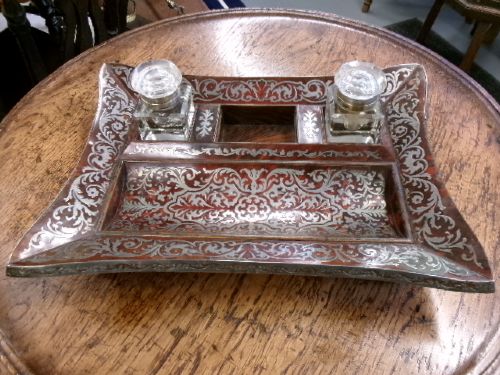
Wood varieties such as walnut, mahogany, and ebony provide substantial body weight, frequently enhanced by Boulle marquetry inlay or intricate hand carving seen in Black Forest animal motifs. Glassmakers contributed heavy cut glass and crystal inserts designed to withstand daily nib dipping without tipping.
Desk sets recorded here span diverse aesthetic movements, ranging from French Empire and Rococo Revival to Art Nouveau and Art Deco.
Factors separating tiers
Quality rests heavily on the crispness of the cast metal ornamentation and the presence of matching, original glass ink inserts with undamaged collars. Superior desk sets demonstrate precise joinery in the wooden bases and retain fully integrated accessories such as matching tapersticks or stamp boxes.
The distinction between standard commercial production and exceptional workshop output also shows in the depth of hand chasing on the brass or bronze mounts and the complexity of the inlaid wooden veneers.
Walker And Hall·Harrods·James Cartland And Sons·Daniel Holy Of Sheffield·Moser
The Antique Double Inkstand Glossary
- Standish
- An alternative term for an inkstand that typically includes a tray fitted with inkwells, pen rests, and small accessory containers for sand or wafers. This portable desk equipment kept writing necessities gathered in one place.
- Encrier
- The French term for an inkstand or inkwell container, frequently encountered on ormolu, marble, and bronze desk sets from the nineteenth century. These continental pieces often display sculptural figural mounts.
- Boulle work
- A decorative technique involving marquetry made from tortoiseshell and brass inlay, popularized in French furniture and desk accessories. This method creates intricate metallic patterns against a dark ground.
- Taperstick
- A small candlestick designed to hold a thin wax taper for melting sealing wax on letters. These miniature candleholders often form an integral part of nineteenth-century desk stands.
- Faience
- Tin-glazed earthenware produced in various European potteries, including Dutch Delft workshops. Such ceramics provided colourful, painted bodies for novelty desktop inkwells.
Antique Double Inkstand: Frequently Asked Questions
What is the difference between an inkstand and an inkwell?
An inkstand refers to the complete tray or desk stand that holds one or more inkwells along with accessory items like pen rests and stamp boxes. An inkwell is simply the individual container that holds the ink.
Most double inkstands feature two separate inkwells mounted securely within a shared wooden, metal, or stone tray.
How do I date an antique double inkstand?
Dating relies on observing the combination of materials, construction methods, and stylistic cues present in the piece. Hallmarks on silver mounts provide exact assay years, while brass casting styles and wood veneers point toward specific decades.
Nineteenth-century examples frequently display heavy cast brass or ornate ormolu, whereas Edwardian and later pieces often feature cleaner lines or simplified silver plating.
Were these stands used for dip pens?
Yes, these desk accessories were designed specifically for the era of steel-nibbed dip pens and quill writing. The dual inkwells allowed a writer to keep two different coloured inks, such as black and red, ready for use.
Integrated pen rests on the tray kept pens from rolling off the writing surface and staining surrounding papers.
How do I care for wooden and metal desk stands?
Maintenance involves keeping the pieces away from direct sunlight and excessive moisture to protect wooden veneers and prevent metal tarnish. Gentle dusting with a dry cloth preserves the finish without harming delicate brass mounts or glass inserts.
Avoid using harsh chemical polishes on silver-plated or gilded surfaces to maintain the original patination acquired over the decades.