

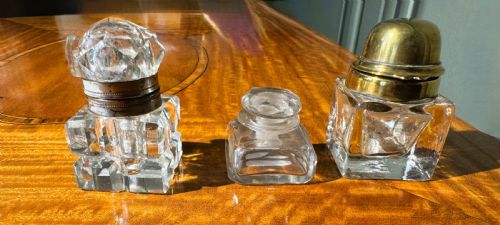
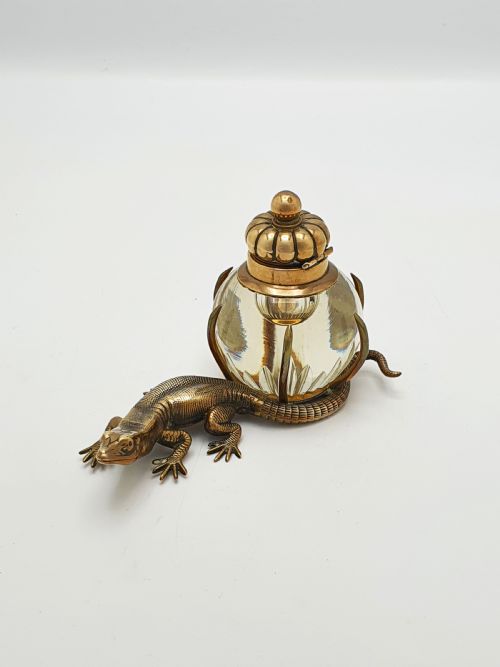


Glass Brass Desk Inkstand
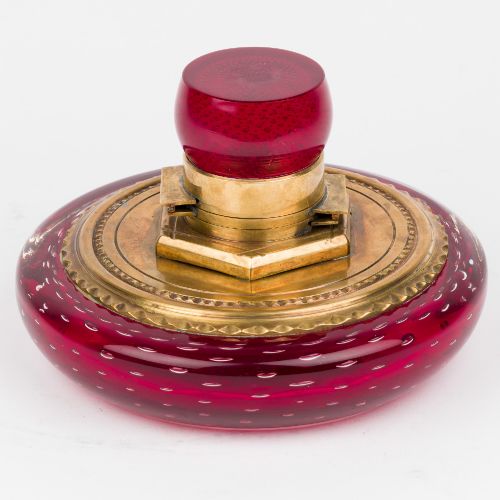
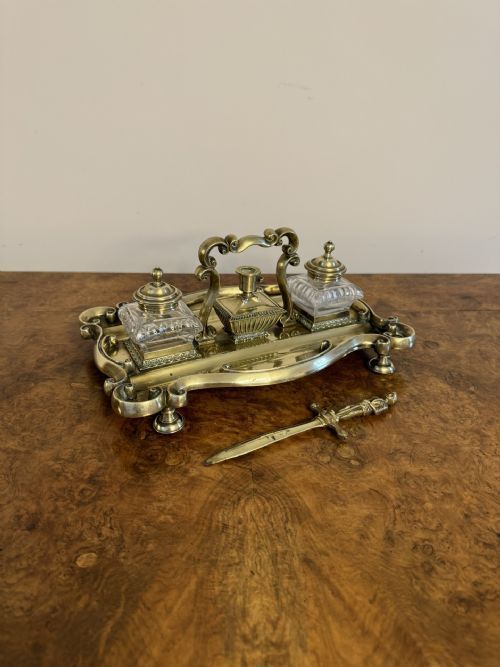
These glass brass desk inkstand pieces combine heavy cast metal bases with cut glass ink pots to organise a writing table.
Glass Brass Desk Inkstand
When you search for a glass brass desk inkstand, you are looking at functional writing accessories that date primarily from the Victorian and Edwardian periods, alongside earlier Regency examples. These items range from simple desk tidies to elaborate stands fitted with multiple ink pots, stationery compartments and occasional drawers.
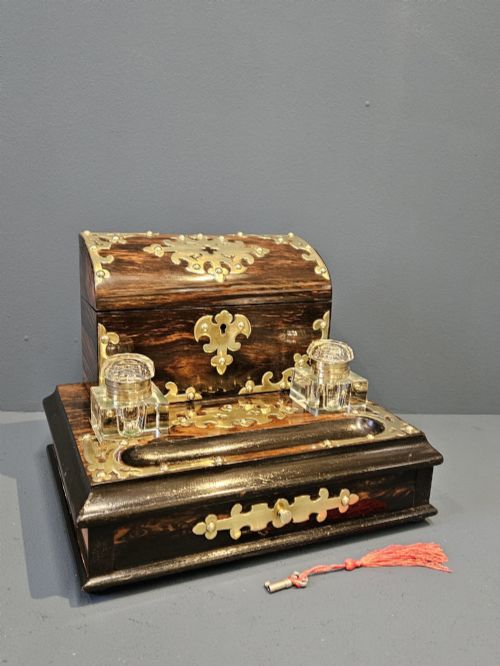
The pieces meeting you on this page span several decades of design, incorporating materials such as oak, walnut, coromandel and rosewood alongside the essential metal and glass components. You will find standard rectangular trays, double-sided sets and novelty animal forms including owls, bulldogs and stags.
Originating as practical desktop necessities for correspondence, these accessories reflect the changing domestic and office habits of the nineteenth and early twentieth centuries. Makers applied diverse styles from Gothic Revival and French Napoleon III to fluid Art Nouveau lines and restrained Regency geometry.
Materials and Construction
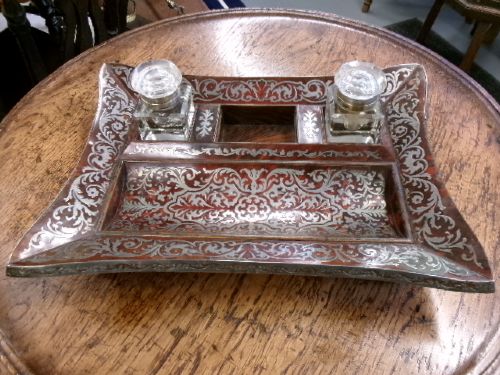
The primary construction relies on heavy cast brass frames, often combined with wooden bases made from timbers like oak, walnut, coromandel and rosewood. Inlaid brass work, mother-of-pearl and tortoiseshell frequently adorn the wooden surfaces, demonstrating skilled cabinet-making techniques.
The glass elements consist of heavy cut glass or crystal ink pots, sometimes featuring iridescence in Art Nouveau pieces or fitted with hinged brass collars and lids. Makers integrated these materials securely into metal mountings, frequently pairing the combination with figural bronze castings or carved antler.
Listings feature oak, walnut, coromandel, and rosewood alongside brass and cut glass.
Markers of Quality
Quality in these items is determined by the crispness of the brass casting, the depth and clarity of the cut glass reservoirs, and the precision of any wood inlay or boulle work. Superior examples display substantial weight in the metal components and retain their original matched ink bottles.
James Cartland & Sons·Kralik·Loetz·Moser
The Glass Brass Desk Inkstand Glossary
- Standish
- A portable tray or stand holding inkwells, pen holders and sanders for a writing desk. It serves as the primary formal term for a fitted inkstand.
- Boulle Work
- An ornate form of marquetry using brass and tortoiseshell inlaid into a dark wood ground. It appears on decorative French-influenced desk sets from the nineteenth century.
- Grand Tour
- A term applied to souvenir items and classical-style objects acquired by travellers in Europe during the nineteenth century. These pieces often feature architectural or classical motifs.
- Ormolu
- Gilded bronze mounted onto furniture and decorative objects. It provides a bright golden finish on the metal mounts of high-end desk stands.
- Chaff-cutter Escapement
- A specific mechanical escapement mechanism found in specialised desk clocks incorporated into inkstands. It regulates the movement of the clock reliably.
Glass Brass Desk Inkstand: Frequently Asked Questions
What is a glass brass desk inkstand used for?
These pieces served as desktop stations for holding wet ink, pens and writing powder before the widespread adoption of the fountain pen. They kept writing implements organised and prevented ink from spilling onto correspondence.
Today, they function as decorative objects on modern desks or mantelpieces, often holding small office supplies or serving as standalone items of historical interest.
How do I date a glass brass desk inkstand?
Dating relies on identifying stylistic markers, timber types and manufacturing methods across different periods. Regency and early nineteenth-century pieces often feature rosewood and refined brass inlay, while Victorian examples frequently incorporate heavy cast brass, oak and elaborate novelty forms.
Later Edwardian and Art Nouveau items display lighter construction, stylized organic metalwork, or iridescent glass bodies. Patent stamps and maker marks can also help narrow down the production decade.
Are the ink pots usually original to the stand?
Many surviving stands retain their original heavy cut glass or crystal ink pots, often matching the exact collar size and shape of the tray apertures. Because glass is fragile, replacement bottles of a similar period are common.
Examining the wear patterns inside the tray and checking for matching glass tint or manufacturer markings helps determine if the bottles belong to the original assembly.
How do I care for a brass and glass inkstand?
Cleaning requires gentle dusting with a soft cloth and avoiding harsh chemical polishes on the brass to preserve any aged patina. Glass inserts can be washed separately in warm soapy water and dried thoroughly before replacement.
Wood bases benefit from occasional application of appropriate furniture wax to nourish the grain without damaging adjacent metal or inlay work.